SC penetration reached 18.4% in October with cumulative estimated sales of $1.79 billion.
Potential exemption from price negotiations looms with the launch of IV biosimilars; MSD secures 12 victories in patent trials.
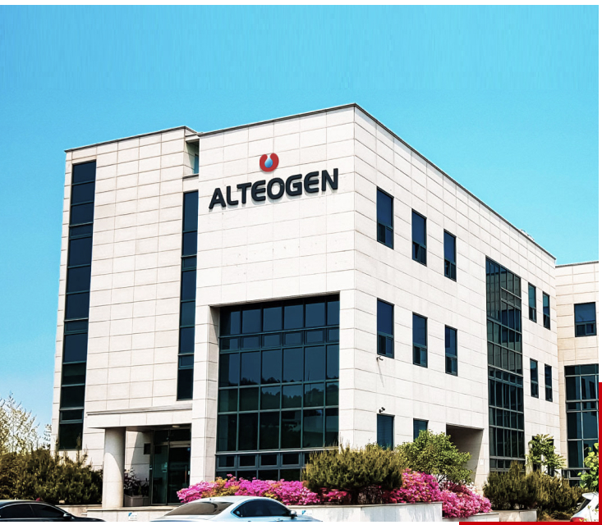
Keytruda QLEX, utilizing Alteogen’s (196170) proprietary technology, is rapidly capturing market share in the United States. As the transition from intravenous (IV) to subcutaneous (SC) administration accelerates, Merck (MSD)’s strategy to defend its Keytruda franchise is gaining significant traction.
A potential turning point has emerged regarding U.S. drug price negotiations. Because the regulation groups Keytruda IV and SC as a single negotiation unit, the future launch of IV biosimilars could serve as grounds to exclude the SC formulation from price negotiations. Furthermore, MSD has secured a series of favorable decisions against Halozyme in U.S. patent trials, strengthening the legal foundation for the expansion of QLEX in its largest market.
SC penetration hits 18.4% as patient and clinician demand grows
According to Bloomberg data shared by Alteogen on the 15th, QLEX sales based on U.S. Wholesale Acquisition Cost (WAC) reached $370 million in October, a 14.3% increase from the previous month. The SC formulation's share of the total Keytruda franchise rose by 2.7 percentage points in one month, from 15.7% in September to 18.4% in October.
Cumulative estimated sales based on WAC from January to October this year reached $1.79 billion. While WAC does not reflect discounts or rebates, MSD reported that QLEX’s third-quarter revenue reached $830 million, a 79% increase from the previous quarter, with U.S. sales accounting for 83.5% of the total.
MSD maintains its goal of converting 30% to 40% of U.S. Keytruda prescriptions to the SC formulation by the end of 2027. With the SC share rising by 6.0 percentage points over two months, the possibility of achieving this target early is being discussed.
QLEX utilizes Alteogen’s hyaluronidase technology, ALT-B4, reducing administration time from approximately 30 minutes for IV to just 1–2 minutes. Clinical data indicates a strong preference for the SC method among both patients and healthcare providers, further supported by the implementation of a permanent J-code in the U.S., which streamlines insurance billing and reimbursement.
This sales growth directly impacts Alteogen’s revenue. The company met the conditions for a $25 million milestone payment in August, and total sales milestones under the contract with MSD could reach up to $1 billion. IBK Securities projects that these milestones will be fully realized by 2028, with royalty revenue expected to reach $460 million annually by 2030.
Integration of IV and SC in price negotiations may offer a silver lining
Under final regulations confirmed by the Centers for Medicare & Medicaid Services (CMS) on the 5th, if Keytruda IV and SC are treated as a single unit, the entry of an IV biosimilar could potentially exempt the SC formulation from price negotiations. While initially viewed as a disadvantageous regulation, it may ultimately serve as a basis to reduce the pricing pressure on the SC version once biosimilars enter the market.
Securities analysts suggest that the launch of biosimilars will alleviate pricing pressure. Shinhan Securities analyst Eom Min-yong noted that if an IV biosimilar is launched, the price reduction period could be limited to a maximum of two years, as the product would be excluded from further negotiations.
MSD continues winning streak in U.S. patent trials
MSD continues to maintain an advantage over Halozyme in U.S. patent litigation. On the 9th, the Patent Trial and Appeal Board (PTAB) invalidated all 30 claims of Halozyme’s U.S. Patent No. 12,037,618. Of the 14 Post-Grant Reviews (PGR) initiated by MSD, 12 have resulted in decisions invalidating all challenged claims, with the remaining two expected to conclude around the 19th.
While Halozyme has secured sales injunctions in some European countries, MSD remains confident in its intellectual property position. During the earnings call on the 29th, MSD CEO Robert Davis emphasized that the company holds the necessary IP to continue the QLEX business, stating, "Our confidence remains unchanged."