E-Mart, Lotte Shopping, and Hyundai Steel among many major firms; average PBR stands at a dismal 0.247x.
Total of 96 KOSPI and 55 KOSDAQ companies named; 34 firms that submitted improvement plans exempted.
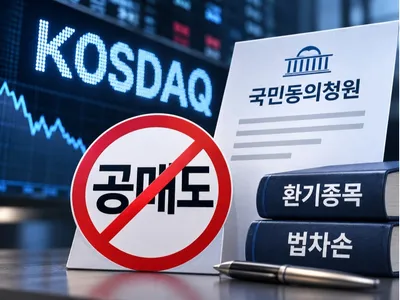
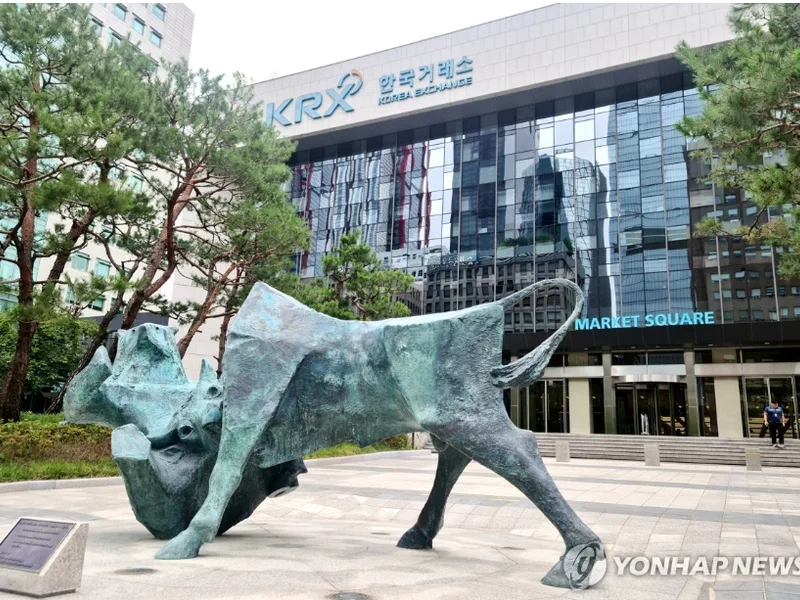
The Korea Exchange (KRX) began disclosing a list of 151 listed companies with persistently low price-to-book ratios (PBR) on Monday. While 34 firms that had previously disclosed corporate value-up plans were excluded from the roster, 15 chronically undervalued companies remained on the list despite having submitted improvement plans.
The disclosure covers 96 companies on the KOSPI and 55 on the KOSDAQ. The average PBR of the listed firms stands at a meager 0.247x, meaning that 10,000 won in book-value net assets is valued at roughly 2,470 won in the stock market. This marks a stark contrast to the overall market averages, with the aggregate PBR for the KOSPI sitting at 1.43x and the KOSDAQ at 1.60x as of the end of last month.
A significant number of major corporate affiliates were included on the list. E-Mart and Lotte Himart recorded PBRs of 0.15x each, while Lotte Shopping registered 0.17x. Other notable names include Lotte Chemical (0.18x), Hyundai Steel (0.19x), and Hanwha Life (0.27x).
By sector, materials (23 firms) and industrials (22 firms) accounted for the largest share on the KOSPI, followed by consumer discretionary (18 firms) and consumer staples (12 firms). On the KOSDAQ, low-PBR companies were heavily concentrated in information technology (17 firms), industrials (10 firms), and healthcare (10 firms).
Targeting Bottom-Tier Sector PBRs Over Three Years; Chronic Underperformers Denied Exemptions
To filter out temporary stock price dips, the exchange based its evaluation on PBR metrics over the past three years. Using the 11 industry sectors under the Global Industry Classification Standard (GICS), the KRX screened for companies that ranked in the bottom 25% of the KOSPI or the bottom 10% of the KOSDAQ for six consecutive semi-annual periods, or six out of the last seven semi-annual periods.
The PBR calculations utilized the 20-day daily average market capitalization and the total shareholders' equity from the most recent balance sheet between September 21 and October 22. This methodology was designed to minimize distortions caused by short-term share price volatility on specific trading days.
Out of 2,431 companies evaluated—excluding those facing delisting procedures—185 met the initial criteria. Among them, 34 firms that published corporate value-up plans incorporating PBR improvement strategies were granted a one-year exemption from the public roster.
However, companies that fell into the low-PBR bracket for 12 consecutive semi-annual periods—or 12 out of the past 13 semi-annual periods—were denied exemptions. This applied to 15 firms (10 on the KOSPI and 5 on the KOSDAQ) that remained on the list despite having submitted improvement plans, proving that mere disclosure is not enough to evade public designation for prolonged undervaluation.
The low-PBR designation is designed to provide investors with enhanced valuation insights while prodding targeted companies to step up their corporate governance and shareholder return efforts. Nevertheless, a low PBR does not automatically signal strong upside potential; companies with weak earnings generation relative to their asset size or deteriorating growth prospects often post low PBRs, necessitating a close examination of return on equity (ROE) and profitability trends.
The publicized list is available on the KRX's KIND (Korea Investor's Network for Disclosure) value-up portal, with "low PBR" indicators slated for sequential rollout across brokerage firms' home trading systems (HTS) and mobile trading systems (MTS).
The exchange plans to provide one-on-one customized consulting for the 151 listed companies throughout 2027. Meanwhile, the Financial Services Commission (FSC) is overhauling stewardship code guidelines to encourage active shareholder engagement by institutional investors.
The roster will be updated on the first trading day of May and November each year, with the current batch remaining posted until May 3, 2027.