



Long-term follow-up data secured in thymic tumor trials for Rivoceranib, originally developed as a liver cancer treatment
Following FDA approval, Repertu prepares for US commercialization alongside ongoing European regulatory submissions and label expansions
HLB (028300) has demonstrated the potential to expand the clinical utility of Rivoceranib—currently developed as a liver cancer therapeutic—into rare cancers. At the European Society for Medical Oncology (ESMO 2026), the company presented long-term follow-up results from a Phase 2 trial in metastatic thymic epithelial tumors, showing a median progression-free survival (PFS) of 11.8 months. This key metric could not be established last year due to shorter observation periods.
Meanwhile, the newly US Food and Drug Administration (FDA)-approved cholangiocarcinoma drug Repertu has entered the commercialization phase. HLB is preparing for direct sales in the US while pursuing European regulatory approval and label expansion into additional cancer types.
Beyond Liver Cancer into Rare Cancers: Rivoceranib Achieves 11.8-Month PFS in Long-Term Follow-Up
The study drawing significant attention at this year's ESMO is the Phase 2 'THRIVE' trial of Rivoceranib in metastatic thymic epithelial tumors. Dr. Se-Hoon Park of Samsung Medical Center presented the updated follow-up results on the 26th. The study involved 11 institutions in South Korea and enrolled 40 patients requiring subsequent therapy following prior treatments, including chemoimmunotherapy. Among them, 40% had received systemic treatment three or more times.
Rivoceranib is a VEGFR-2 targeted anticancer drug that inhibits the formation of blood vessels supplying nutrients to cancer cells. While HLB has been developing it as a first-line liver cancer treatment in combination with the immune checkpoint inhibitor camrelizumab, the THRIVE study evaluated the efficacy of Rivoceranib as a monotherapy for rare cancers.
Thymic epithelial tumors are rare cancers arising in the thymus in the middle of the chest. Categorized into thymic carcinoma and thymoma, treatment options remain limited when tumors progress or fail to respond to conventional therapies.
When first presented at ESMO 2025, the median follow-up duration was 3.7 months, and the median PFS—representing the duration patients live without disease progression—was not yet reached.
With the follow-up period extended to 13.6 months this year, the median PFS was calculated at 11.8 months, indicating that the median duration from treatment to disease progression or death was 11.8 months.
The objective response rate (ORR), representing the proportion of patients with tumor shrinkage meeting a predefined threshold, stood at 35%, while the disease control rate (DCR)—including patients whose tumors shrank or stabilized—reached 85%. The median duration of response (DOR) for patients showing tumor reduction was 11.2 months.
Although these figures decreased from last year's reported ORR of 38.9% and DCR of 94.4%, the actual number of responding patients remained identical at 14, with disease control observed in 34 patients. This shift resulted from the expansion of the analysis cohort from 36 to 40 patients.
 [Source: ESMO 2026 Presentation Materials, Rivoceranib THRIVE Phase 2 Tumor Response Results]
For thymic carcinoma patients, the median PFS was 10 months. The thymoma cohort has not yet reached its median PFS, posting a disease control rate of 93.8%. The median overall survival (OS) has also not yet been reached.
In the safety evaluation, grade 3 or higher treatment-related adverse events occurred in 55% of patients. Major severe adverse events included hypertension (22.5%) and proteinuria (17.5%). Dose reductions due to adverse events were required in 67.5% of patients, while 7.5% permanently discontinued treatment. No treatment-related deaths were reported.
This study is a single-arm Phase 2 trial involving 40 patients. Lacking a comparative control arm, it is difficult to determine superiority over existing therapies; however, the long-term follow-up provides additional evidence supporting Rivoceranib's antitumor activity and disease-modulatory potential.
Repertu Prepares for US Direct Sales Following NCCN Inclusion
Repertu (generic name: lirafugratinib) received FDA approval on September 23. The approval targets adult patients with advanced cholangiocarcinoma harboring FGFR2 gene alterations who have received prior systemic therapy. Specifically, it applies to patients with unresectable locally advanced or metastatic cholangiocarcinoma carrying FGFR2 fusions or other rearrangements.
Repertu is a targeted therapy that selectively inhibits the FGFR2 protein, which is implicated in cancer cell growth. In the ReFocus clinical trial that served as the basis for approval, the drug demonstrated an ORR of 46% and a median duration of response of 11.8 months.
Following FDA approval, Repertu was included as a subsequent therapy option in the National Comprehensive Cancer Network (NCCN) clinical practice guidelines for biliary tract cancers. Because NCCN guidelines are widely utilized by US clinicians to select anticancer therapies and guide treatment strategies, this marks a critical foundation for Repertu's entry into the active prescription market.
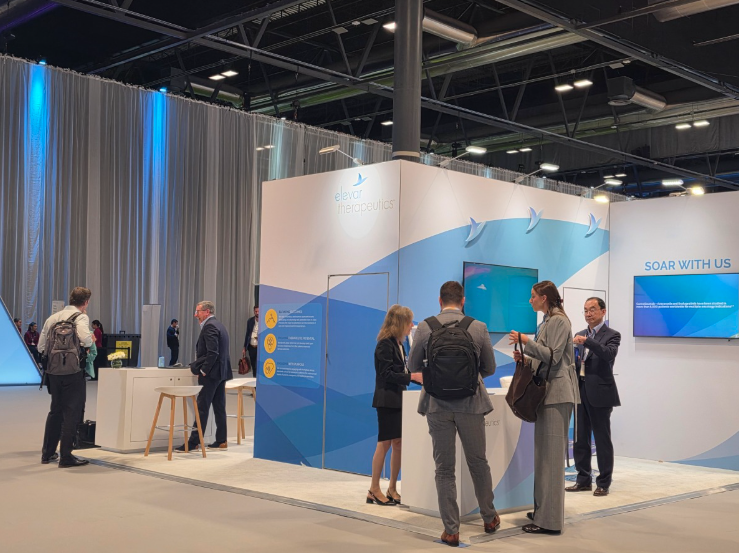
Elevar Therapeutics operated a dedicated booth at this ESMO congress to share clinical data with healthcare professionals. The company plans to commercialize Repertu through direct sales in the United States.
Additional safety analyses from the original ReFocus trial were also unveiled at the conference. The incidence of dermatitis among patients previously treated with immune checkpoint inhibitors was 48%, compared to 14% in treatment-naive patients. Conversely, the overall incidence of grade 3 or higher skin and mucosal adverse events showed no statistically significant difference, standing at 33% and 37%, respectively.
These findings indicate that a patient's prior treatment history may be associated with certain adverse event profiles, serving as useful reference data for establishing personalized safety management strategies during treatment.
Expansion of therapeutic indications is also underway. Elevar is currently conducting 'ReFocus202,' a global Phase 2 trial targeting other solid tumors carrying FGFR2 fusions or rearrangements. This 'tumor-agnostic' strategy targets common genetic aberrations regardless of the primary cancer site.
As treatment responses and durability are confirmed across multiple cancer types, clinical evidence to support label expansions is expected to accumulate. In Europe, the marketing authorization application submitted to the European Medicines Agency (EMA) is currently under review.
"Following FDA approval, we are making steady preparations for the US launch of Repertu," said Kim Dong-gun, CEO of Elevar Therapeutics. "Through ESMO, we engaged in meaningful scientific exchanges with medical professionals and industry stakeholders, and we will continue our collaborative research and regulatory efforts outside the United States."
Liver Cancer Combination Therapy Aims for FDA Resubmission Backed by Phase 3 Data
HLB is also advancing the development of its first-line liver cancer regimen combining Rivoceranib with the immune checkpoint inhibitor camrelizumab.
In the global Phase 3 'CARES-310' trial, the median overall survival in the combination therapy arm reached 23.8 months, marking an 8.6-month improvement over the 15.2-month median OS observed in the sorafenib control arm. The risk of death was also reduced by 36% compared to the control group (HR 0.64).
At this year's ESMO, a subgroup analysis exploring the correlation between early antibiotic use and the therapeutic efficacy of the combination regimen was also presented. The aforementioned survival data were derived from the entire patient cohort of the pivotal Phase 3 trial.
On the 9th, Elevar resubmitted its New Drug Application (NDA) for the first-line liver cancer treatment to the FDA. A target review action date for the resubmission has not yet been disclosed.
Through ESMO, HLB has reinforced clinical evidence for Rivoceranib in rare cancers while disclosing US launch preparations for its FDA-approved drug Repertu. As Rivoceranib pursues a regulatory resubmission in liver cancer alongside label expansions into other malignancies, Repertu has entered a crucial phase of proving its commercial viability through actual prescriptions and sales revenue.



