As Hoban expands its stake, Cho Won-tae secures 37亿元 (37 billion won) stock acquisition contract; allied factions hold roughly 39%
Terms of four board directors expire next March, drawing keen interest on the destination of KDB’s 10.58% stake
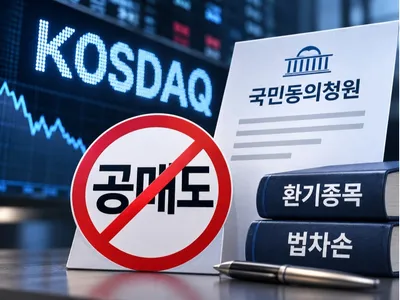
Hoban Group is suspected to have overtaken Hanjin Group Chairman Cho Won-tae as the top shareholder following additional share acquisitions in Hanjin Kal. In response, Chairman Cho has also moved to expand his stake by signing a 37 billion won share acquisition contract. Nevertheless, even if a shift in the largest shareholder materializes, several barriers remain before securing managerial control: the robust friendly stake backing Chairman Cho, an incumbent board devoid of Hoban-affiliated figures, and the ambiguous stance surrounding the Korea Development Bank's (KDB) 10.58% stake.
While the proxy tussle between the two sides has entered full swing, actual changes in management control are a separate matter. Should Hoban push for active management participation, it will need to secure support from other shareholders and gain entry into the board of directors. With the terms of four board members expiring next March, attention is naturally focusing on the upcoming appointment process for their successors.
Ultra-Tight Stake Race… Cho Won-tae’s Allied Bloc Holds Near 39%
As of July 10, Hoban Group’s stake in Hanjin Kal stood at 20.15%, trailing Chairman Cho and his related parties by 0.42 percentage points at 20.57%. Hoban subsequently purchased additional shares in the open market and filed for a corporate combination review with the Fair Trade Commission (FTC) last October. Although the exact volume of additional acquisitions has not been disclosed, speculation mounts that a change at the top of the shareholder registry has occurred.
Hanjin Kal announced on December 2 that whether a change in the largest shareholder has taken place has not yet been finalized, adding that it will re-disclose specific details once confirmed or by December 1.
Chairman Cho has also moved to cement his holdings. On December 2, he entered into an agreement to acquire 325,000 common shares of Hanjin Kal at 114,000 won per share, totaling 37.05 billion won. The transaction period is scheduled from December 3 to January 1 next year. Upon completion, his personal stake will rise from 5.75% to 6.23%, bringing the combined stake of his related parties to approximately 21.05%.
Chairman Cho's friendly faction presents the first major hurdle for Hoban. Combining the 20.57% stake held by Cho and his special affiliates with Delta Air Lines' 14.90% brings the total to 35.47%. Factoring in LX Pantos' 3.83%, the bloc reaches 39.30%. Even if Hoban ascends to the position of sole largest shareholder, wresting management control will prove arduous if these stakeholders continue to back Chairman Cho.
That said, friendly shareholders are not identical to the Cho family's special affiliates. There is no absolute guarantee that they will cast their votes in the same direction across every general meeting agenda. Hoban, for its part, has maintained its stated investment purpose as a "simple investment" thus far, reportedly voting in favor of Chairman Cho’s reappointment as an internal director at the general shareholders' meeting last March.
Expiring Board Terms Raise Stakes; All Eyes on KDB’s 10.58%
The board of Hanjin Kal comprises nine members—two internal directors and seven independent directors. Currently, there are no directors representing Hoban. A change in the largest shareholder does not automatically trigger a reshuffle of the incumbent board. For Hoban to exert genuine influence over management, securing board representation is imperative.
Next March, the terms of four directors will expire: Vice Chairman Ryu Kyung-pyo and independent directors Bae Sung-rye, Song Baek-hoon, and Hong Dong-pyo, all of whom were recommended by KDB. With nearly half of the entire board facing the end of their terms, a proxy showdown could erupt during the successor appointment process should Hoban pursue management participation.
In March of this year, Hanjin Kal removed the provision excluding cumulative voting from its articles of incorporation and trimmed the upper limit of board members from 11 to 9. Cumulative voting allows shareholders to concentrate voting rights—calculated by multiplying the number of shares held by the number of directors to be elected—onto a single candidate. Should Hoban field its own nominees, its chances of penetrating the board will hinge heavily on the number of directors up for election and how other shareholders exercise their voting rights.
Another crucial variable is the "3% rule" applied to the election of audit committee members. During the separate election of audit committee members, regulations cap the combined voting rights of the largest shareholder and related parties at 3%. Because this calculation differs fundamentally from standard director elections, the choices made by institutional investors such as the National Pension Service (NPS) carry immense weight. The NPS notably cast a dissenting vote against Chairman Cho's reappointment as an internal director last March.
KDB’s 10.58% stake stands out as yet another catalyst capable of restructuring the shareholder matrix. KDB injected 500 billion won into Hanjin Kal in 2020 to back Korean Air’s acquisition of Asiana Airlines. At the time, the state bank lent crucial support to Chairman Cho's defense of management control and has since maintained oversight over key management affairs pursuant to their investment agreement.
With the integration of Korean Air and Asiana Airlines slated for December this year, discussions have surfaced regarding the possibility of KDB recouping its investment. Should the bank opt to offload its stake, the identity of the buyer and the scale of the sale could drastically alter the stake gaps among major shareholders. Specific timelines and methods for any potential divestment have yet to be finalized.
The expiration of terms for the three KDB-recommended independent directors next March adds another layer of complexity. The ultimate trajectory of the management control battle will depend heavily on whether Hoban can successfully nominate its own candidates and garner outside support, and how KDB recalibrates its equity stake and board influence.