Tokyo Electron forecasts a $210 billion equipment market by 2027, anticipating 30% growth.
Samsung and SK equipment investments projected to rise 57%; SK hynix to provide 1.4 trillion won in support for local suppliers.
The global semiconductor equipment market is projected to grow by more than 30% by 2027. As the expansion of artificial intelligence (AI) infrastructure drives memory capacity increases and the advancement of cutting-edge processes, global equipment manufacturers are actively expanding their production capabilities. With Samsung Electronics and SK hynix also preparing for new production line investments, expectations for increased orders within the domestic semiconductor equipment industry are rising.
SK hynix plans to provide 1.4 trillion won to domestic material, component, and equipment (MCE) partners over the next five years and establish a joint verification facility in Yongin, which is expected to broaden the business foundation for the local equipment industry. The current trend involves not only the construction of new factories and process conversions in existing lines but also strengthened support for technology verification and commercialization.
Equipment Investment Concentrated in 2027; Production Expansion Post-2028
Japanese semiconductor equipment manufacturer Tokyo Electron recently projected the global wafer fabrication equipment (WFE) market to exceed $210 billion by 2027, a more than 30% increase from the estimated $160 billion in 2026. Applied Materials, one of the world's largest semiconductor equipment makers, also expects WFE demand in 2027 to rise by over 30% compared to 2026.
WFE primarily focuses on wafer manufacturing equipment and some wafer-level packaging equipment, though it does not encompass the entire back-end semiconductor equipment market.
Applied Materials reported $10.41 billion in revenue for the fourth quarter of fiscal year 2026, a 53% increase year-on-year. Revenue from the semiconductor systems segment also grew by 64% to $8 billion. As major clients provide demand forecasts for the next eight quarters and accelerate orders, Applied Materials has begun expanding its production capacity.
Gary Dickerson, CEO of Applied Materials, stated during the earnings call on the 12th, "Demand for advanced semiconductors is significantly outstripping supply. Multi-year investments in new production capacity are required to bridge the supply-demand gap."
In South Korea, Samsung Electronics' Pyeongtaek P5 and SK hynix's Yongin Y1 are expected to lead the increase in equipment investment next year. Shinhan Securities forecasts that the combined new DRAM investment for both companies, based on equipment intake, will increase by approximately 57% in 2027 compared to 2026.
Hana Securities estimated in an industry report on the 12th that equipment intake for SK hynix's Yongin Y1 and Micron's Idaho plant will begin in the first quarter of 2027, while Samsung Electronics' Pyeongtaek P5 is expected to start in the third quarter.
Even after equipment is brought into new factories, processes such as installation, test runs, and yield stabilization are required before actual production increases. Hana Securities expects the new factory capacity to contribute to supply in earnest from 2028 onwards. As equipment ordering and delivery precede the expansion of production capacity by semiconductor manufacturers, the investment effects may be reflected in the performance of domestic equipment companies first.
Order Backlog Up 135%; Expanding Beyond Front-End to HBM Equipment
The order backlogs and performance of domestic equipment companies have shown improvement since the first half of 2026. According to Shinhan Securities, the combined order backlog of four deposition equipment companies—Wonik IPS, TES, Jusung Engineering, and Eugene Technology—reached approximately 1.2 trillion won at the end of June, a 135% increase from the same period last year. The combined operating profit of six major equipment companies in the second quarter also rose 40% year-on-year to 132.1 billion won.
Park Hyun-woo, a researcher at Shinhan Securities, noted based on memory market conditions and order visibility that "it is too early to discuss a peak in orders and performance."
New DRAM production line investments are expected to drive demand for deposition, etching, and heat treatment equipment. As NAND flash stacking increases, the difficulty of etching and deposition processes rises, necessitating equipment replacement and additional investment during process transitions. Domestic front-end equipment companies such as Wonik IPS, Jusung Engineering, Eugene Technology, and TES are active in these areas.
In the HBM sector, the role of packaging and inspection equipment is growing. Demand for advanced packaging equipment, including TC bonding, is expected to rise alongside HBM production increases and product generation shifts, while the importance of inspection and measurement equipment is growing due to higher process precision.
Hana Securities projects that global DRAM production capacity will increase by 15% in 2027 compared to the previous year. Considering the expansion of HBM production, the growth in general DRAM capacity is estimated to be around 5%. It is expected that new factory investments and process conversions of existing lines will proceed simultaneously to respond to the expansion of AI memory production.
Changes in process technology are also stimulating equipment demand. DRAM is moving toward 4F² and 3D structures, while NAND flash faces key challenges such as stacking over 400 layers and the introduction of wafer bonding technology. Consequently, the scope of advanced process equipment, such as high-aspect-ratio etching, deposition, and hybrid bonding, is expected to widen.
SK hynix to Provide 1.4 Trillion Won in MCE Support; Lowering Barriers for Mass Production Verification
SK hynix announced on the 16th that it will invest 1.4 trillion won over the next five years to support the research and development, technology verification, mass production, and sales of domestic MCE partners. The plan aims to reduce the commercialization burden on small and medium-sized partners who previously struggled to verify performance in actual semiconductor production lines even after successful technology development.
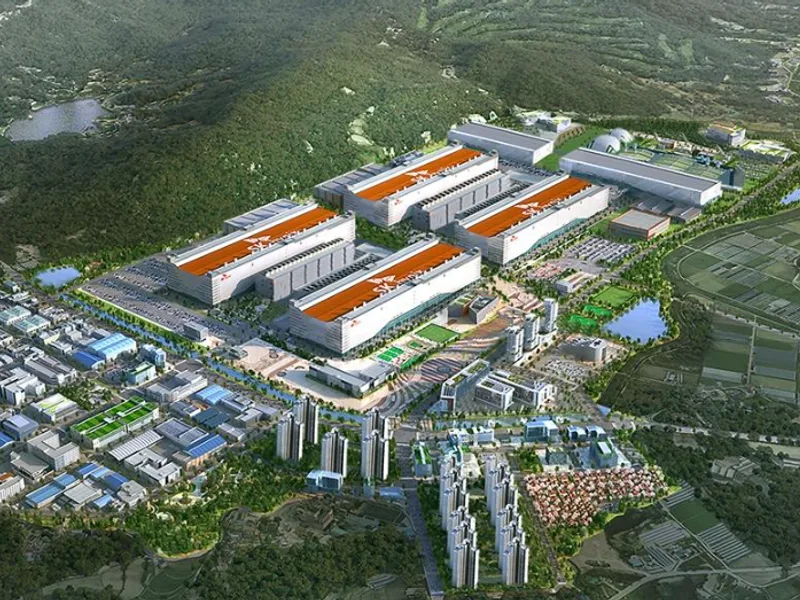
The 'Trinity Fab' to be built in the Yongin Semiconductor Cluster is a facility that concretizes these support measures. SK hynix, the government, and local municipalities will jointly invest a total of 874.6 billion won, with SK hynix contributing 443.2 billion won. A cleanroom of approximately 3,305 square meters will be established within the first Yongin fab, equipped with semiconductor process equipment such as etching, deposition, cleaning, and inspection tools.
After completing facility construction in May 2027, the company plans to begin verification services in the fourth quarter of the same year following equipment installation and testing. Partners will be able to evaluate the performance of materials and equipment in an environment similar to actual mass production lines using 12-inch wafers.
SK hynix will provide up to 50% of initial technology development costs and introduce a reward system based on performance and contribution, even for projects that fail or do not lead to procurement. It also plans to operate a 2 trillion won export supply chain reinforcement guarantee program in collaboration with financial institutions.
This support measure differs in nature from existing equipment investment expansion. While new fab construction increases ordering opportunities for equipment makers, the joint verification facility focuses on reducing the verification time and costs required for domestic MCE companies to apply their developed technologies to actual production lines.
In particular, for next-generation DRAM and high-stack NAND processes, securing yield and process stability is as critical as the performance of materials and equipment. For companies experiencing delays in the mass production verification stage after technology development, the joint verification facility will serve as a foundation to accelerate commercialization.
With the projected growth of the global equipment market in 2027, combined with new production line investments by Samsung Electronics and SK hynix and support for MCE technology verification, business opportunities for the domestic equipment industry are expected to expand further. However, the actual scale of order growth will depend on the individual technological competitiveness of each company and whether their equipment is adopted by clients.