Smart glasses controversy erupts just three days before the College Scholastic Ability Test; government launches emergency response to prevent AI-driven cheating.
Expansion into major banks and semiconductor firms drives sevenfold growth in wireless backdoor detection revenue.
Shares of Gisun (446840) hit the daily limit in early trading on the 16th. As concerns mount over the misuse of AI-powered smart glasses for academic dishonesty—highlighted by a top-scoring tax accountant candidate admitting to using AI for cheating—Gisun, a specialist in wireless eavesdropping and illegal filming detection, has come into the spotlight.
With the national college entrance exam scheduled for the 19th, the government has initiated emergency countermeasures. The presidential office held an emergency meeting on the 15th, ordering a comprehensive investigation into potential AI-related cheating across all national certification exams. Technical measures, including the deployment of dedicated AI-monitoring personnel at test sites and the use of thermal imaging cameras, are currently being reviewed.
While the need for enhanced security in corporations and financial institutions was previously highlighted by major hacking incidents involving companies like Coupang, SK Telecom, and KT, the focus has now shifted to the demand for physical security to ensure the integrity of national examinations.
Physical Security Competitiveness: Wireless Eavesdropping, Backdoor, and Illegal Filming Detection
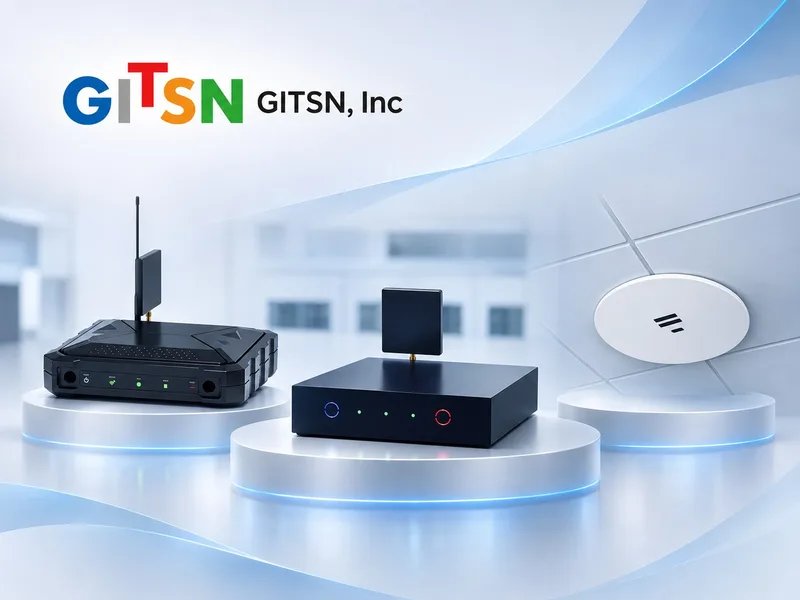
Gisun operates three core physical security businesses based on radio frequency (RF) technology: wireless eavesdropping security, wireless backdoor hacking security, and illegal filming detection.
Its wireless eavesdropping detection system, 'Alpha-I,' has been supplied to major government agencies, including the Presidential Office, the Ministry of National Defense, and the National Police Agency. The 'Alpha-H' wireless backdoor hacking detection system monitors for unauthorized wireless communication signals, such as those emitted by hidden spy chips within data centers and server rooms.
The 'Alpha-C' illegal filming detection system utilizes complex sensor technology, including thermal environment analysis and radar, to continuously monitor for installed or intrusive hidden cameras.
As the use of AI and ultra-small electronic devices for cheating becomes a reality, the potential for Gisun's detection technology to expand into the field of exam security is gaining significant attention.
Supply to Major Banks and Semiconductor Firms Drives Sevenfold Revenue Growth
Gisun is expanding its reach from public institutions to private sectors, including finance and semiconductors.
In October, the company announced that it had supplied its wireless backdoor detection system to 16 financial institutions, including the five major domestic banks: KB Kookmin, Shinhan, Hana, Woori, and NH NongHyup. It has also secured supply contracts with global semiconductor firms and is expanding its footprint into five overseas countries.
In the first half of this year, revenue from the wireless backdoor detection system reached 1.74 billion KRW, a sevenfold increase compared to the same period last year. This figure already exceeds the total annual revenue of 830 million KRW recorded in the previous year.
Total revenue for the first half reached 7.36 billion KRW, a 50.8% increase year-on-year, while operating losses were halved to 1.43 billion KRW. Notably, the company turned a profit in the second quarter, recording 4.9 billion KRW in revenue and 460 million KRW in operating profit.
In a report dated October 20, Kiwoom Securities projected that Gisun would turn an annual profit this year with 19.4 billion KRW in revenue and 700 million KRW in operating profit, with growth expected to continue into next year with 25 billion KRW in revenue and 3.9 billion KRW in operating profit.
Mandatory Illegal Filming Detection Next Year to Boost Growth
The growth foundation for the illegal filming detection business is also strengthening. An amendment to the 'Public Restrooms Act,' passed by the National Assembly in July, includes provisions to categorize illegal filming detection systems as mandatory safety management facilities. The amendment takes effect on February 12 next year.
Gisun estimates the potential market size to be approximately 290 billion KRW, based on the roughly 264,000 public restroom stalls nationwide.
Demand for data center security, driven by increased investment in AI infrastructure, serves as a mid-to-long-term growth engine. The key will be whether the company can leverage its supply track record in the financial and semiconductor sectors to secure large-scale data center projects.
Beyond the financial, semiconductor, and AI data center sectors, Gisun's physical security technology is now drawing attention in the realm of exam security. Whether this AI cheating crisis will lead to new business opportunities beyond a short-term stock price boost remains a point of keen interest.