January-September exports reached $1.41 billion, up 25.5% year-on-year
Samyang pursues overseas production, Nongshim boosts domestic export volume, and Ottogi drives new investments
As K-ramen exports continue to achieve record-breaking performances, South Korea's instant noodle industry is accelerating the expansion of its production bases. Companies are simultaneously bolstering domestic facilities to increase export volumes and securing overseas production hubs to meet local demand. Samyang Foods is constructing a local plant in China and pursuing a production base in Vietnam, while Nongshim has begun operations at its export-dedicated plant in Busan. Ottogi also plans to build a new export-focused production facility in Gumi, North Gyeongsang Province.
According to trade statistics from the Korea Customs Service on the 13th, instant noodle exports for the January-September period of 2026 reached $1.41 billion, representing a 25.5% increase compared to the same period last year. This figure accounts for approximately 93% of last year's annual export total of $1.52 billion.
Ramen export values have risen steadily from $765.41 million in 2022 to $952.40 million in 2023, and $1.25 billion in 2024, surpassing the $1.5 billion mark for the first time last year. With the upward trajectory continuing through September this year, the likelihood of breaking annual export records is growing increasingly high.
From Domestic Export Plants to Overseas Production: Expanding Manufacturing Bases
Samyang Foods is expanding its investments in China and Vietnam to secure overseas production bases. The company has invested approximately 2072 billion won in its Jiaxing plant in Zhejiang, China, which is being constructed with eight production lines capable of producing up to 1.13 billion units annually. The target operational timeframe is between late this year and early next year.
It also plans to build a new production plant in Tuong Thanh, Bac Ninh Province, Vietnam, with an investment of about 2186 billion won. Scheduled for completion in January 2029, the plant is designed to house up to eight production lines, initially starting with a single dried-noodle line before sequentially confirming additional lines.
Nongshim is expanding its domestic production facilities to boost export volumes. The Noksan export-dedicated plant in Busan, backed by a 2043 billion won investment, commenced operations on October 29th and can produce up to 500 million units annually across three production lines (two for bagged noodles and one for cup noodles).
Combined with the 700-million-unit export capacity of its existing Busan and Gumi plants, Nongshim's domestic export supply capacity reaches 1.2 billion units annually. The Noksan plant is designed to scale up to eight production lines to accommodate future export growth.
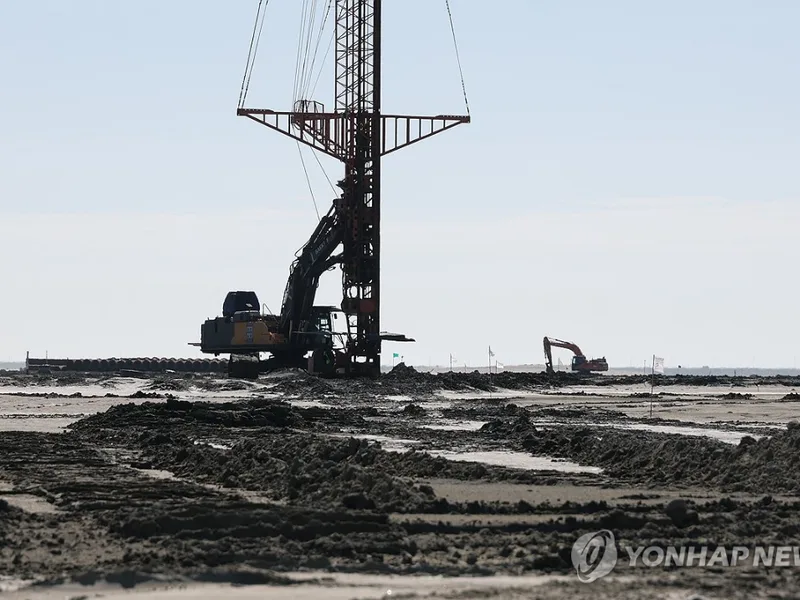
Ottogi, through its affiliate Ottogi Ramen, is building a new ramen production plant for exports in the Gumi 2nd National Industrial Complex in North Gyeongsang Province. The company plans to invest a total of 2000 billion won from 2026 to 2029, which is expected to create 120 new jobs upon completion.
Ottogi's products are currently exported to about 70 countries. This investment aims to secure a domestic production foundation to meet growing overseas demand and steadily increase export volumes.
From SNS Marketing to Localization: Differentiated Strategies for Overseas Markets
The three companies also differ in how they secure overseas consumers beyond facility investments.
Samyang Foods boosted its overseas recognition through social media marketing leveraging the spicy flavor of Fire Noodles (Buldak Bokkeum Myeon). The "Fire Noodle Challenge," which began spreading via YouTube in 2014, captured international consumer interest, and the brand gained renewed attention in 2024 when U.S. rapper Cardi B featured Carbonara Buldak.
As Buldak Bokkeum Myeon became a staple of social media content, brand awareness soared, enabling Samyang Foods to target major markets including the U.S., Europe, and China. Recently, the company has expanded its overseas supply foundation by securing production hubs in China and Vietnam.
Nongshim has intensified marketing tied to the local dining industry and cultural events. It collaborated with the New York Korean restaurant Atoboy to introduce menu items utilizing Shin Ramyun, and operated a "Shin Ramyun Pocha" at the Korean Cultural Center New York.
In 2025, Nongshim's overseas business accounted for 37.1% of total sales. Leveraging the global brand recognition of Shin Ramyun, Nongshim is broadening touchpoints with local consumers while expanding production capacity at its domestic export plants to secure overseas supply volumes.
Ottogi is focusing on lifting its relatively low overseas sales proportion. International sales reached 4097 billion won in 2025, representing 11.2% of total sales. The company has established a local sales subsidiary in Japan to build a direct distribution network and is expanding localized products and sales strategies in key markets like China.
By pursuing U.S. production facilities as well, Ottogi is broadening its overseas manufacturing and sales foundations simultaneously. The company has set a target to increase overseas sales to 1.1 trillion won by 2030, raising its share of total sales to the 30% range.
While Samyang Foods weights overseas local production and Nongshim focuses on expanding domestic export plants, Ottogi's increased facility investment to drive its overseas sales share is fueling a more active push into global markets by South Korea's instant noodle industry.