


Anthropic closes at $97.17, up from its $83 IPO price; S&P 500 records sixth straight day of losses.
Nvidia falls 3.30%, AMD drops 7.72%; markets eye next week's PCE amid concerns over potential Fed rate hikes.
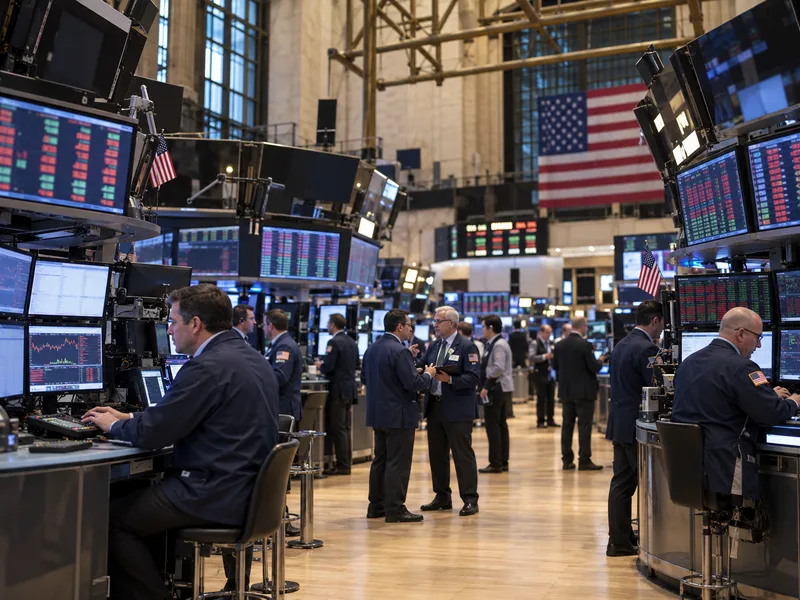
The three major U.S. stock indices all fell by more than 2% on November 19 (local time). While technology stocks showed strength early in the session ahead of Anthropic's trading debut, the indices turned downward as semiconductor stocks, including Nvidia and AMD, faced selling pressure. Anthropic pared its intraday gains to finish its first day of trading 17.07% above its IPO price.
The Dow Jones Industrial Average closed at 49,097.06, down 1,101.11 points (2.19%). The S&P 500 index fell 2.02% to 7,175.83, and the Nasdaq Composite dropped 2.25% to 23,879.20. The S&P 500 has now declined for six consecutive sessions, marking its longest losing streak since 2024. Over 90% of the index's constituents finished in the red.
Shares of Anthropic, the developer of the AI chatbot 'Claude,' opened at $111.50 on the Nasdaq. This was 34.3% higher than its final IPO price of $83, which had already exceeded the top end of its target range of $78. The stock closed at $97.17, approximately 13% lower than its opening price.
Anthropic increased its offering size from 825 million shares to 980 million shares during its roadshow. The total offering value, including new and existing shares, reached $81.34 billion before over-allotment, surpassing the $75 billion valuation set by SpaceX during its June IPO. This figure excludes a separate $26 billion private placement involving seven investors, including Google, Nvidia, and AMD.
Nvidia reported on the 17th that its revenue for the third quarter of fiscal year 2027 (ending October 25) rose 103% year-over-year. The company provided a fourth-quarter revenue forecast of $130 billion, plus or minus 3%, excluding potential revenue from Chinese data center computing. Despite rising as much as 4.7% during the session, Nvidia shares closed down 3.30% at $145.98, marking a six-day losing streak since the announcement of CEO Jensen Huang's resignation on the 12th. Analysts point to lingering concerns over AI investment burdens and leadership uncertainty.
AMD shares plunged 7.72% following a short-selling report by Hunterbrook Capital. Hunterbrook Media alleged that new versions of AMD firmware were repeatedly identified in server software updates from Chinese server manufacturer IEIT Systems, even after the company was placed on the U.S. Department of Commerce's export control list in March 2025. AMD told Reuters that the report distorted its business practices and trade relationships, asserting that it complies with U.S. export control regulations. According to Vanda Research, some retail investors sold existing AI holdings, such as AMD, to raise capital for Anthropic shares.
Broadcom also fell over 2%, and the Philadelphia Semiconductor Index closed down 2.41% at 9,419.72. AI cloud firms CoreWeave and Nebius dropped 6.11% and 9.39%, respectively.
Initial jobless claims saw a slight increase, and manufacturing expansion in the Philadelphia region slowed. For the week ending November 14, initial jobless claims were 203,000, up 1,000 from the revised figure of the previous week. The Federal Reserve Bank of Philadelphia's November manufacturing index fell from 20.9 the previous month to 6.3.
The possibility of additional interest rate hikes by the Federal Reserve remained a burden on investor sentiment. According to the minutes of the October Federal Open Market Committee (FOMC) meeting released the previous day, nearly all participants suggested that further hikes might be appropriate if inflation and employment move according to the baseline forecast. Chicago Fed President Austan Goolsbee noted the potential for AI to boost long-term productivity, though he cautioned that in the short term, AI investment and increased demand could drive inflation higher. The 10-year U.S. Treasury yield edged down to 5.04% from 5.07% the previous day. The October Personal Consumption Expenditures (PCE) price index, a key metric for the Fed, is scheduled for release on the 25th at 10:30 PM KST.