Sungkwang Bend, Taekwang, and SeAH Steel secure actual orders in Canada; additional orders anticipated in Alaska
While total U.S. steel imports fall 13.4%, South Korean shipments jump 44%, drawing local industry fire over steel pipes
The expansion of North American liquefied natural gas (LNG) and energy infrastructure investments is emerging as a fresh lifeline for South Korea's steel industry. Korean suppliers have recently landed a series of steel pipe and pipe fitting supply contracts for Canadian LNG projects, while POSCO International has agreed to supply a portion of the steel materials required for gas pipe manufacturing for the Alaska LNG project in the United States. However, the surge in South Korean steel imports has prompted the U.S. steel industry to demand countermeasures, specifically targeting steel pipes and tubing. This dual dynamic highlights both expanding business opportunities in North America and mounting concerns over rising entry barriers in the U.S. market.
According to the American Iron and Steel Institute (AISI), U.S. imports of South Korean steel rose 44% during the 12-month period from October of last year through September of this year, compared to the preceding 12-month period. Over the same timeframe, total U.S. steel imports contracted by 13.4%. The U.S. steel sector has directly singled out the increase in South Korean steel pipe imports, urging Washington to launch an investigation.
On the domestic stock market, expectations of additional orders from the Alaska LNG project are being priced into shares of steel pipe and pipe-fitting makers. Aside from POSCO International’s steel supply agreement, however, direct supply contracts between local steel pipe and fitting manufacturers and the Alaska project have yet to be officially confirmed. Furthermore, the South Korean government’s investment plans remain unfinalized, underscoring the need to distinguish between market anticipation and actual project execution.
Securing Orders in Canada, Anticipating Further Alaska Bids
The North American LNG investment boom is translating into tangible orders for South Korean manufacturers. LNG terminals utilize "fittings" to connect or redirect pipelines, while long-distance gas transmission relies on heavy-duty steel pipes.
Sungkwang Bend and Taekwang, prominent domestic players in the pipe-fitting sector, have secured supply volumes for Canadian LNG projects. In August, Sungkwang Bend signed a fitting supply contract worth approximately 25.5 billion won ($18.3 million) for the second phase of a Canadian LNG project, accounting for 10.38% of its revenue last year.
Shinhan Securities estimates that Taekwang also secured sub-10 billion won orders from the same project. In a report released on the 25th of last month, Korea Investment & Securities estimated Taekwang’s third-quarter standalone order intake at 89.6 billion won, explaining that orders from the U.S. are helping to offset a drought in Middle Eastern procurement. However, these figures have not yet been finalized in earnings reports.
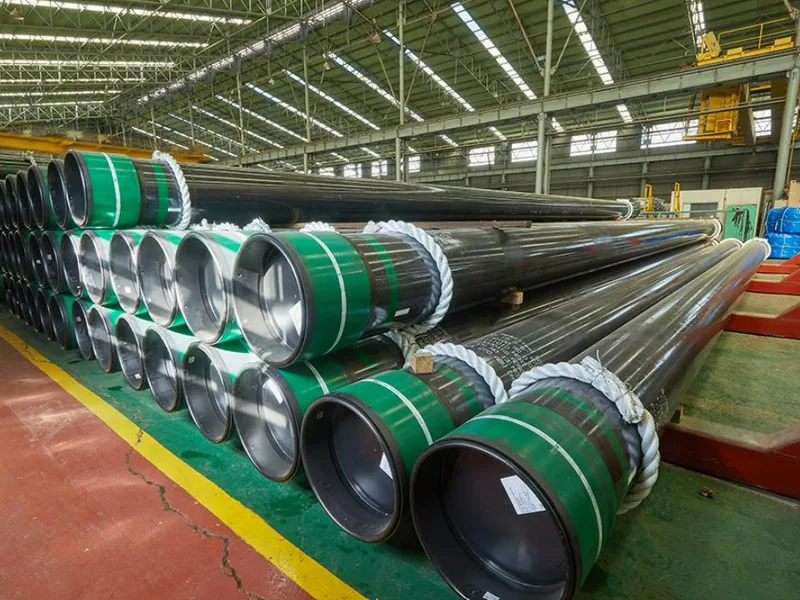
In the steel pipe sector, SeAH Steel secured a contract worth roughly 98.1 billion won to supply welded carbon steel pipes for a Canadian natural gas pipeline project. The contract, originally signed last December, saw its delivery deadline extended from September to the end of November this year. While Nexteel and Husteel have also entered the U.S. energy-grade steel pipe market, direct orders for the Alaska LNG project have not been confirmed.
Participation in the U.S. Alaska LNG project has become more concrete for POSCO International. Glenfarne, the project developer, announced in January that POSCO International agreed to supply a portion of the steel materials designated for gas pipe manufacturing. POSCO International has also pursued equity investment in the project and long-term LNG off-take agreements.
Phase 1 of the Alaska LNG project requires approximately 725,000 metric tons of steel pipe. Glenfarne has signed preliminary supply agreements for about two-thirds of this volume with international makers including Greece's Corinth Pipeworks and Germany's Europipe. Because POSCO’s supply of raw steel materials and foreign firms' manufacturing of finished steel pipes constitute distinct business segments, it remains undecided whether domestic steel pipe manufacturers will secure additional volumes.
South Korean Imports Rise 44%, Pressuring U.S. Industry for Further Regulations
Even as the North American energy market expands, pushback from the U.S. steel industry is taking concrete shape. Despite the U.S. imposing steep tariffs of 50% on steel products, South Korean import volumes have climbed over the past 12 months.
Data released by the AISI on the 27th of last month showed that U.S. imports of South Korean steel in September reached 519,000 U.S. short tons (approx. 907 kilograms per ton), marking a 21% increase from the previous month. Cumulative imports over the past 12 months hit 3.957 million short tons, making South Korea the largest exporter of steel to the United States during this period.
On September 28, the U.S. steel industry formally petitioned the government for a response. Trade associations, including the AISI, urged the U.S. Department of Commerce and the Office of the United States Trade Representative (USTR) to investigate the root causes of the rising South Korean steel inflows and take corrective action, explicitly citing the growth in structural steel as well as pipe and tube products.
U.S. industry representatives argue that the influx of South Korean steel threatens to undermine the protective efficacy of existing tariff measures. While the U.S. government is expanding energy infrastructure investments, domestic steelmakers are raising red flags over import volumes altogether.
Such developments could pose a burdensome headwind for South Korean companies competing for future orders. The introduction of additional import restrictions or an increased emphasis on local sourcing could erode the price competitiveness of domestic steel pipe makers. Nevertheless, because steel pipes and fittings involve different products and regulatory standards, the potential impact on pipe-fitting specialists like Sungkwang Bend and Taekwang must be evaluated separately.
Furthermore, rising import volumes do not necessarily translate into improved profitability for domestic suppliers. Punitive tariffs continue to weigh heavily on export pricing and profit margins. The 44% surge represents a comparison between the most recent 12-month period and the preceding 12 months, which differs from the export growth rate calculated strictly from the post-tariff implementation period.
Ultimately, whether confirmed orders in Canada will expand to the Alaska LNG venture depends on subsequent procurement tenders and Washington's trade policy responses.