Democrats Secure Majorities in House, Senate, and Governor Seats; Texas Regime Change Sparks Caution on Data Center Investments
Automakers Eye Tariff Relief, Biotech Focuses on Interest Rate Variables; Analysts Urge Distinction Between Policy Hype and Earnings Recovery
The Democratic "blue tsunami" in the US midterm elections—securing majorities in both chambers of Congress and over half of governorships—is upending sector investment strategies across global stock markets. The semiconductor sector, which has rallied on the back of surging investments in artificial intelligence (AI) data centers, is now confronting heightened policy uncertainty. Conversely, expectations are mounting that renewable energy and battery sectors will counter potential rollbacks in eco-friendly policies, while biotech has emerged as a focal point for sentiment improvement driven by falling Treasury yields.
The core takeaway for domestic equities from this election is a shift toward sector rotation. This marks the opening of a phase where investors must move beyond a narrow, semiconductor-centric view and simultaneously evaluate policy shifts, interest rates, earnings, and individual industry calendars. However, the Democrats' capture of Congress does not immediately translate to the complete repeal of the Trump administration's agenda. With the president’s veto power and the administration’s trade authorities remaining intact, a time lag between expectations and actual institutional change is inevitable.
Texas Upends AI Investments: Big Tech Resilience Amid Semiconductor Plunge
In this election, technology investors closely watched Texas. Democratic candidate Gina Hinojosa’s victory over Republican Governor Greg Abbott raises the likelihood of policy shifts surrounding data center construction, power and water consumption, and tax incentives. Hinojosa campaigned on a platform to pause new data center construction until new regulations are established.
Texas is a central hub concentrated with US data center expansion plans. According to Wells Fargo analysis cited by CNBC, approximately 27% of planned data center power capacity in the US is concentrated in Texas. This has sparked concerns that tighter new permitting and power supply conditions could affect not only data center construction timelines but also the ordering schedules for servers, memory, and networking equipment.
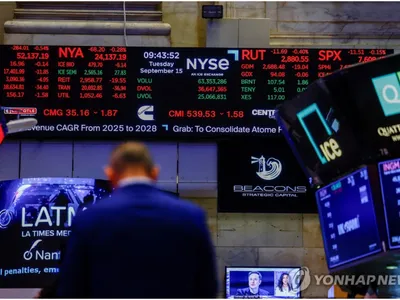
This cautious sentiment was directly reflected in semiconductor stock prices. In the US market on the 4th (local time), Micron Technology and NVIDIA declined, and the Philadelphia Semiconductor Index fell by approximately 3.1%. In contrast, the Dow Jones Industrial Average rose 3.04%, while the S&P 500 and Nasdaq gained 1.58% and 1.44%, respectively, creating a divergence between semiconductor weakness and overall market strength.
Even within the AI industry, stock performance varied. While legacy Big Tech firms such as Amazon, Meta, Alphabet, and Microsoft remained strong, data center operators like Applied Digital and Iren plunged. Restrictions on new data center construction could escalate the burden on companies pouring massive capital into facility expansion. Analysts note that individual exposures will vary depending on reliance on greenfield capital expenditures.
Regulatory momentum targeting data centers did not originate with this election. Governor Abbott suspended new data center connections to the power grid in August, followed by a temporary halt on environmental permits in September. Hinojosa’s victory heightens concerns that these restrictions could evolve into a more comprehensive approval freeze tied to resident protection legislation.
At the same time, it is premature to equate the possibility of tighter data center regulations with the collapse of the AI investment boom. Analysts point out that projects with finalized financing, contracts, or ongoing construction will not be halted solely due to election outcomes. In the short term, the pace of approvals for new projects and cost burdens will take precedence over existing orders. For domestic chipmakers, investors must distinguish between broad industry downturns and stock corrections driven by policy uncertainty.
Democratic Landslide Shifts Expectations: Batteries and Renewables Come into Focus
Batteries and renewable energy are sectors where policy expectations are concentrating following the Democratic victory. Given that Democrats have championed clean energy tax credits and support for electric vehicles (EVs) and renewables, expectations are growing that they could check the rollback of related frameworks or push for reinstated support. Domestic corporations with US-based manufacturing footprints could also feel the ripple effects of these policy shifts.
However, market expectations priced into stock prices and actual earnings recoveries are separate issues. For the battery sector, investors must verify specific details of policy support alongside customer order flows, factory utilization rates, and profitability improvements. Similarly, in renewable energy, the critical question is whether discussions on expanded support will translate into actual project groundbreakings and equipment orders.
Energy storage systems (ESS) carry dual and conflicting variables. While stricter environmental policies are favorable, the tempered pace of data center investments forces a reassessment of power infrastructure demand forecasts. Therefore, rather than grouping batteries and ESS together as a single policy beneficiary, investors should distinguish between revenue structures tied to EVs, power grids, and data center-linked businesses.
Biotech requires a segmented evaluation of post-election policy expectations and interest rate variables. While some forecast that the Democrats' control of Congress could elevate interest in the healthcare sector, it is difficult to map this directly as a broad-based windfall for domestic new drug developers. Shifts in US healthcare policy and individual biotech firms' clinical trials, approvals, and technology export milestones remain distinct investment variables.
The decline in US Treasury yields as the election results were digested provides a supportive backdrop for growth stock sentiment. However, a single day’s drop in bond yields should not be hastily linked to policy decisions at the December Federal Open Market Committee (FOMC) meeting. Investors must monitor how future oil prices, inflation, and employment data alter market expectations regarding the rate-cut path.
Biotech stock trajectories will likely diverge based on individual clinical and regulatory schedules and licensing achievements, rather than oil prices and market rates alone. Crucially, rather than rallying on the common theme of a "Democratic victory," stock differentiation will depend on clinical timelines, approval prospects, capital reserves, and the quality of licensing agreements.
Tariffs Remain in Trump’s Hands: Complex Calculus for Shipbuilding and Autos
Automotive stocks could see rising expectations for tariff relief driven by Congress’s strengthened check on trade policy. However, even if Democrats push legislation to roll back tariffs, President Trump retains veto power, and the executive branch maintains broad trade authorities. The investment thesis for autos is more soundly anchored in the "potential easing of trade pressures" rather than the "certainty of tariff repeal."
For the shipbuilding industry, which has priced in expectations of cooperation with the Trump administration, investors must assess policy continuity post-election. However, there are limits to viewing the US-Korea shipbuilding cooperation initiative, MASGA (Make American Shipbuilding Great Again), through a partisan lens. Restoring the global competitiveness of the US shipbuilding and maritime sectors is a bipartisan objective pursued by both Democrats and Republicans.
Even with Democrats controlling Congress, the broad framework of cooperation will likely remain intact, but the actual scope of benefits must be parsed separately. Depending on whether overseas construction of US naval vessels is permitted and on local investment terms, domestic shipbuilders’ opportunities could expand into new ship orders or narrow down to maintenance, repair, and overhaul (MRO), block supplies, and local shipyard operations.
Robotics and entertainment are best approached through the lens of individual industry calendars and business execution rather than direct US election benefits. For robotics, investors should monitor expectations for new product and business strategy unveilings ahead of CES in January, while discerning whether exhibition interest actually converts into customers and revenue.
For entertainment, diplomatic schedules surrounding the Asia-Pacific Economic Cooperation (APEC) summit in Shenzhen, China, in November are a key focal point. However, the mere hosting of the summit does not guarantee an expansion of concerts or content distribution within China. If related expectations are priced into stocks, investors must confirm whether actual performance approvals and business announcements follow.
Cosmetics is a sector best evaluated through the lens of individual corporate earnings rather than novel political catalysts. The primary barometer is whether export growth and expanding distribution channels translate into improved profit margins alongside top-line sales.
Construction is an area where easing tensions and expectations of an end to wars surrounding Iran and Ukraine are frequently cited. It is premature to forecast the timing of a truce or reconstruction orders based solely on US midterm election outcomes. For reconstruction expectations to mature into a concrete investment thesis, subsequent steps such as financial backing, project public notices, and contract signings must be confirmed.
Cryptocurrencies should also be treated as a separate asset class defined by its own pricing and supply-demand dynamics, rather than prematurely labeling short-term rebounds as election windfalls. Relying on a single day's market action to gauge overarching policy directions or trend reversals remains premature.