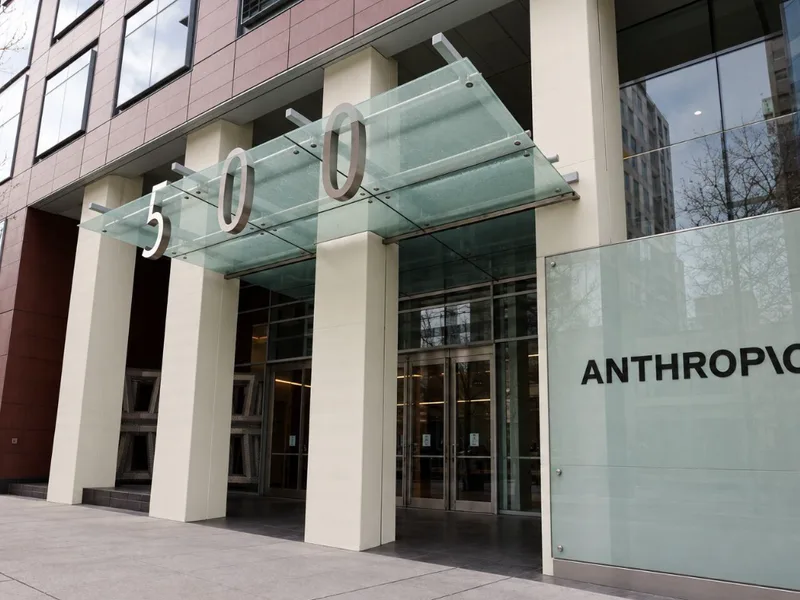
Six Japanese brokerage firms participate in public offering; South Korean access limited to private placement.
IPO priced at $83 per share, raising $107.3 billion; concerns mount over initial price volatility.
Artificial intelligence firm Anthropic has launched one of the largest initial public offerings (IPO) in history, highlighting a stark divide in access between Japanese and South Korean investors. While approximately $3 billion worth of shares were made available to the public in Japan, South Korean retail investors were excluded from the public subscription process. Consequently, domestic investors will be forced to purchase shares directly on the Nasdaq after the listing, exposing them to significant risks from initial price volatility.
According to U.S. Securities and Exchange Commission (SEC) filings and Reuters, Anthropic set its IPO price at $83 per share, a 6.4% premium over the initial target range of $70 to $78.
The offering size was expanded from 825 million shares to 980 million, bringing the IPO value to approximately $81.3 billion. When combined with $26 billion in separate private placements, the total capital raised reaches $107.3 billion, surpassing the record set by SpaceX in June.
Japan secures $3 billion in public offering; South Korea restricted to private placement
Anthropic offered 36.1 million Class A common shares in Japan, valued at approximately $3 billion. Six local financial institutions, including Mizuho Securities, Goldman Sachs Japan, Rakuten Securities, and SBI Securities, acted as subscription channels for investors.
In contrast, no public offering was conducted for retail investors in South Korea. Anthropic’s prospectus filed with the SEC states that Class A shares are not registered under South Korean capital market laws and that domestic sales are restricted to private placements. The document further notes that, barring specific legal exemptions, the company cannot publicly solicit or sell shares to the general public in Korea.
Domestic brokerage firms were also excluded from the global underwriting syndicate, which included major players like Goldman Sachs and Morgan Stanley. Despite growing interest in mega-cap overseas IPOs, South Korean retail investors remain unable to secure shares at the offering price.
The specific reasons for South Korea's exclusion from the public offering remain undisclosed. Given that international offerings are subject to complex national securities regulations, registration requirements, and underwriting structures, it is difficult to attribute the outcome solely to the actions of domestic firms.
Anthropic is scheduled to begin trading on the Nasdaq under the ticker symbol 'ANT' on the 19th (U.S. local time). Given the high demand observed during the subscription process, domestic investors may face prices significantly higher than the $83 IPO price if buying pressure intensifies upon listing. Conversely, if initial enthusiasm wanes, investors could face immediate losses.
Valuation concerns also persist. Anthropic’s fully diluted valuation stands at approximately $1.5 trillion, a 55% increase from its $965 billion valuation during a private funding round in May.
Anthropic reported an annualized revenue of $81 billion as of late October, driven by rising demand for enterprise AI. However, the company recorded an operating loss of $567 million in the third quarter, with infrastructure spending reaching approximately $9 billion in the first half of the year. Despite rapid revenue growth, the market is closely watching how the company’s massive capital expenditures will impact its valuation post-listing.
SpaceX, which saw its share price surge immediately after its IPO before experiencing a sharp decline, serves as a cautionary tale regarding high volatility. As the success of an IPO does not guarantee sustained stock performance, South Korean investors who missed the public offering must exercise extreme caution regarding entry timing and price.
According to Reuters, Armina Rosenberg, a portfolio manager at Minotaur Capital, stated, "A single listing does not end the debate." She noted that future earnings reports will serve as a critical test for the economic sustainability of the AI business.