Expansion of Market Access in Retail, Tourism, and Content: Optimism Following Breakthrough After 8 Years and 8 Months
Full Lifting of Restrictions Still Pending: Focus Shifts to Implementation and Local Licensing
As signs emerge that the Chinese market may be reopening, South Korean retail, travel, and beauty industries are growing increasingly optimistic. The substantive conclusion of follow-up negotiations on services and investment under the South Korea-China Free Trade Agreement (FTA), reached after eight years and eight months, has fueled expectations for deeper market penetration and increased consumption of Korean cultural products. However, as the unofficial ban on Korean cultural content (Hallyu) has not been fully lifted, industry players remain cautious, closely monitoring the scope of actual market opening and subsequent administrative procedures.
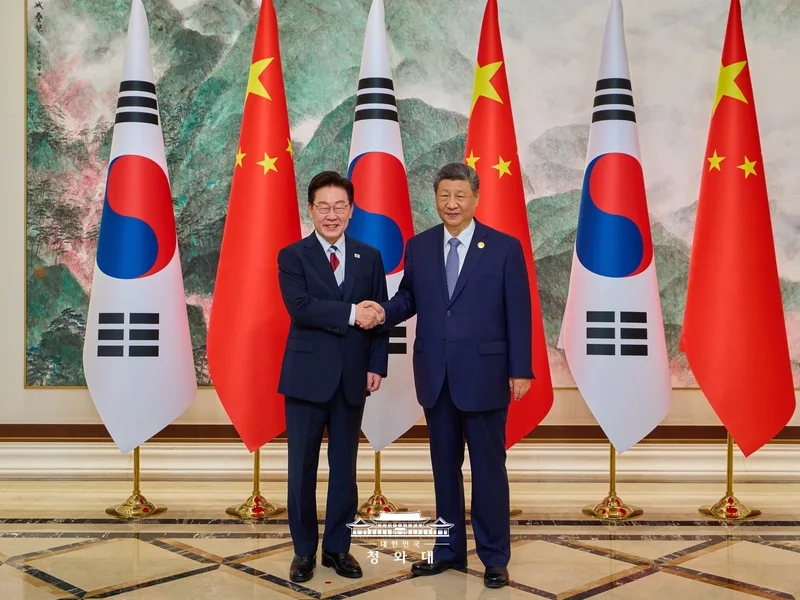
The Ministry of Trade, Industry and Energy announced on the 18th that the substantive conclusion of the FTA follow-up negotiations was declared during the South Korea-China summit held in Shenzhen. This milestone comes eight years and eight months after negotiations began in March 2018. Remaining steps include technical text refinement, legal review, formal signing, and ratification.
The agreement includes provisions for market opening and institutional frameworks in retail, tourism, content, and investment. In the retail sector, South Korean companies seeking to operate more than 30 stores in China will now be permitted to operate independently without the need for local joint ventures. However, actual expansion will depend on individual business strategies, local licensing, and market conditions.
In tourism, an institutional basis has been established for South Korean travel agencies operating in 23 Chinese regions to arrange overseas travel for both Chinese and foreign nationals. In the content sector, China has pledged Most-Favored-Nation (MFN) treatment for films and games, and agreed to apply non-discrimination principles to pre-screening processes for online games and movies. The scope for co-production has also expanded from films to include dramas, animations, variety shows, and documentaries. The investment chapter includes protections against forced technology transfers and enhanced investor safeguards.
Notably, the agreement does not include a mandatory clause requiring China to approve performances by South Korean artists. The presidential office stated that while there are no explicit regulations banning such performances, they intend to continue discussions with China to broaden opportunities for cultural exchange.
Shifting Consumption Patterns of Chinese Tourists and Signs of Recovery in Cosmetics Exports
While the industry welcomes the improvement in bilateral relations and market opening, it remains cautious about whether these developments will translate into tangible performance and on-the-ground changes.
Kiwoom Securities projects that improved relations will have a positive impact on the cosmetics sector. Increased access to China's travel, content, and retail markets is expected to boost the influx of Chinese tourists and support the recovery of cosmetics exports. Expectations are particularly high as women in their 20s and 30s emerge as a key consumer demographic, and exports of cosmetics to China have returned to growth for the first time in four years.
Recovery is also evident in tourism data. Since the resumption of Chinese group tours to South Korea in August 2023, the number of Chinese arrivals has steadily increased. According to immigration statistics, 5.47 million Chinese visitors entered South Korea between January and September of this year, already surpassing the total for the previous year. Women in their 20s and 30s accounted for 47% of this growth.
Their consumption patterns differ from traditional group tourists. Surveys indicate that 95.3% of female Chinese tourists in their 20s and 30s traveled independently, with 69.6% gathering information via social media or video platforms. Content featuring Korean cosmetics and popular brands is actively shared on Chinese social media platforms like Xiaohongshu.
This shift is reflected in domestic retail sales. While foreign sales at Olive Young surged 47% year-on-year from January to August, duty-free shop sales to foreigners grew by only 3.2% in the first half of the year, according to the Korea Duty Free Shops Association. This suggests a trend of younger, independent travelers favoring local retail shops over traditional duty-free outlets.
Cosmetics exports are also showing signs of recovery, reaching $1.66 billion from January to October, a 2.9% increase year-on-year. This marks the first growth in four years. Monthly exports have risen for five consecutive months since June, with October showing a 31.6% increase compared to the same month last year.
However, a full recovery to historical levels will take time. Export figures for the first ten months of this year represent only about 35% of the $4.73 billion recorded in 2021. Furthermore, the current agreement focuses on lowering entry barriers in services and investment rather than reducing tariffs on goods, meaning it will not lead to an immediate surge in cosmetics exports. Success will ultimately depend on the implementation of the agreement and the practical application of local licensing and regulatory processes.