



Developing a once-a-daily oral medication… targeting FDA filing in 2027 and approval in 2028. Commercialization revenues to be reinvested into follow-on pipeline candidates… aiming for 1 trillion won in sales by 2030.
Leading a novel drug through global Phase 3 clinical trials independently demands immense capital and time, yet the experience accumulated along the way serves as a vital corporate asset. The capabilities secured through multi-national clinical operations, data management, and regulatory preparation can be effectively leveraged for subsequent drug development. Market Times explores domestic biotech companies independently tackling global Phase 3 trials and their drug candidates, tracing the entire commercialization journey from clinical trials to regulatory approval and manufacturing readiness.
The first company under the microscope is AriBio, developer of the oral Alzheimer’s disease treatment candidate "AR1001." Having completed global Phase 3 trials involving 1,535 early-stage Alzheimer’s patients across 13 countries, the company is bracing for the release of its top-line results in November. AriBio has already initiated New Drug Application (NDA) documentation and manufacturing preparations, targeting a U.S. Food and Drug Administration (FDA) filing in 2027 and approval in 2028.
November Data Reveal… Targeting First-Line Treatment for Early Alzheimer’s
While AR1001 targets early-stage Alzheimer's much like Leqembi and Kisunla, its mechanism of action is distinct. Whereas the two antibody therapies directly target amyloid-beta, AR1001 is designed to inhibit PDE5 enzyme activity, inducing multiple therapeutic effects including enhanced cerebral blood flow, neuroprotection, and the suppression of tau protein hyperphosphorylation.
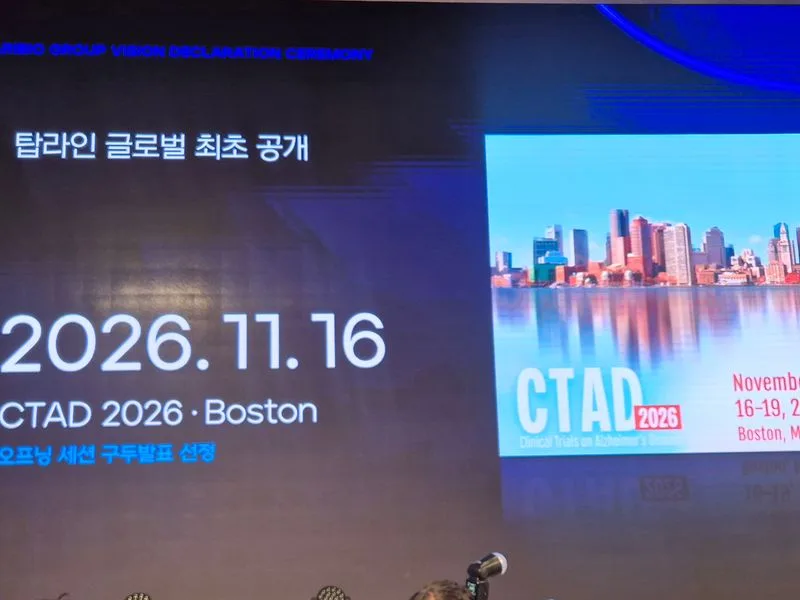
The linchpin of commercialization lies in the results of the global Phase 3 trial, dubbed "POLARIS-AD." The top-line data are scheduled to be unveiled for the first time on November 16, 2026, at the Clinical Trials on Alzheimer's Disease (CTAD 2026) conference in Boston, USA. Fred Kim, head of AriBio’s U.S. branch, explained that the timing was finalized following consultations with partners such as Jiangsu Hengrui Pharmaceuticals, taking into account the conference's embargo policies.
The company reported a Phase 3 discontinuation rate of 12.2% and an extension study participation rate of 95.5%. Kim emphasized that these figures reflect sustained patient engagement, and that the expertise and operational capabilities gained from conducting global Phase 3 trials will serve as invaluable assets for developing subsequent new drugs.
In analyzing the data, attention is focused not only on the overall patient cohort but also on the therapeutic efficacy within the monotherapy subgroup. This is to secure the empirical basis for positioning AR1001 as a first-line treatment for its initial target indication: early-stage Alzheimer's disease. Kim explained that to develop a therapy applicable from the mild cognitive impairment stage caused by Alzheimer's, it is crucial to confirm meaningful results within the monotherapy group as well.
From Data Verification to Manufacturing… Parallel Preparation for FDA Approval
The company has also poured resources into enhancing the reliability of the data intended for the regulatory filing. AriBio utilized specialized contract research organizations (CROs) across various fields while conducting evaluator training and cross-verification of data. By establishing an in-house clinical monitoring team at its U.S. branch and building an internal management system, the company directly participated in trial execution and data auditing.
Kim also cited the collaboration with diagnostics developer Fujirebio as evidence of data quality. He explained that as Fujirebio’s Alzheimer's blood diagnostic device underwent the FDA approval process, the quality of AR1001’s Phase 3 clinical data was indirectly validated as well.
Alongside data validation and analysis, AriBio is collaborating with partners to prepare NDA documentation. On the manufacturing front, the company stated that it has completed the production of validation batches required for regulatory filings and has entered the stability evaluation phase. Commercial drug manufacturing will leverage contract development and manufacturing organizations (CDMOs) in India and the United States, while production in China is slated to expand stepwise following regulatory approval and the commencement of sales.
Targeting 1 Trillion Won in Sales by 2030… Reinvestment into Follow-On Pipelines
The company anticipates that translating these preparations into commercialization will drive growth in contract-based revenues. Kim revealed that upfront and milestone payments received through licensing and option agreements have already surpassed 150 billion won. AriBio's overarching goal is to achieve 1 trillion won in sales by 2030 by securing subsequent milestone payments tied to regulatory approvals and commercial sales, as well as recurring product revenues. The strategy is to reinvest these proceeds into follow-on drug development, establishing a self-sustaining financial foundation for continuous R&D.
Research and development will proceed on dual tracks: expanding the indications for AR1001 and securing a pipeline of successor candidates. Starting with early-stage Alzheimer's, AR1001 is slated for expansion into stroke, Parkinson's disease, vascular dementia, and traumatic brain injury. Preclinical studies for combination therapies with other treatments are also underway, with specific details to be disclosed later in consideration of patent and business strategies.
Among follow-on candidates, the dementia with Lewy bodies treatment "AR1005" is currently undergoing Phase 2 clinical trials, with top-line results targeted for 2027. Development will also continue for "AR1004," a candidate for mild cognitive impairment that has secured Phase 2 Investigational New Drug (IND) clearance. Furthermore, the company plans to expand its pipeline by discovering novel candidates utilizing its proprietary artificial intelligence (AI) platform, "ARIDD," and evaluating in-licensing opportunities for multi-targeted drugs.
As it broadens its development scope, the company will also harness the capabilities of its affiliate network. By combining AriBio Lab's research expertise in immunology and neuroinflammation with AriBio’s global clinical and regulatory experience, the company aims to advance Alzheimer's vaccine development and evaluate combination therapy candidates. Collaborations with AriBio Holdings will focus on building an AI data infrastructure to leverage research and clinical datasets.
AriBio is developing AR001 with the vision of enabling patients to maintain their treatment regimen with a single daily oral pill at home. This design aims to alleviate the burden of hospital visits for patients and their families, while eventually facilitating use in primary care settings and medically underserved regions. Marking the culmination of 16 years of R&D, Kim stated that the company will rigorously review clinical data, transparently disclose findings as they are, and meticulously prepare for subsequent development phases.



