



First immunotherapy-based adjuvant therapy for stage III dMMR colon cancer
Phase 3 clinical trial demonstrates a 50% reduction in risk of recurrence or death; 3-year disease-free survival rate reaches 86.3%
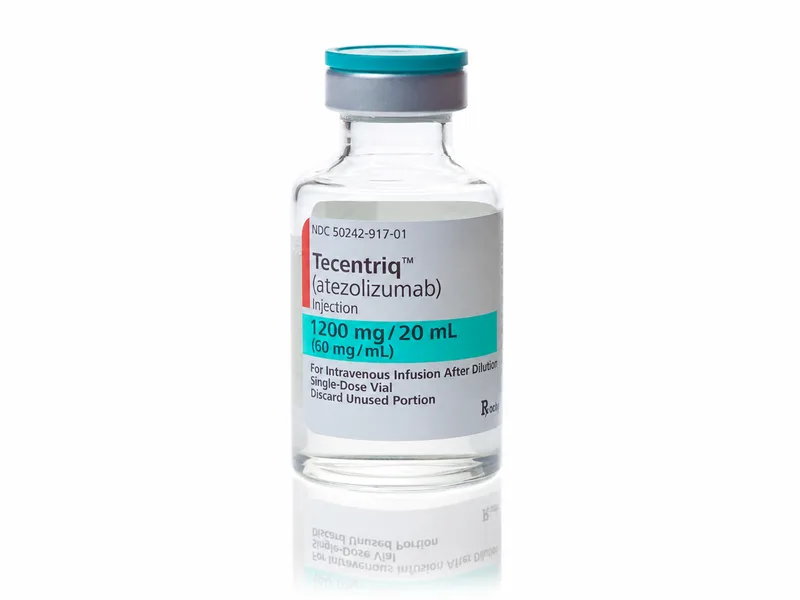
Roche’s immunotherapy Tecentriq has received U.S. regulatory approval as a postoperative adjuvant therapy for patients with specific forms of stage III colon cancer. This approval introduces a new treatment option that combines immunotherapy with standard chemotherapy to lower the risk of recurrence following tumor resection.
On the 8th (local time), the U.S. Food and Drug Administration (FDA) approved the use of Tecentriq in combination with fluoropyrimidine and oxaliplatin as an adjuvant treatment for stage III colon cancer patients with deficient mismatch repair (dMMR). The approval covers both the intravenous formulation of Tecentriq and the subcutaneous version, "Tecentriq Hybreza." According to Genentech, a member of the Roche Group, this is the first time an immunotherapy-based adjuvant treatment has been approved for this patient population.
dMMR refers to a condition where cells fail to correctly repair DNA errors that occur during cell division. Such tumors accumulate mutations, which can make them more recognizable to the immune system. According to the Mayo Clinic, approximately 15% of all colon cancers are classified as dMMR. The standard postoperative adjuvant treatment for stage III colon cancer has historically been chemotherapy based on fluoropyrimidine and oxaliplatin, regardless of MMR status.
The FDA approval was based on the Phase 3 'ATOMIC' clinical trial, which evaluated the efficacy of adding Tecentriq to standard chemotherapy in 712 patients with stage III dMMR colon cancer who had undergone surgery. The chemotherapy regimen used in the study was mFOLFOX6, consisting of fluorouracil (a fluoropyrimidine drug), oxaliplatin, and leucovorin.
Patients in the combination therapy arm received mFOLFOX6 plus Tecentriq for six months, followed by an additional six months of Tecentriq monotherapy. The control arm received mFOLFOX6 alone for six months. The primary endpoint was disease-free survival (DFS), defined as the time from patient randomization until recurrence or death.
Results published in the New England Journal of Medicine (NEJM) showed that at a median follow-up of 40.9 months, the risk of recurrence or death in the combination group was 50% lower than in the chemotherapy-only group. The 3-year disease-free survival rate was 86.3% in the combination arm compared to 76.2% in the control arm, a difference of 10.1 percentage points. However, a statistically significant difference in overall survival (OS) had not been established by the time of the reported analysis, and further follow-up is required to assess long-term survival benefits.
Grade 3 or 4 adverse events occurred in 84.1% of the combination group and 71.9% of the control group. The FDA noted that the prescribing information for the product includes warnings and precautions regarding immune-mediated adverse reactions and infusion-related reactions.
Dr. Frank Sinicrope of the Mayo Clinic, who led the research, stated that the ATOMIC trial is the first study to demonstrate the efficacy of immunotherapy in patients with stage III dMMR colon cancer following surgical tumor removal. He emphasized that the goal of the treatment is to eliminate microscopic cancer cells that may remain after surgery, thereby reducing recurrence and increasing the potential for a cure.
This latest approval brings the total number of indications for Tecentriq in the United States to 12. Roche plans to pursue similar regulatory approvals in other regions, including with the European Medicines Agency (EMA).



