



Rate pressure mounts as U.S. CPI hits 3.7%, sending chip index down 4%
CoreWeave bond yields top 15% as Gartner warns of $3.5 trillion in potential asset impairments
The artificial intelligence (AI) investment rally that has underpinned global markets faltered as U.S. semiconductor stocks fell for a sixth consecutive session. Concerns over potential interest rate hikes following higher-than-expected inflation have merged with mounting anxiety over the financing stability of AI infrastructure firms. Specifically, corporate bond yields for AI cloud provider CoreWeave surged into the 15% range, bringing the sustainability of the debt-heavy AI investment model under intense scrutiny.
On Oct. 14 (local time), the Philadelphia Semiconductor Index closed down approximately 4% on Wall Street. This marks its sixth straight day of declines, the longest such streak since May last year. The tech-heavy Nasdaq Composite also shed 1.88%.
The sell-off extended beyond chipmakers to encompass AI data center and server-related equities. CoreWeave shares plummeted roughly 15%, while Nebius and Oracle both saw declines of around 10%. Dell Technologies, a major AI server manufacturer, also recorded a double-digit loss.
Reuters estimated that the total market capitalization of major AI-related companies shrank by approximately $80 billion in a single day. Market sentiment appears to be shifting from the excitement of expanding AI investment to a more critical focus on whether these massive capital expenditures can generate a timely return on investment (ROI).
Inflation at 3.7% reignites rate fears, creating a double burden for AI firms
The U.S. Labor Department reported that the September Consumer Price Index (CPI) rose 3.7% year-on-year. This figure exceeded the market expectation of 3.6% and surpassed the 3.4% growth recorded in August.
With inflationary pressure proving more resilient than anticipated, the possibility of the Federal Reserve maintaining or even raising interest rates has gained traction. This is a direct blow to AI firms that rely heavily on external financing to fund massive infrastructure projects.
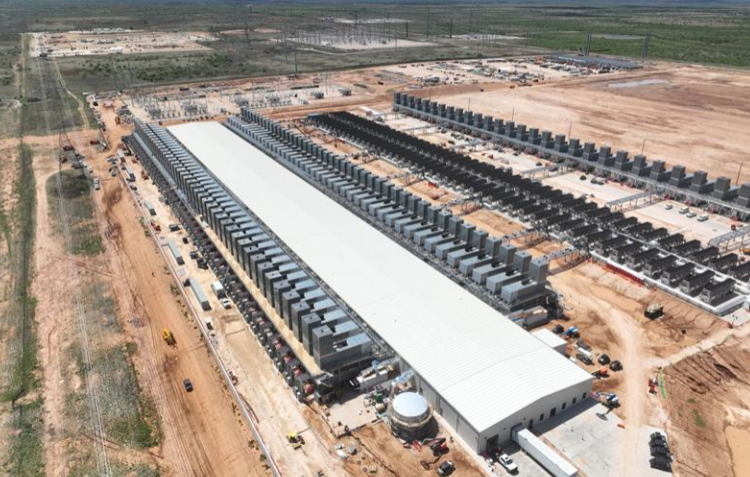
Building AI data centers requires securing vast quantities of Nvidia’s high-performance graphics processing units (GPUs) alongside significant investments in power, cooling, and networking systems. These businesses face astronomical upfront costs while realizing sales revenue through long-term service contracts.
As interest rates rise, the cost of both new investments and the refinancing of existing debt increases. Even as demand for AI computation grows, rising financial costs could severely squeeze profitability.
The sharp decline also reflected growing wariness regarding the valuation of companies that have surged during the AI boom. A downgrade of enterprise hardware firms, including Dell, by Barclays further accelerated the selling pressure.
CoreWeave bond yields hit 15%; Gartner warns of $3.5 trillion in AI infrastructure "impairment risk"
While falling share prices reflect shifting sentiment, the decline in corporate bond prices has highlighted more fundamental fears regarding liquidity and funding.
According to MarketWatch, CoreWeave’s $2.75 billion corporate bond issued in April with a 9.75% coupon was recently trading at approximately 81 cents on the dollar. Yields in the secondary market have now surged past 15%.
Similarly, the price of its 9.625% coupon bond maturing in 2032 fell from $85 in early October to $79.50 on Oct. 14. Over the same period, the yield on that bond climbed from 13.42% to 15.06%.
While a falling stock price affects valuation, a spike in bond yields signals a crisis in funding. Although existing debt servicing costs may not change overnight, the company will likely face significantly higher interest demands during new financing rounds or when rolling over existing debt.
CoreWeave’s business model involves securing Nvidia GPUs on a massive scale to provide AI computational services to corporate clients. Because it must build data centers before realizing revenue through long-term contracts, its initial capital requirements are vast.
Data from LSEG indicates that CoreWeave’s cumulative bond issuance has reached $22 billion, with loan financing totaling $26 billion. These figures represent the total capital raised to date, rather than the current outstanding debt balance.
CoreWeave has pushed back against market concerns. In an internal memo to employees, CEO Mike Intrator stated that the market may be "misunderstanding" the company’s business or reacting irrationally.
He noted that the company held a backlog of $104.2 billion as of the end of the second quarter and secured over $25 billion in new customer commitments during the third quarter. Intrator emphasized that the scale of these contracts is more than sufficient to cover the company's debt obligations.
However, a large backlog does not necessarily solve immediate cash flow issues. There is often a significant temporal gap between the sales revenue generated by long-term contracts and the immediate liquidity required for data center expansion.
Broad warnings about the profitability of AI infrastructure are also mounting. In a report released on Oct. 14, Gartner projected that AI firms will invest approximately $7 trillion in infrastructure between 2026 and 2030. To achieve a 12% return on invested capital (ROIC), cumulative sales revenue of $8.5 trillion would be required. However, Gartner forecasts that revenue actually attributable to AI data centers will not exceed $3.6 trillion during that period.
Gartner warned that if current investment trajectories continue, more than $3.5 trillion in AI infrastructure assets could be at risk of impairment by the end of 2030. The firm also predicted that over 80% of "neocloud" providers—AI-specialized cloud operators like CoreWeave—could cease independent operations by 2030.
While these are projections rather than realized losses, the combination of CoreWeave's falling bond prices and Gartner's warnings underscores the growing tension between AI investment scale and actual profitability.
AI investment jitters: Will semiconductor demand be the next to shake?
The funding instability among U.S. AI infrastructure firms is a looming concern for the South Korean semiconductor industry. Samsung Electronics and SK hynix are the primary beneficiaries of the surging demand for High Bandwidth Memory (HBM) and high-capacity DRAM used in AI servers.
If AI cloud providers delay data center construction or GPU procurement due to debt burdens, it could eventually lead to a slowdown in memory orders.
However, the spike in CoreWeave's bond yields does not immediately equate to a drop in HBM or DRAM demand. Currently, the shift is primarily in how the financial markets price risk for AI infrastructure firms; this must be distinguished from actual changes in semiconductor supply contracts or order volumes.
Signs of robust demand for semiconductor equipment remain. ASML, the Dutch lithography giant, reported Q3 sales revenue of €11.7 billion and a net profit of €4.96 billion on Oct. 14. The company also raised its annual sales outlook to between €44 billion and €45 billion.
ASML CEO Christophe Fouquet noted that customer demand is currently exceeding production capacity plans for 2027 and 2028, with some customers already inquiring about orders for 2029 and 2030. ASML is reportedly considering further capacity expansions for 2028.
This suggests that while financial costs are rising for AI service providers, long-term capital expenditure demand from semiconductor manufacturers remains intact.
The ultimate impact on Samsung Electronics and SK hynix will depend on whether the financing troubles of U.S. AI firms translate into actual GPU order cancellations or shifts in memory supply schedules. For now, the market is closely watching to see how much financial market volatility will bleed into real-economy semiconductor demand.



