



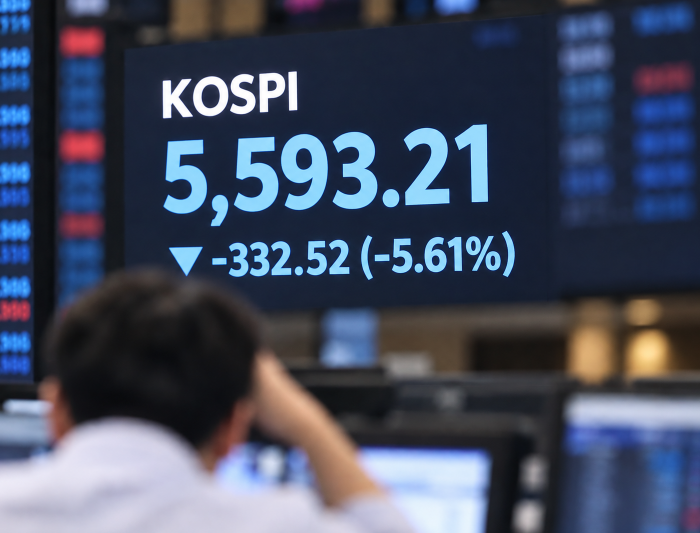
KOSPI plunges to 5593 intraday; Samsung Electronics and SK hynix nosedive by 8% and 10% respectively.
Selling pressure broadens to Samsung Electro-Mechanics and Samsung SDI; 34 trillion won margin debt burden weighs on market sentiment.
On the 15th, the KOSPI index breached the 5,600 psychological support level during intraday trading, hit by a combination of retreating U.S. semiconductor stocks, growing skepticism over the profitability of artificial intelligence (AI) investments, and a consumer price index (CPI) report that exceeded market expectations. The sell-off, which saw Samsung Electronics and SK hynix tumble by as much as 8% and 10% respectively, quickly spread to key tech components including Samsung Electro-Mechanics and Samsung SDI. With "sidecar" trading halts triggered in both the KOSPI and KOSDAQ markets, concerns are mounting over potential forced liquidations stemming from the 34 trillion won in outstanding margin debt.
According to the Korea Exchange on the 15th, the KOSPI opened at 5,673.01—down 5.59% from the previous session—and continued its downward trajectory to hit 5,588. Following a 5.46% plunge on the 13th and a subsequent 0.44% drop on the 14th to close at 6,008.81, the index surrendered both the 6,000 and 5,600 levels in rapid succession.
Investor sentiment has deteriorated sharply as concerns over Chinese memory chipmakers’ technological catch-up, heavy foreign institutional selling, and weak performance in U.S. tech stocks converged with the recent inflation shock.
Selling Spreads Beyond Semiconductors to Electronic Components and Batteries
On the 13th, reports regarding the potential of China’s ChangXin Memory Technologies (CXMT) to narrow the technological gap in next-generation DRAM sparked fears of intensifying competition in the domestic memory industry. Coupled with ongoing debates regarding the profitability of expanding AI infrastructure investments and sustained foreign outflows, Samsung Electronics and SK hynix plummeted 7.39% and 10.09%, respectively. It remains unconfirmed whether CXMT’s development plans will translate into large-scale mass production and viable yields.
Foreign investors offloaded over 4 trillion won in KOSPI equities on the 13th, followed by an additional 1.18 trillion won on the 14th, marking their seventh consecutive session of net selling. On the 14th alone, foreign selling of SK hynix and Samsung Electronics totaled 910.4 billion won, highlighting the concentration of the sell-off in these two bellwether stocks.
Caution regarding the semiconductor sector deepened on the 14th following earnings from Dutch equipment maker ASML, which investors deemed lackluster. This was exacerbated by U.S. September inflation data, which outperformed estimates, fueling a broader tech sell-off in New York.
The U.S. Department of Labor reported on the 14th (local time) that the September CPI rose 3.7% year-on-year, exceeding the consensus of 3.6%. The core CPI, excluding volatile food and energy, also rose 2.6%, higher than the anticipated 2.5%.
The Nasdaq index fell 1.88%, while the Philadelphia Semiconductor Index plummeted 4.30%. Micron Technology dropped 3.88% and AMD fell 2.28%. AI data center-related firms, including CoreWeave and Oracle, also saw significant declines amid concerns over borrowing costs and the long-term ROI of their investments.
In the domestic market, the selling spread beyond large-cap semiconductors to electronic components and battery manufacturers. The concurrent slump in Samsung Electro-Mechanics and Samsung SDI placed intense downward pressure on the market's leading tech stocks.
As the sell-off intensified, "sidecar" mechanisms were triggered in both the KOSPI and KOSDAQ markets to temporarily suspend program trading, as the market correction deepened across the entire technology sector.
Forced Liquidations Hit 59.3 Billion Won; 34 Trillion Won Margin Debt Remains a Threat
The continuous slide in equity prices is heightening the risk of forced liquidations for investors who bought stocks on margin.
According to data from the Korea Financial Investment Association, the value of forced liquidations due to margin calls reached 59.35 billion won on the 13th—the highest level since July 31, when it hit 122 billion won. The ratio of forced liquidations relative to outstanding margin debt also rose to 5.6%, up from 2.7% the previous trading day.
Outstanding margin debt stood at 34.25 trillion won. While this marks a slight decrease from the previous session, it represents an increase of over 860 billion won since the end of September. This indicates that a significant amount of leveraged capital remains in the market despite recent corrections.
Under margin trading rules, investors must provide additional collateral if the value of their holdings falls below a certain threshold. If they fail to meet these requirements within the deadline, brokerages may forcibly sell the stocks, creating the risk of a "domino effect" as consecutive price drops trigger further liquidations.
The 59.3 billion won figure specifically pertains to liquidations from delayed payments, which is distinct from forced sales due to collateral shortfalls in margin accounts. The timing of actual liquidations varies depending on the specific margin maintenance ratios and collateral replenishment deadlines set by individual brokerage firms.
With heavy sell orders pouring into semiconductors and other tech stocks immediately after the opening bell on the 15th, it is highly probable that forced liquidations have exacerbated the intraday decline. If the recent slump has pushed more accounts below their required maintenance levels, these forced sales could exert further downward pressure on prices.
In an environment characterized by sustained foreign selling, the emergence of forced liquidation volume threatens to create a vicious cycle where price declines trigger further collateral deficiencies, leading to even more forced selling. As the KOSPI gives way below the 5,600 level, the 34 trillion won margin debt pool remains a significant structural vulnerability for the market.



