



Semiconductor Strong Earnings Yet Stock Corrections… AI Demand Remains Robust
Healthcare ETFs Rise 5.35% in a Week… Diversifying Investment Destinations
Even as artificial intelligence (AI) semiconductor companies post record-breaking earnings, Wall Street's buying momentum is broadening to other industries. While semiconductor stocks have declined for consecutive days, major pharmaceutical firms have surged to record highs, with retailers and small-to-mid-cap stocks also showing strength. Investors who previously focused solely on the growth potential of AI are now scrutinizing corporate profitability and cash generation capabilities as they widen their investment scope.
This does not mean the growth trend of the AI industry has stalled. TSMC, the world's largest foundry (semiconductor contract manufacturer), reported a 69% year-on-year surge in third-quarter net profit, while major memory chip makers such as Samsung Electronics, SK hynix, and Micron continue their growth trajectories, fueled by expanding demand for high-bandwidth memory (HBM) and server DRAM. Dutch semiconductor equipment maker ASML is already receiving inquiries from clients for equipment delivery spanning 2029 to 2030.
Semiconductors Fall for 7 Consecutive Days… Major Pharma Stocks Hit Record Highs
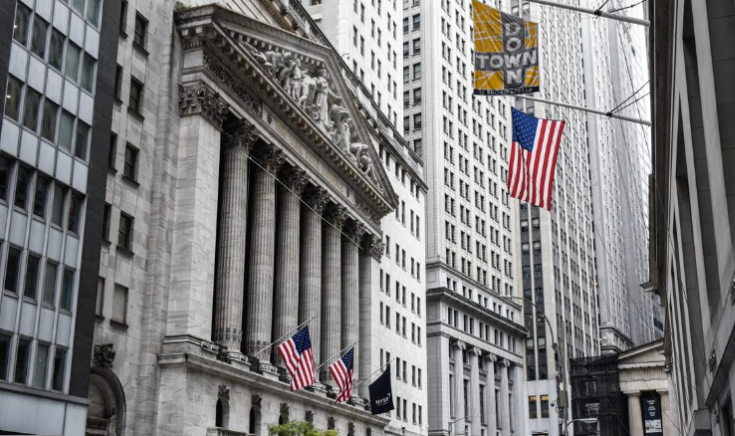
On the 15th (local time), the healthcare sector rose 1.84% on the New York Stock Exchange, marking the highest gain among the 11 sectors of the S&P 500 index. The Healthcare Select Sector SPDR Fund (XLV), a healthcare exchange-traded fund (ETF), gained 5.35% over the past week.
The upward momentum of major pharmaceutical companies was particularly noticeable. Eli Lilly, which dominates the obesity treatment market, rose 3.6% on this day, closing at its third-highest level in history. AbbVie also finished trading at $284.40, nearing all-time highs. Gilead Sciences and Amgen each rose 7.7% and 7.0%, respectively, over the past five trading sessions.
The strength of Eli Lilly and AbbVie is underpinned by already secured revenue bases. Eli Lilly is pursuing expanded sales of obesity treatments alongside the development of subsequent new drugs, while AbbVie continues its growth centered on its flagship immunology drug, Skyrizi. Unlike clinical-stage biotech firms whose valuations fluctuate wildly depending on clinical trial results, large pharmaceutical companies generating cash flows from existing pharmaceuticals drove the stock gains.
Even within the same healthcare sector, divergences were stark. The SPDR S&P Biotech ETF (XBI) fell 2.8% over the past month. Companies generating cash from existing products received relatively favorable evaluations compared to firms that must rely on external financing to fund new drug development.
Retail giant Walmart also showed strength, driven by price competitiveness and expanded online operations. Deutsche Bank raised its investment rating to 'Buy', forecasting that Walmart's market share will grow as inflation persists, while raising its target price from $113 to $136. It also positively evaluated the growth of high-margin businesses such as e-commerce, advertising, and memberships.
The rally has also spread to small- and mid-cap stocks. The S&P 500 Equal Weight Index-related ETF rose 1.4% on the day, and the small-cap-heavy Russell 2000 Index gained 1.38%. In contrast, the Nasdaq Composite, heavily weighted toward mega-cap tech stocks, edged up a mere 0.08%. The range of advancing stocks is broadening in the U.S. stock market, which had previously been dominated by a handful of large tech stocks.
Lukewarm Stock Reaction Despite Record Earnings… Focus Shifts to AI Capital Expenditures
The semiconductor industry's fundamentals remain robust. TSMC's third-quarter net profit reached NT$763.1 billion, up 68.7% from the same period last year. Revenue rose 50.9% to NT$1,494.2 billion, with advanced 2-nanometer processes accounting for 8% of total wafer revenue. The gross margin reached 66.4%.
Long-term demand for semiconductor production facilities is also solid. ASML expects that even if it expands production capacity for 2027-2028, it will be difficult to fully meet customer equipment demand. The competition to secure AI semiconductor production capacity is increasingly likely to extend years into the future.
However, strong earnings have not guaranteed stock price gains. The Philadelphia Semiconductor Index declined for the seventh consecutive session on the 15th. NVIDIA fell 1.8%, while AI server manufacturers Dell Technologies and Hewlett Packard Enterprise (HPE) dropped 6.9% and 7.1%, respectively. TSMC also fell 1.8% in the U.S. market despite reporting record quarterly net profits.
What Wall Street is scrutinizing goes beyond the sheer scale of AI investments. Attention is also focused on the financial capacity to shoulder massive capital expenditures. AI cloud company CoreWeave reported operating cash flow of $679 million in the second quarter of this year, but capital expenditures reached $9.4 billion. With the recent secondary market yield on corporate bonds surpassing 15%, concerns regarding financing burdens have also mounted.
Unlike TSMC, which maintains high profit margins while expanding advanced semiconductor production, AI data center operators must invest upfront in facilities and equipment and recover costs over an extended period. This is why the financial conditions of semiconductor manufacturers and infrastructure operators differ significantly within the AI industry.
Jed Ellerbroek, a portfolio manager at Argent Capital Management, noted, "While AI-related companies are driving the growth of the U.S. economy and stock market, investors are adopting a cautious and selective attitude, unlike past tech booms."
The fact that demand for AI semiconductors remains robust is a separate issue from whether AI-related stocks will continue to dominate the market. Wall Street is examining the financial muscle of AI companies continuing their massive investments while simultaneously seeking new growth opportunities in other industries such as pharmaceuticals and retail.



