



$82 Billion Wiped Out in Two Days; Benchmark to Purge 80 Concentrated Equities
Market Rebounds 5.65%, Yet $5.6 Billion Outflow Risk Looms as Rupiah Weakness Persists
In a frantic effort to counter MSCI’s threat of a demotion from emerging-market status, Indonesia is advancing plans to strip its flagship index of roughly 80 listed companies characterized by high ownership concentration, which together account for about 18% of the local stock market’s capitalization. The measure follows a catastrophic two-day market rout that saw equities plunge roughly 15%, evaporating $82 billion in market value. While the market rebounded over 5% on the 20th, lingering concerns persist that a complete exclusion from key MSCI indices could trigger $5.6 billion in foreign capital flight.
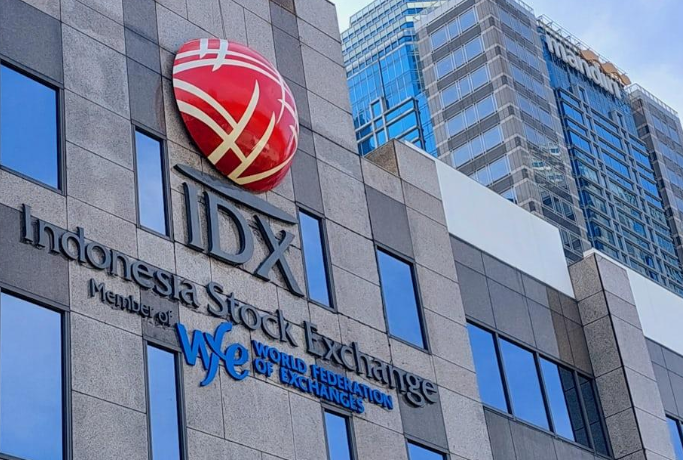
According to Reuters and local Indonesian media reports on the 21st, the Indonesia Stock Exchange (IDX) plans to remove approximately 80 listed firms with highly concentrated shareholdings from the calculation of the Jakarta Composite Index (JCI). These stocks comprise roughly 18% of the index's total market cap. The move is designed to mitigate the distortion that shares concentrated among controlling shareholders and related parties exert on market-wide price formation.
On the 16th, MSCI announced it would review reclassifying Indonesia from its current emerging market status to a "Standalone Market"—a classification even lower than a frontier market. Should the reclassification be finalized, Indonesian equities would be stripped from major global emerging market benchmarks.
MSCI pointed to opaque shareholding structures, questionable trading practices, and a lack of effective market oversight among certain listed companies as primary concerns. While Indonesian authorities have rolled out initiatives to expand free floats and mandate greater stake disclosures, MSCI evaluated that insufficient evidence exists to prove tangible improvements in the operational trading environment.
$82 Billion Evaporates Over Two Days; Authorities Tighten Trading Curbs
The Jakarta Composite Index nosedived 11.6% on the 16th, followed by an additional 3.64% drop on the 19th, bringing the cumulative two-day decline to a staggering 14.8%. Foreign net selling of equities for the year has ballooned to approximately $4.9 billion.
In an aggressive bid to stanch the bleeding, the exchange narrowed the maximum daily downward price limit for individual stocks from 15% to 7%. For ultra-low-priced shares trading at 14 rupiah or less, a strict daily maximum drop of 1 rupiah was imposed.
Following discussions with MSCI officials on the 19th, authorities unveiled a broad overhaul of index methodologies and stricter disclosure rules. Under the new guidelines, shareholders holding stakes of 1% or more will be required to disclose whether they maintain related-party ties with the firm.
The proposed removal of some 80 stocks from the benchmark index is distinct from a corporate delisting. While these shares will continue to trade publicly, they will be excluded from index calculations. A definitive implementation timeline has yet to be finalized.
Jeffrey Hendrik, a director at the Indonesia Stock Exchange, stated that removing heavily concentrated stocks from index calculations will allow the benchmark to more accurately reflect genuine market dynamics.
Bolstered by the regulatory intervention, the Indonesian stock market rebounded sharply. The Jakarta Composite Index closed up 282.28 points (5.65%) at 5,278.89 on the 20th, while the blue-chip LQ45 index surged 8.58%. Nonetheless, the rally fell short of recouping the 14.8% plunge suffered over the preceding two sessions.
$5.6 Billion Outflow Warning Threatens Rupiah and Sovereign Bond Markets
Goldman Sachs estimates that a complete expulsion of Indonesia from major MSCI indices could trigger approximately $5.6 billion in passive fund outflows. Furthermore, active funds that utilize these indices as core performance benchmarks hold over $8,000,000,000 in local assets.
Because passive funds are mandated to track index weightings precisely, an official downgrade would inevitably unleash a wave of forced liquidations. Active funds, meanwhile, could also pare down their allocations should anxieties surrounding liquidity and trading transparency intensify.
Indonesia’s weighting within the MSCI Emerging Markets Index has already shrunk from 1.16% at the start of the year to 0.43% at the end of September. Over the same timeframe, the number of Indonesian stocks included in the MSCI index plummeted from 18 to 9.
As the rupiah trades at around 18,000 per dollar, its value against the South Korean won has slumped by 10.77% over the past three months, sliding to 7.37 won per 100 rupiah on the 20th.
Gary Tan, a portfolio manager at global asset manager Allspring Global Investments, noted that the broader contagion risks—specifically the potential spillover into the rupiah and domestic sovereign bond yields—pose a far greater concern than index-driven equity selling per se.
Major international credit rating agencies Moody's and Fitch have both downgraded their outlooks on Indonesia's sovereign credit rating from "stable" to "negative" this year. While the sovereign ratings themselves remain intact, the revisions reflect mounting apprehension over President Prabowo Subianto’s fiscal management and policy credibility.
George Xu, a director for sovereign ratings at Fitch, remarked that while the MSCI announcement itself is unlikely to exert an immediate, severe blow to the nation's creditworthiness, external pressures could inflate government borrowing costs and erode foreign exchange buffers.
Although major Indonesian banks boast robust returns on equity (ROE) of 18% to 20%, the underlying profitability of the financial sector is being overshadowed by low free floats and corporate governance deficiencies that continue to undermine broader market confidence.
MSCI plans to monitor market reforms through the end of April 2027 before rendering a final verdict in late June of that year. The ultimate fate of Indonesia's emerging market status will hinge on the tangible, on-the-ground execution of the index restructuring and enhanced disclosure mandates announced by Jakarta.



