



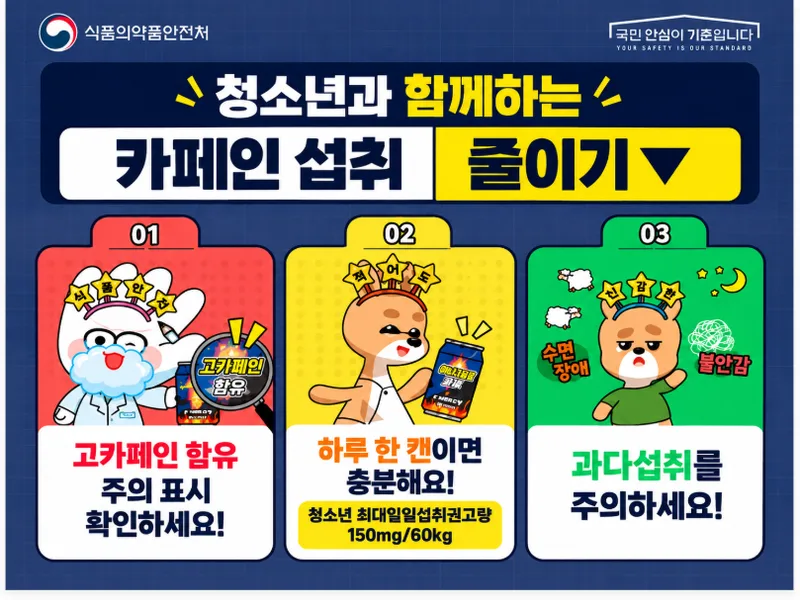
Recommended daily intake set at 150 mg or less for teenagers weighing 60 kg
A single Americano contains 150 mg; energy drinks and chocolate also require caution
With the 2027 College Scholastic Ability Test (CSAT) fast approaching, health authorities are urging students to exercise caution regarding their caffeine intake. A single Americano purchased from a coffee shop can single-handedly reach the maximum recommended daily caffeine limit for adolescents.
On November 20, the Ministry of Food and Drug Safety (MFDS) issued guidelines regarding the consumption of caffeine-containing foods to help test-takers maintain optimal health ahead of the exams.
The MFDS recommends a maximum daily caffeine intake of 2.5 mg per kilogram of body weight for children and adolescents. The recommended limits are set at 125 mg or less for teenagers weighing 50 kg, 150 mg for those weighing 60 kg, and 175 mg for those weighing 70 kg. For adults, the recommended limit is 400 mg or less per day, while pregnant women are advised to consume no more than 300 mg daily.
150 mg in a Single Americano… Energy Jellies Contain 100 mg
According to the MFDS's breakdown of caffeine content by food type, a single 355-ml Americano from a specialty coffee shop contains approximately 150 mg of caffeine. If a 50-kg adolescent drinks one cup, they exceed the daily recommended limit by 25 mg, while a 60-kg teenager hits the limit with a single cup.
Standard coffee beverages (250 ml) contain about 103 mg of caffeine, and energy drinks (250 ml) contain 80 mg. Energy jellies (20 g), often consumed to ward off sleepiness, contain approximately 100 mg of caffeine.
Caffeine is also found in a variety of foods beyond coffee. Coffee-flavored milk (200 ml) contains 47 mg, cola (250 ml) contains 25 mg, a single green tea bag contains 22 mg, and chocolate (30 g) contains 16 mg.
If a test-taker weighing 60 kg consumes one coffee beverage and one carton of coffee-flavored milk, their caffeine intake reaches 150 mg. Adding chocolate or cola on top of this can easily push them past the daily recommended threshold.
These figures serve as reference values provided by the MFDS, and actual caffeine content may vary depending on the specific product.
Cut Back If Heart Palpitations or Sleep Disorders Occur
Sensitivity to caffeine varies by individual. Even if daily intake remains below the recommended limit, students experiencing heart palpitations, headaches, anxiety, or sleep disturbances should reduce or discontinue consumption.
Consumers are particularly advised to check the "high caffeine content" label and total caffeine content displayed on product packaging when purchasing high-caffeine items. Those consuming multiple food products should tally the caffeine content of each item.
To prevent excessive caffeine consumption among children and adolescents, the MFDS prohibits the sale of high-caffeine foods in schools nationwide and at designated "safe children's food stores" near school zones.
Health advisories regarding caffeine consumption are also posted across approximately 78,000 youth-oriented facilities, including convenience stores, libraries, study cafes, and cram schools (hagwons).
"While studying is important, nothing is more critical than your health," said MFDS Minister Oh Yu-kyung, urging students to regulate their caffeine intake and take proper rests to maintain good physical condition through exam day.



