



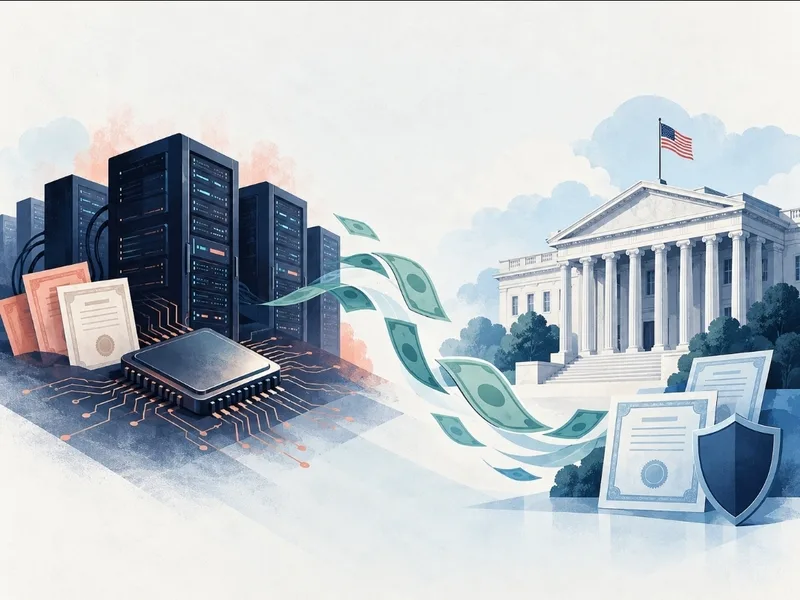
CoreWeave corporate bond yields recently breached 16%, fueling credit risk vigilance.
Capital expenditures outpace operating cash flow; financing burdens persist even as Treasury yields decline.
The yield on the benchmark U.S. 10-year Treasury note has fallen below 5%, driven by a sell-off in technology stocks amid mounting concerns over massive capital investments and borrowing burdens by AI companies, which in turn stimulated safe-haven demand for government bonds. The recent surge in CoreWeave's corporate bond yields exemplifies how anxiously investors view the debt loads of AI infrastructure firms. The market is increasingly scrutinizing growth expectations alongside companies' ability to continuously secure the necessary funding for their investments.
According to Reuters, the yield on the 10-year U.S. Treasury note dropped 19.3 basis points (1 bp = 0.01 percentage point) from the previous trading session to close at 4.953% on the 22nd (local time). This marked the first time the yield fell below 5% during intraday trading since September 23. While technology-led equities remained weak, bond prices climbed. Market analysts noted that alongside AI-related anxieties, fiscal instability in France and tensions in the Middle East also fueled safe-haven demand that day.
Previously, credit risks surrounding AI cloud firm CoreWeave came to the fore in the corporate bond market. The secondary market yield on the company's dollar-denominated bonds maturing in October 2031 briefly surpassed 16% during intraday trading on the 15th. According to Tradeweb data cited by Reuters, the yield eased to 15.13% on the 19th. Although bond prices recovered somewhat, investors continued to demand high yields.
Connecting the strength in Treasuries and the weakness in certain corporate bonds is heightened vigilance over credit risk. As capital seeking to avoid credit risk shifts out of corporate bonds and equities and into government debt, corporate bond yields rise while Treasury yields fall. In an analysis on the 21st, Michael Lebowitz of RIA Advisors cited credit anxiety surrounding select AI companies, including CoreWeave, as a factor explaining the rally in Treasuries, suggesting that corporate debt concerns can drive up demand for government bonds.
CoreWeave's cash flow underscores why the market is closely watching financing conditions. The company's operating cash flow for the first half of this year stood at $3.663 billion, while cash spent on property, plant, and equipment (capex) and capitalized internal-use software acquisition reached $14.117 billion over the same period. Capital expenditures vastly exceeded the cash generated from operating activities. To maintain its scale of investment, the company must rely on existing cash reserves, borrowings, and capital raising alongside operating cash flow.
Interest burdens have also escalated. CoreWeave's net interest expense for the second quarter hit $640 million, more than double the $267 million recorded in the same period last year, and equivalent to roughly a quarter of its $2.575 billion in quarterly revenue. Even if facility expansions support future revenue growth, the company must shoulder the accompanying financial costs. Increased borrowing and ballooning interest payments can dilute the profit-boosting effects of revenue growth.
Nonetheless, the company boasts a substantial backlog of demand-backed contracts. CoreWeave disclosed a revenue backlog of approximately $104 billion as of the end of June, which includes estimated future revenues to be recognized upon contract fulfillment. The company also typically receives advance payments from customers prior to service delivery under long-term agreements. However, the entire backlog cannot be viewed as immediately available cash. Even if advance payments provide a fraction of the investment capital, external funding remains necessary depending on the scale and timing of capital expenditures and remaining contract cash inflows.
Under this financial structure, a decline in Treasury yields does not immediately translate into lower borrowing costs for corporations. Corporate bond yields reflect not only the benchmark Treasury yield but also additional risk premiums for credit risk and liquidity. If the increase in risk compensation outpaces the drop in Treasury yields, corporate bond yields actually rise. While existing fixed-rate bonds maintain their stipulated coupons, high secondary market yields pose a burden when companies issue new debt or refinance maturing obligations.
Should strained financing conditions persist, they could eventually impact capital expenditure plans. If projected revenues from new data centers fail to offset surging capital costs, operators may delay groundbreaking or equipment orders. However, this pressure does not impact all tech firms equally. Companies capable of funding investments through internal operating cash flow retain different investment capacities in the same interest rate environment compared to those heavily reliant on external borrowing.
The true extent of these constraints will likely become apparent in new bond and loan terms. Key factors include how much requisite capital can be secured, and how collateral and maturity conditions shift alongside interest rates. These variables intersect with the operational launch timelines of contracted data centers and customer payment schedules. Whether CoreWeave can stably secure the financial resources needed for construction costs and interest payments while converting its massive order backlog into revenue remains the critical test for executing its investment plans.



