



MARKET INDEX
KOSPI2,609.91▼ 0.76%
KOSDAQ820.64▼ 0.95%
S&P 5005,864.67▲ 0.86%
NASDAQ18,373.61▲ 0.96%
USD/KRW1,354.50▲ 3.20 (+0.24%)
WTI Crude$70.67▼ 1.25%
BTC/USD$68,450▲ 1.45%
KOSPI2,609.91▼ 0.76%
KOSDAQ820.64▼ 0.95%
S&P 5005,864.67▲ 0.86%
NASDAQ18,373.61▲ 0.96%
USD/KRW1,354.50▲ 3.20 (+0.24%)
WTI Crude$70.67▼ 1.25%
BTC/USD$68,450▲ 1.45%
헤더 좌
헤더 우
BREAKING
MARKET Times 공식 배너

GM Pivots to Hybrids: Intensifying SUV Rivalry with Hyundai Motor and Kia in the U.S. <<<EXCEPT>>> General Motors is shifting its product strategy to incorporate hybrid technology into its flagship SUV lineup, setting the stage for a head-to-head battle with Hyundai Motor and Kia in the competitive U.S. large SUV market. <<<CONTENT>>> <blockquote><p><span>GM to introduce hybrid variants for three flagship SUV models; redirects $500 million in EV production subsidies.</span></p><p><span>Hyundai Motor and Kia report a 53% surge in hybrid sales, signaling a direct confrontation in the large SUV segment.</span></p></blockquote> <p>General Motors (GM), the largest automaker in the United States, is moving to integrate hybrid powertrains into its flagship sports utility vehicles (SUVs). As the company modifies its long-standing focus on all-electric vehicles (EVs), it is preparing for an intensifying battle with Hyundai Motor and Kia in the U.S. large SUV market.</p> <p>Hyundai Motor and Kia have already secured a firm foothold in the market, having aggressively expanded their hybrid sales in the U.S. this year. The new hybrid models GM is pursuing are set to compete directly against key rivals such as the Hyundai Palisade and Kia Telluride.</p> <h3>GM Shifts Strategy: Hybrid Expansion for Flagship SUVs</h3> <p>Reuters reported on the 27th (local time), citing multiple sources, that GM is planning to produce hybrid versions of the Chevrolet Traverse, Buick Enclave, and GMC Acadia at its Lansing, Michigan facility. These three models share a common platform and serve as the core of GM's U.S. lineup.</p> <p>Following the report, GM confirmed its investment plans to prepare its Lansing Delta Township plant for hybrid production. This marks a strategic shift for an automaker that had previously been heavily centered on pure battery-electric vehicles.</p> <p>The company’s capital allocation is also reflecting this pivot. The U.S. Department of Energy is reportedly reallocating $500 million, originally intended to support GM's EV manufacturing transition, toward the hybrid production efforts at the Lansing plant. GM already recorded $3.6 billion in costs related to its EV strategy adjustments between January and September of this year.</p> <p>During the third-quarter earnings call on the 20th, GM CEO Mary Barra stated, "We will introduce hybrid models in the major segments where we compete," confirming that the company intends to add hybrids to its core product offerings alongside its existing EV investments.</p> <p>GM’s U.S. market share stood at 16.4% from January to September this year, a 0.7 percentage point decline from 17.1% in the same period last year. While competitors like Toyota and Honda expanded their influence in the U.S. by leveraging popular hybrid models, GM struggled with a lack of relevant vehicle offerings.</p> <p>Rising gasoline prices in the U.S. have fueled consumer demand for hybrids. In August, hybrid vehicles accounted for 19% of new car retail sales, up from roughly 16% prior to the start of the Iran conflict. GM dealers have increasingly voiced concerns over the lack of hybrid options on their lots.</p> <p>GM is prioritizing large SUVs for its hybrid rollout—vehicles characterized by their size and frequent use for long-distance driving. By adding hybrid powertrains to existing gasoline models, the company aims to capture fuel-conscious consumers.</p> <h3>Hyundai Motor and Kia Lead with 53% Growth in Hybrid Sales</h3> <p>Hyundai Motor and Kia entered the U.S. large SUV hybrid market well ahead of GM. The two companies saw their combined U.S. sales reach 506,200 units in the third quarter, a 5.4% increase year-on-year. Notably, hybrid sales climbed 53.4% to 138,112 units, accounting for 27.3% of total sales, while EV sales fell by 51% to 22,311 units.</p> <p>Sales of large SUVs also showed strong growth. In September, the Palisade saw sales rise 52.1% year-on-year to 10,327 units, while the Telluride increased 41.9% to 11,927 units. Both models compete in the exact family-SUV segment that GM is now looking to penetrate with its new hybrids.</p> <p>To support this growth, the companies are expanding local production. Hyundai is strengthening hybrid output at its Alabama plant and the new Georgia Metaplant, while Kia continues to produce the Telluride hybrid at its Georgia facility.</p> <p>The 2027 Palisade Hybrid is priced starting at $44,560 in the U.S., offering an EPA-estimated combined fuel economy of 34 mpg for the front-wheel-drive trim. The Telluride hybrid starts at $46,490, delivering 35 mpg and a maximum output of 329 horsepower.</p> <p>Hyundai Motor plans to increase its North American hybrid lineup to more than 10 models by 2030 and aims to raise the share of hybrids in its total sales to 50%.</p> <p>As GM moves to bring the Traverse, Enclave, and Acadia into the fold, they are entering a segment where Hyundai Motor and Kia have already established a strong competitive advantage. While GM has not yet disclosed a specific launch schedule for its new hybrids, the battle over price and fuel efficiency in the U.S. large SUV market is expected to intensify significantly.</p> [SOURCE]

GM Pivots to Hybrids: Intensifying SUV Rivalry with Hyundai Motor and Kia in the U.S. <<<EXCEPT>>> General Motors is shifting its product strategy to incorporate hybrid technology into its flagship SUV lineup, setting the stage for a head-to-head battle with Hyundai Motor and Kia in the competitive U.S. large SUV market. <<<CONTENT>>> <blockquote><p><span>GM to introduce hybrid variants for three flagship SUV models; redirects $500 million in EV production subsidies.</span></p><p><span>Hyundai Motor and Kia report a 53% surge in hybrid sales, signaling a direct confrontation in the large SUV segment.</span></p></blockquote> <p>General Motors (GM), the largest automaker in the United States, is moving to integrate hybrid powertrains into its flagship sports utility vehicles (SUVs). As the company modifies its long-standing focus on all-electric vehicles (EVs), it is preparing for an intensifying battle with Hyundai Motor and Kia in the U.S. large SUV market.</p> <p>Hyundai Motor and Kia have already secured a firm foothold in the market, having aggressively expanded their hybrid sales in the U.S. this year. The new hybrid models GM is pursuing are set to compete directly against key rivals such as the Hyundai Palisade and Kia Telluride.</p> <h3>GM Shifts Strategy: Hybrid Expansion for Flagship SUVs</h3> <p>Reuters reported on the 27th (local time), citing multiple sources, that GM is planning to produce hybrid versions of the Chevrolet Traverse, Buick Enclave, and GMC Acadia at its Lansing, Michigan facility. These three models share a common platform and serve as the core of GM's U.S. lineup.</p> <p>Following the report, GM confirmed its investment plans to prepare its Lansing Delta Township plant for hybrid production. This marks a strategic shift for an automaker that had previously been heavily centered on pure battery-electric vehicles.</p> <p>The company’s capital allocation is also reflecting this pivot. The U.S. Department of Energy is reportedly reallocating $500 million, originally intended to support GM's EV manufacturing transition, toward the hybrid production efforts at the Lansing plant. GM already recorded $3.6 billion in costs related to its EV strategy adjustments between January and September of this year.</p> <p>During the third-quarter earnings call on the 20th, GM CEO Mary Barra stated, "We will introduce hybrid models in the major segments where we compete," confirming that the company intends to add hybrids to its core product offerings alongside its existing EV investments.</p> <p>GM’s U.S. market share stood at 16.4% from January to September this year, a 0.7 percentage point decline from 17.1% in the same period last year. While competitors like Toyota and Honda expanded their influence in the U.S. by leveraging popular hybrid models, GM struggled with a lack of relevant vehicle offerings.</p> <p>Rising gasoline prices in the U.S. have fueled consumer demand for hybrids. In August, hybrid vehicles accounted for 19% of new car retail sales, up from roughly 16% prior to the start of the Iran conflict. GM dealers have increasingly voiced concerns over the lack of hybrid options on their lots.</p> <p>GM is prioritizing large SUVs for its hybrid rollout—vehicles characterized by their size and frequent use for long-distance driving. By adding hybrid powertrains to existing gasoline models, the company aims to capture fuel-conscious consumers.</p> <h3>Hyundai Motor and Kia Lead with 53% Growth in Hybrid Sales</h3> <p>Hyundai Motor and Kia entered the U.S. large SUV hybrid market well ahead of GM. The two companies saw their combined U.S. sales reach 506,200 units in the third quarter, a 5.4% increase year-on-year. Notably, hybrid sales climbed 53.4% to 138,112 units, accounting for 27.3% of total sales, while EV sales fell by 51% to 22,311 units.</p> <p>Sales of large SUVs also showed strong growth. In September, the Palisade saw sales rise 52.1% year-on-year to 10,327 units, while the Telluride increased 41.9% to 11,927 units. Both models compete in the exact family-SUV segment that GM is now looking to penetrate with its new hybrids.</p> <p>To support this growth, the companies are expanding local production. Hyundai is strengthening hybrid output at its Alabama plant and the new Georgia Metaplant, while Kia continues to produce the Telluride hybrid at its Georgia facility.</p> <p>The 2027 Palisade Hybrid is priced starting at $44,560 in the U.S., offering an EPA-estimated combined fuel economy of 34 mpg for the front-wheel-drive trim. The Telluride hybrid starts at $46,490, delivering 35 mpg and a maximum output of 329 horsepower.</p> <p>Hyundai Motor plans to increase its North American hybrid lineup to more than 10 models by 2030 and aims to raise the share of hybrids in its total sales to 50%.</p> <p>As GM moves to bring the Traverse, Enclave, and Acadia into the fold, they are entering a segment where Hyundai Motor and Kia have already established a strong competitive advantage. While GM has not yet disclosed a specific launch schedule for its new hybrids, the battle over price and fuel efficiency in the U.S. large SUV market is expected to intensify significantly.</p> [SOURCE]

GM Pivots to Hybrids: Intensifying SUV Rivalry with Hyundai Motor and Kia in the U.S.

<<<EXCEPT>>>
General Motors is shifting its product strategy to incorporate hybrid technology into its flagship SUV lineup, setting the stage for a head-to-head battle with Hyundai Motor and Kia in the competitive U.S. large SUV market.

<<<CONTENT>>>
<blockquote><p><span>GM to introduce hybrid variants for three flagship SUV models; redirects $500 million in EV production subsidies.</span></p><p><span>Hyundai Motor and Kia report a 53% surge in hybrid sales, signaling a direct confrontation in the large SUV segment.</span></p></blockquote>

<p>General Motors (GM), the largest automaker in the United States, is moving to integrate hybrid powertrains into its flagship sports utility vehicles (SUVs). As the company modifies its long-standing focus on all-electric vehicles (EVs), it is preparing for an intensifying battle with Hyundai Motor and Kia in the U.S. large SUV market.</p>

<p>Hyundai Motor and Kia have already secured a firm foothold in the market, having aggressively expanded their hybrid sales in the U.S. this year. The new hybrid models GM is pursuing are set to compete directly against key rivals such as the Hyundai Palisade and Kia Telluride.</p>

<h3>GM Shifts Strategy: Hybrid Expansion for Flagship SUVs</h3>

<p>Reuters reported on the 27th (local time), citing multiple sources, that GM is planning to produce hybrid versions of the Chevrolet Traverse, Buick Enclave, and GMC Acadia at its Lansing, Michigan facility. These three models share a common platform and serve as the core of GM's U.S. lineup.</p>

<p>Following the report, GM confirmed its investment plans to prepare its Lansing Delta Township plant for hybrid production. This marks a strategic shift for an automaker that had previously been heavily centered on pure battery-electric vehicles.</p>

<p>The company’s capital allocation is also reflecting this pivot. The U.S. Department of Energy is reportedly reallocating $500 million, originally intended to support GM's EV manufacturing transition, toward the hybrid production efforts at the Lansing plant. GM already recorded $3.6 billion in costs related to its EV strategy adjustments between January and September of this year.</p>

<p>During the third-quarter earnings call on the 20th, GM CEO Mary Barra stated, "We will introduce hybrid models in the major segments where we compete," confirming that the company intends to add hybrids to its core product offerings alongside its existing EV investments.</p>

<p>GM’s U.S. market share stood at 16.4% from January to September this year, a 0.7 percentage point decline from 17.1% in the same period last year. While competitors like Toyota and Honda expanded their influence in the U.S. by leveraging popular hybrid models, GM struggled with a lack of relevant vehicle offerings.</p>

<p>Rising gasoline prices in the U.S. have fueled consumer demand for hybrids. In August, hybrid vehicles accounted for 19% of new car retail sales, up from roughly 16% prior to the start of the Iran conflict. GM dealers have increasingly voiced concerns over the lack of hybrid options on their lots.</p>

<p>GM is prioritizing large SUVs for its hybrid rollout—vehicles characterized by their size and frequent use for long-distance driving. By adding hybrid powertrains to existing gasoline models, the company aims to capture fuel-conscious consumers.</p>

<h3>Hyundai Motor and Kia Lead with 53% Growth in Hybrid Sales</h3>

<p>Hyundai Motor and Kia entered the U.S. large SUV hybrid market well ahead of GM. The two companies saw their combined U.S. sales reach 506,200 units in the third quarter, a 5.4% increase year-on-year. Notably, hybrid sales climbed 53.4% to 138,112 units, accounting for 27.3% of total sales, while EV sales fell by 51% to 22,311 units.</p>

<p>Sales of large SUVs also showed strong growth. In September, the Palisade saw sales rise 52.1% year-on-year to 10,327 units, while the Telluride increased 41.9% to 11,927 units. Both models compete in the exact family-SUV segment that GM is now looking to penetrate with its new hybrids.</p>

<p>To support this growth, the companies are expanding local production. Hyundai is strengthening hybrid output at its Alabama plant and the new Georgia Metaplant, while Kia continues to produce the Telluride hybrid at its Georgia facility.</p>

<p>The 2027 Palisade Hybrid is priced starting at $44,560 in the U.S., offering an EPA-estimated combined fuel economy of 34 mpg for the front-wheel-drive trim. The Telluride hybrid starts at $46,490, delivering 35 mpg and a maximum output of 329 horsepower.</p>

<p>Hyundai Motor plans to increase its North American hybrid lineup to more than 10 models by 2030 and aims to raise the share of hybrids in its total sales to 50%.</p>

<p>As GM moves to bring the Traverse, Enclave, and Acadia into the fold, they are entering a segment where Hyundai Motor and Kia have already established a strong competitive advantage. While GM has not yet disclosed a specific launch schedule for its new hybrids, the battle over price and fuel efficiency in the U.S. large SUV market is expected to intensify significantly.</p>

[SOURCE]
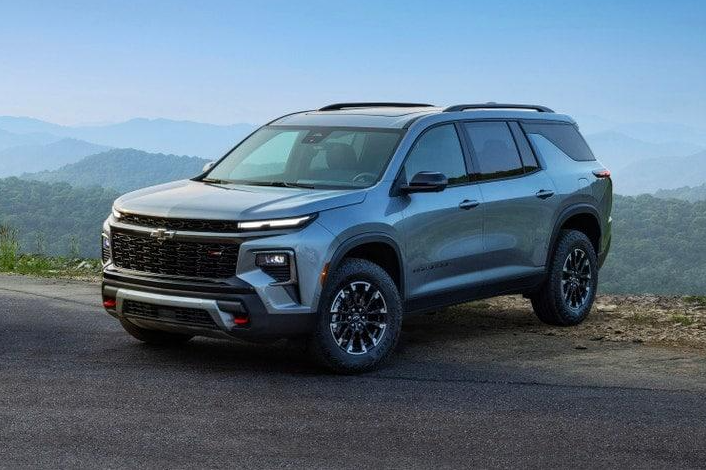
MTIMES Archive / Photo

GM to introduce hybrid variants for three flagship SUV models; redirects $500 million in EV production subsidies.

Hyundai Motor and Kia report a 53% surge in hybrid sales, signaling a direct confrontation in the large SUV segment.

General Motors (GM), the largest automaker in the United States, is moving to integrate hybrid powertrains into its flagship sports utility vehicles (SUVs). As the company modifies its long-standing focus on all-electric vehicles (EVs), it is preparing for an intensifying battle with Hyundai Motor and Kia in the U.S. large SUV market.

Hyundai Motor and Kia have already secured a firm foothold in the market, having aggressively expanded their hybrid sales in the U.S. this year. The new hybrid models GM is pursuing are set to compete directly against key rivals such as the Hyundai Palisade and Kia Telluride.

GM Shifts Strategy: Hybrid Expansion for Flagship SUVs

Reuters reported on the 27th (local time), citing multiple sources, that GM is planning to produce hybrid versions of the Chevrolet Traverse, Buick Enclave, and GMC Acadia at its Lansing, Michigan facility. These three models share a common platform and serve as the core of GM's U.S. lineup.

Following the report, GM confirmed its investment plans to prepare its Lansing Delta Township plant for hybrid production. This marks a strategic shift for an automaker that had previously been heavily centered on pure battery-electric vehicles.

The company’s capital allocation is also reflecting this pivot. The U.S. Department of Energy is reportedly reallocating $500 million, originally intended to support GM's EV manufacturing transition, toward the hybrid production efforts at the Lansing plant. GM already recorded $3.6 billion in costs related to its EV strategy adjustments between January and September of this year.

During the third-quarter earnings call on the 20th, GM CEO Mary Barra stated, "We will introduce hybrid models in the major segments where we compete," confirming that the company intends to add hybrids to its core product offerings alongside its existing EV investments.

GM’s U.S. market share stood at 16.4% from January to September this year, a 0.7 percentage point decline from 17.1% in the same period last year. While competitors like Toyota and Honda expanded their influence in the U.S. by leveraging popular hybrid models, GM struggled with a lack of relevant vehicle offerings.

Rising gasoline prices in the U.S. have fueled consumer demand for hybrids. In August, hybrid vehicles accounted for 19% of new car retail sales, up from roughly 16% prior to the start of the Iran conflict. GM dealers have increasingly voiced concerns over the lack of hybrid options on their lots.

GM is prioritizing large SUVs for its hybrid rollout—vehicles characterized by their size and frequent use for long-distance driving. By adding hybrid powertrains to existing gasoline models, the company aims to capture fuel-conscious consumers.

Hyundai Motor and Kia Lead with 53% Growth in Hybrid Sales

Hyundai Motor and Kia entered the U.S. large SUV hybrid market well ahead of GM. The two companies saw their combined U.S. sales reach 506,200 units in the third quarter, a 5.4% increase year-on-year. Notably, hybrid sales climbed 53.4% to 138,112 units, accounting for 27.3% of total sales, while EV sales fell by 51% to 22,311 units.

Sales of large SUVs also showed strong growth. In September, the Palisade saw sales rise 52.1% year-on-year to 10,327 units, while the Telluride increased 41.9% to 11,927 units. Both models compete in the exact family-SUV segment that GM is now looking to penetrate with its new hybrids.

To support this growth, the companies are expanding local production. Hyundai is strengthening hybrid output at its Alabama plant and the new Georgia Metaplant, while Kia continues to produce the Telluride hybrid at its Georgia facility.

The 2027 Palisade Hybrid is priced starting at $44,560 in the U.S., offering an EPA-estimated combined fuel economy of 34 mpg for the front-wheel-drive trim. The Telluride hybrid starts at $46,490, delivering 35 mpg and a maximum output of 329 horsepower.

Hyundai Motor plans to increase its North American hybrid lineup to more than 10 models by 2030 and aims to raise the share of hybrids in its total sales to 50%.

As GM moves to bring the Traverse, Enclave, and Acadia into the fold, they are entering a segment where Hyundai Motor and Kia have already established a strong competitive advantage. While GM has not yet disclosed a specific launch schedule for its new hybrids, the battle over price and fuel efficiency in the U.S. large SUV market is expected to intensify significantly.

[SOURCE]


MARKET Times

MTIMES Global Editorial Statement

This analysis is provided for international business intelligence and informational purposes only. It does not constitute investment advice or a solicitation to buy or sell securities. For inquiries regarding licensing or syndication, please contact [email protected].

← More in IndustryBack to Top ↑

Related Market & Corporate Intelligence

Anthropic Expands AI Business into Drug Discovery, from Antibody Optimization to Clinical SupportAnthropic Expands AI Business into Drug Discovery, from Antibody Optimization to Clinical SupportKOSDAQ in crisis at 700 mark... Why couldn't the upward trend be maintained?KOSDAQ in crisis at 700 mark... Why couldn't the upward trend be maintained?South Korean Battery Makers Pivot to LFP and ESS Amid Evolving DemandSouth Korean Battery Makers Pivot to LFP and ESS Amid Evolving DemandWall Street Sells Off Big Tech Despite Solid Earnings: The Growing Skepticism Over AI ROIWall Street Sells Off Big Tech Despite Solid Earnings: The Growing Skepticism Over AI ROI
HomeTOP10AlmatenPicksCorpAlgiten

