Nasdaq plunges 5.52% amid spreading concerns over data center regulations
Big tech expands investments; semiconductor demand outlook remains robust
U.S. semiconductor stocks plummeted over 12% in a single session, intensifying skepticism over the sustainability of the artificial intelligence (AI) investment boom. A heavy sell-off was triggered by mounting uncertainties surrounding profitability, weighed against soaring capital expenditures and impending data center construction regulations. Paradoxically, major big tech companies driving the demand for AI infrastructure are actually expanding their capital expenditure plans, revealing a sharp divergence between actual investment flows and stock market performance.
On the 5th (local time), the Nasdaq composite tumbled 5.52% on the New York Stock Exchange, marking its steepest decline since April 2025. The S&P 500 fell 4.36%, and the Dow Jones Industrial Average dropped 3.44%. The Philadelphia Semiconductor Index nosedived by more than 12%, while NVIDIA plunged over 9%. Advanced Micro Devices (AMD), Micron Technology, and Marvell Technology also suffered double-digit losses.
Having retreated more than 10% from its all-time high in October, the Nasdaq has officially entered technical correction territory. The selling pressure quickly spread from AI semiconductors to data center operators and power infrastructure firms.
Spreading Data Center Regulations Cast Doubt on AI Profitability
A primary catalyst for the sharp downturn is heightened anxiety over stricter data center regulations following the U.S. midterm elections. Out of 41 local ballot measures concerning data centers across 10 U.S. states in the election on the 3rd, 40 yielded outcomes favorable to development restrictions. While the legal efficacy and implementation timelines vary by measure, concerns are mounting that the approval processes for new permits, power grids, and water infrastructure will become increasingly stringent.
UBS estimates that approximately 30% of projected new data center capacity additions in the U.S. through 2028 face potential risks from construction moratoriums. Rather than actual investment cancellations, this volume represents capacity exposed to widening regulatory headwinds.
These regulatory jitters have added fuel to ongoing debates regarding the return on investment (ROI) for AI. While leading technology firms such as Google and Meta are pouring vast sums into securing data centers and semiconductors, the timeline for generating commensurate returns remains opaque.
The growing leverage of certain companies has also become a burden. Credit Default Swap (CDS) premiums for AI cloud provider CoreWeave surged to all-time highs, heightening vigilance over financing risks.
Jo A-in, an analyst at Samsung Securities, recently noted, "Uncertainties are growing over whether the cash flows generated from big tech companies' core legacy businesses can adequately support the accelerating pace of AI facility investments." She explained that sustained cash flow deterioration could negatively impact the mid-to-long-term demand outlook for domestic semiconductor firms.
Ipek Ozkardeskaya, senior analyst at Swissquote Bank, told Reuters, "We expect increased scrutiny on such aggressive AI infrastructure expansion." Market skepticism is less about AI's growth potential and more focused on whether colossal capital expenditures can translate into expected profits.
Supply-and-demand shocks further exacerbated the sell-off. Amid persistent de-leveraging by hedge funds and continuous institutional selling, the Cboe Volatility Index (VIX) briefly breached the 28 threshold during the session. Fears of forced liquidations driven by leveraged exchange-traded funds (ETFs) and algorithmic trading strategies further pressured semiconductor equities.
Big Tech Expands Investments, Semiconductor Demand Outlook Remains Solid
The sell-off in semiconductor stocks rippled across the global supply chain. On the 5th, European chip equipment and component makers ASML and Infineon, alongside Japan's Advantest and Tokyo Electron, suffered sharp declines. Domestically, Samsung Electronics and SK hynix tumbled 7.57% and 9.46%, respectively, though these Asian markets closed prior to the conclusion of the U.S. regular trading session.
Equities collapsed well ahead of any concrete evidence pointing to a reduction in semiconductor orders. In their recent earnings releases, Meta, Alphabet, and Amazon actually raised their capital expenditure guidance. A clear disconnect persists between the market's fear of a spending slowdown and the actual deployment plans presented by corporations.
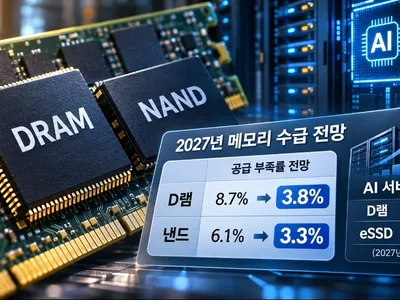
Furthermore, the supply-demand outlook for memory chips remains resilient. In a recent report, Citi projected supply deficits for DRAM and NAND at 3.8% and 3.3%, respectively, for 2027. Although the projected deficit margins were trimmed from previous estimates, supply shortages are expected to persist, anchored by server DRAM and enterprise SSDs.
Goldman Sachs forecasts that capital expenditures by major hyperscalers will reach $1.2 trillion by 2027. The firm also analyzed that if capital spending deviates by $250 billion above or below expectations, it could alter the earnings growth rate of S&P 500 companies by approximately 6 percentage points.
Even if AI investments persist, a deceleration in growth velocity could significantly impact the earnings outlook and stock prices of semiconductor firms. Particularly for Samsung Electronics and SK hynix—where high expectations are pinned on expanding High Bandwidth Memory (HBM) shipments and rising server DRAM demand—it has become critical whether major clients' investment blueprints translate into tangible purchase orders and long-term supply contracts.
While major big tech companies continue to ramp up AI facility investments and the memory supply deficit outlook holds firm, the risk that data center regulations and debt burdens may slow the pace of expansion has intensified. The market has begun re-pricing future growth expectations. It is now time to verify whether the scale of investment plans is genuinely backed by actual semiconductor orders and supply contracts.