Intensified inspections on smart glasses and micro-cameras; post-exam tracking for AI-assisted cheating.
Measures strengthened following a confession of cheating in the tax accountant exam; field effectiveness remains a key challenge.
On November 18, one day before the 2027 College Scholastic Ability Test (CSAT), authorities across South Korea have implemented heightened measures to prevent cheating involving artificial intelligence (AI) and ultra-small electronic devices. The move comes amid growing concerns that devices difficult to identify with the naked eye, such as smart glasses and micro-cameras, could be exploited for malpractice.
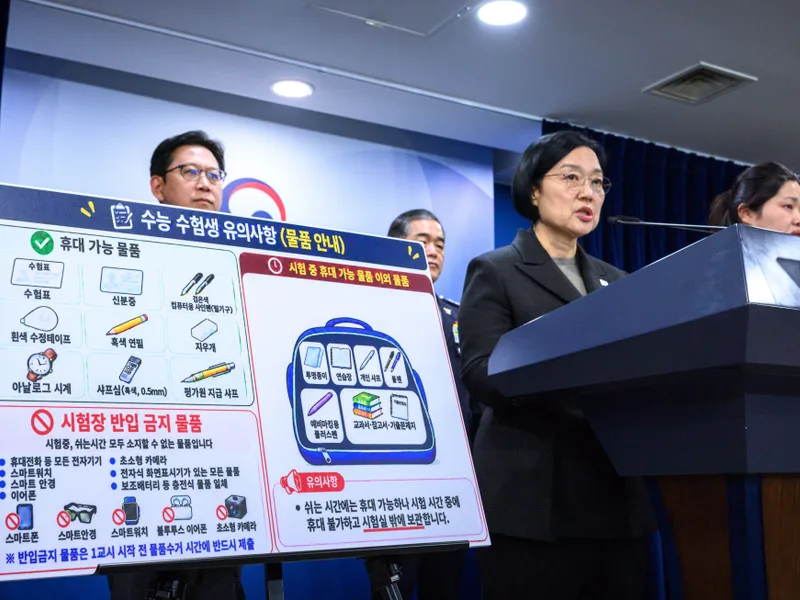
The electronic devices capable of being used for cheating are becoming increasingly sophisticated. Notable examples include 'AI smart glasses' that are nearly indistinguishable from regular eyewear, 'micro-cameras' hidden in collars or buttons to photograph test papers, and wireless earphones inserted deep into the ear canal, all equipped with communication and recording capabilities.
Consequently, electronic device inspections at this year's CSAT test centers will be significantly more rigorous. On the day of the exam, supervisors will check students' sleeves, collars, and buttons, and apply identification stickers to clothing buttons to prevent the concealment of micro-cameras. Students wearing glasses must have them inspected during every session and, if requested by a supervisor, must remove them and place them on their desks for closer examination. Possession of prohibited devices, such as smart glasses or smartwatches, will be treated as cheating regardless of whether they were actually used.
All-out effort to block AI-assisted cheating; proposal to extend exam bans to 10 years
The government has also bolstered on-site supervision and post-exam investigative frameworks. In addition to the existing 75,000 supervisors, approximately 8,400 personnel—including 1,800 specialists in smart devices and 6,600 hallway monitors—will be deployed across 1,312 test centers nationwide. Authorities plan to send emergency alerts before the exam to ensure no mobile phones remain unsubmitted. For suspected cases involving the use of AI to solve test questions, the government intends to cooperate with global big tech firms to investigate AI service access logs and telecommunication records.
Sanctions against cheating are also set to be strengthened. The government is consulting with the National Assembly to extend the ban on taking the CSAT from one year to 10 years, aiming to apply these stricter penalties starting with this year's exam. Serious cases of malpractice may lead to criminal charges for obstruction of official business or the revocation of university admissions.
Prime Minister Han Seung-soo emphasized in a public statement on the 17th, "We will uphold the fairness of the CSAT with a firm resolve to tolerate no form of cheating."
These government measures were accelerated following an incident on the 15th, where a top-scoring candidate of the 63rd Tax Accountant Exam confessed to police that they had cheated using a micro-camera, a smartphone, and generative AI. The Presidential Office also convened an emergency meeting to review response strategies.
Ha Joon-kyung, Chief of Policy at the Presidential Office, stated, "Relevant agencies, including the Ministry of Education, must thoroughly examine all possibilities to prevent AI-assisted cheating in the upcoming CSAT. While mobilizing all available resources, such as thermal imaging cameras, we must ensure that students wearing regular glasses or medical devices do not suffer unnecessary disadvantages during the supervision process."
Detecting devices that are indistinguishable from everyday items through on-site inspections alone remains a significant challenge. Balancing enhanced oversight with the need to prevent undue hardship for students using legitimate medical or vision-correcting devices remains a critical task for exam administrators.