U.S. Equities Rally on Midterm Resolution; VIX Plummets 20%
Big Tech Advances While Semiconductors Lag Amid Persistent AI Regulation Concerns
Key Market Dynamics
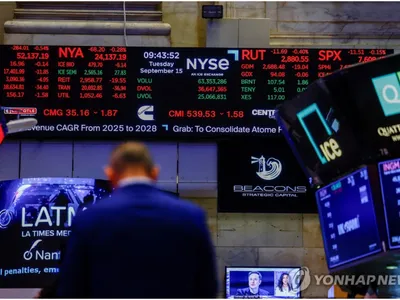
① Uncertainty Eases Post-Election; Nine Sectors Advance
U.S. markets rallied as the conclusion of the midterm elections alleviated political uncertainty. Nine out of eleven sectors advanced, with the exception of energy and industrials, while sharp drops in crude oil prices and Treasury yields provided a tailwind for investor sentiment.
Concerns over post-election political gridlock receded after the administration signaled a willingness to accept the election results and cooperate with the opposition.
Historically, equities have shown strong post-midterm resilience. Over the past 19 midterm election cycles, the market has posted gains six months later without exception, averaging a 14.2% return. Analysts noted that a divided Congress could reduce policy uncertainty and fiscal expansion pressures by making sweeping new legislation less likely.
Actual policy shifts are expected to materialize following the inauguration of the new Congress in January.
② Big Tech Hits Record Highs While Semiconductors Slip: Intra-AI Divergence
Despite the lifting of electoral uncertainty, AI-related shares showed a fragmented performance.
Apple and Microsoft closed at all-time highs, while Amazon and Alphabet posted substantial gains. Conversely, a pullback in Nvidia allowed Apple to reclaim its status as the world's most valuable company, and memory stocks such as Micron Technology and SanDisk traded lower.
Advanced Micro Devices (AMD) and Super Micro Computer also faced profit-taking despite beating earnings expectations. Although AMD projected an 80% surge in revenue for next year and anticipated outperforming Intel in quarterly sales for the first time, it could not escape the broader valuation compression hitting the semiconductor sector.
Markets are beginning to differentiate corporate exposure based on data center deployment velocity, capital access, and regulatory impacts rather than broad-brush AI growth narratives.
③ Texas Data Center Regulations Emerge, Though Far from Outright Halt
The Democratic victory in the Texas gubernatorial race—the first since 1990—brought data center policies to the forefront as a new variable.
The governor-elect has indicated plans to temporarily suspend approvals for new data centers until the state legislature establishes appropriate safeguards. The initiative aims to mitigate the burden of data centers on power grids, water supplies, and residential utility rates, while re-evaluating tax incentives.
Analysts emphasize that this should be distinguished from policies aimed at halting the AI industry or shutting down existing data center operations. Moving forward, negotiations between big tech companies and state governments are likely to center on how to allocate power costs and community burdens.
Market jitters over potential disproportionate pressures on capital-weak data center and neo-cloud operators triggered steep sell-offs in related equities.
Market Perspective
Domestic equities overreacted to the U.S. midterm results and data center regulatory concerns. While U.S. markets also saw weakness in semiconductors and AI infrastructure, nine of the eleven broader sectors finished higher.
Regardless of which party controls Congress, the U.S. is unlikely to abandon AI investments. Massive capital has already been deployed, and AI is directly tied not only to strategic competition with China but also to regional investment and job creation. Furthermore, recent debates over data centers are primarily focused on resource consumption—such as power and water—and local cost burdens rather than AI technology itself.
The core challenge is the market's heightened sensitivity to AI-related headlines. Divergence within the AI ecosystem is widening—with megacap tech rallying while semiconductor and data center plays retreat. For the time being, tracking liquidity shifts will be more critical than gauging headline index direction.
In the domestic market, calling a short-term bottom remains premature. Given the pullback in the MSCI Korea Index and overnight futures, morning volatility in semiconductor names is expected to persist. Investors should assess whether recent sell-offs exceed fundamental earnings adjustments, carefully distinguishing between established market leaders, policy- and investment-backed beneficiaries, and stocks with accumulating institutional buying.
Today's Checklist
Semiconductors: Domestic market reactions in Samsung Electronics and SK hynix following weakness in U.S. memory and chip equities.
AI Regulation: Potential spillover effects from Texas data center policy concerns.
Supply and Demand: Shifts in foreign and institutional trading flows regarding semiconductor issues.
Sector Divergence: Capital rotation between megacap tech, AI infrastructure, and semiconductors.
Oil and Yields: Impact of declining crude prices (mid-$88 range) and the U.S. 10-year Treasury yield (4.88%).
Key Indicators
US Dollar Index: 101.51 (-0.35%)
Crude Oil: $88.12 (-7.97%)
Volatility Index (VIX): 16.61 (-20.26%)
U.S. 10-Year Treasury Yield: 4.88%
MSCI Korea Index: -1.79%
Nighttime Futures: -1.65%
Source: Market Analyst's Stock Story (t.me/shmstory)
YouTube: Market Analyst TV www.youtube.com/@blueoak1004
This article has been reorganized from a Telegram post by "Market Analyst's Stock Story" with the author's consent. All content may contain errors and does not constitute a recommendation to buy or sell securities; it cannot be used as a basis for trading. Under no circumstances may the contents of this post be used as legal grounds.