KAI secures 1.4 trillion won confidential order, drawing market attention to potential FA-50 or Surion deals
Initial shipments arrive in Malaysia while production advances in Poland; Middle Eastern helicopter market also in focus
Korea Aerospace Industries (KAI) is accelerating its push into overseas markets after securing a major aircraft export contract. While the client, aircraft type, and contract duration remain confidential at the request of the counterparty, market watchers point to the FA-50 light attack aircraft and the Surion utility helicopter as the most likely candidates. The deal has drawn keen interest as a potential stepping stone for KAI to expand its export arena from Southeast Asia and Europe to the Middle East.
According to KAI’s recent third-quarter earnings report, the company booked 1.4575 trillion won in new orders within its finished aircraft export segment. This represents newly secured business rather than revenue recognized from legacy contracts. Although the buyer and platform remain under wraps, the agreement stands out as one of KAI’s key international achievements this year.
A Veiled Contract: FA-50 or Surion?
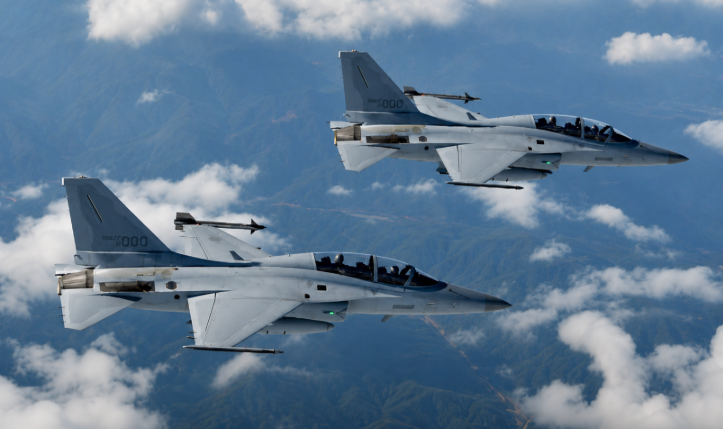
Industry speculation initially centers on the FA-50, a light attack aircraft developed from the domestic T-50 supersonic advanced jet trainer that performs both training and light combat missions. For nations that find high-end, frontline fighter jets cost-prohibitive, the aircraft offers a relatively manageable alternative.
KAI has previously built a track record for the FA-50 in the Philippines, Poland, and Malaysia. In Malaysia, the first two FA-50M aircraft arrived at the Kuantan Air Base on the first of this month. Under an 18-jet export contract signed in 2023, the aircraft are slated for official handover later this month following final acceptance trials by the Royal Malaysian Air Force.
The FA-50M units supplied to Malaysia are designed to replace aging British-built Hawk fighters. Enhanced operational capabilities include an Active Electronically Scanned Array (AESA) radar and in-flight refueling functionality. Following this initial delivery, KAI is pursuing an additional 18-jet export and subsequent logistics support projects.
Another potential candidate is the domestically developed Surion utility helicopter. Designed for diverse missions including troop transport, logistics, and medical evacuation, KAI has previously engaged in export discussions with Middle Eastern nations such as Iraq and the United Arab Emirates (UAE).
Byun Yong-jin, an analyst at iM Securities, noted in a recent report that the contract value likely points to an order of 10 or more FA-50s or 20 or more Surions. Describing the confidential agreement as a welcome addition to KAI's order book after a hiatus, he suggested the deal could either signal accelerating demand for core products or a resurgence in Middle Eastern arms procurement, depending on the platform.
The exact aircraft type and counterpart nation have not been officially confirmed. The possibility of a Middle Eastern Surion export remains an estimate by securities firms based on past negotiation history and contract scale.
Expanding Beyond Southeast Asia and Europe to the Middle East
KAI’s international business has traditionally centered on the FA-50 in Southeast Asia and Europe. In the Philippines, repeat orders followed on the heels of established operational experience, while production of the FA-50PL is underway for Poland. Meanwhile, Malaysia has entered the formal handover phase as initial deliveries arrive locally.
International clients weigh various criteria when procuring aircraft. Existing operators prioritize continuity in maintenance and pilot training systems, whereas first-time buyers evaluate a mix of aircraft performance, weapon integration, logistics support, and delivery schedules. Long-term partnerships that encompass maintenance, spare parts supply, and pilot training well beyond the initial sale ultimately dictate export competitiveness.
The Surion targets a different market segment than the FA-50. Unlike fighter jets, its broad utility—spanning troop transport and tactical support—allows it to tap into military helicopter replacement demand. Securing additional contracts in the Middle East would open a new frontier for KAI in utility helicopter exports, complementing its success in light attack aircraft.
Mass production of the next-generation KF-21 fighter jet is also underway. Related revenues were reflected in third-quarter earnings, and KAI is leveraging its domestic manufacturing experience to pursue overseas market entry.
Post-Contract Execution Crucial: Deliveries and Follow-On Orders
As export contracts multiply, managing delivery schedules has become increasingly critical. KAI experienced delivery disruptions this year due to engine supply issues for the Light Armed Helicopter (LAH). With a portion of the original delivery volume expected to spill over into next year, annual revenue forecasts have been impacted.
Aerospace manufacturing is characterized by lengthy timelines spanning from contracting and production to testing and handover. Any bottlenecks in parts supply or technical hitches inevitably delay deliveries and revenue recognition. The LAH delivery setbacks this year underscore that fulfilling existing contracts is just as vital as securing new orders.
Further contracts remain in the pipeline. Domestically, the third-phase mass production project for the LAH is progressing, while internationally, Indonesia's involvement in the KF-21 program remains a focal point. Once project budgets and contract terms are finalized, they are expected to be reflected in KAI’s new order figures.
KAI has set a full-year new order target of 10.4 trillion won, having secured approximately 2.2 trillion won through the third quarter. The extent to which the company meets this goal will depend on the realization of major year-end deals, including follow-on LAH mass production orders and overseas KF-21 initiatives.
Having broadened the FA-50 export foundation in the Philippines, Poland, and Malaysia, KAI has now secured another substantial contract. Once the counterparty and platform of this confidential agreement are unveiled, the direction of KAI’s next international stage will come into clear view.