Semiconductor Sell-Off Driven by AI Regulatory Fears; $3 Trillion Erased from U.S. Market Cap
VIX Spikes Nearly 70%; MSCI Korea Index Tumbles 12.56%
Market Overview
① Semiconductor Sell-Off: Volatility Index Approaches 30
U.S. markets nosedived following the midterm elections as concerns over potential data center regulations intensified. All 11 major sectors closed in the red, with total market capitalization shrinking by approximately $3 trillion.
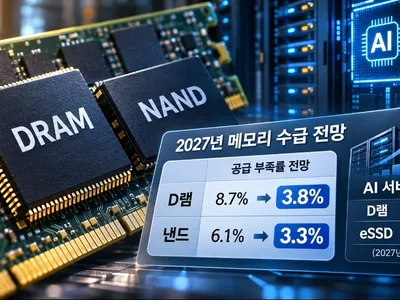
Semiconductor stocks bore the brunt of the selling, marking their steepest decline since the height of tariff-related shocks. Nvidia tumbled 8%, Micron fell 14%, and Broadcom shed 8%. Out of the top 30 stocks by market cap, only Costco managed to close higher.
The Volatility Index (VIX) surged 69.66% to 28.18, briefly touching 30 during intraday trading. Analysts attribute the accelerated decline to algorithm-driven program selling triggered by the spike in market volatility.
Speculation also points to a simultaneous liquidation of hedge fund positions. Nomura noted that many funds are aggressively offloading assets to lock in year-end profits, intensifying downward pressure. Rumors of a large-scale liquidation by a specific fund have circulated, though the actual scale and impact remain unconfirmed.
② From Elections to AI Risk: The Rise of Data Center Regulation
Post-election, market focus has shifted from political uncertainty to data center policy. In several regions, including Texas, candidates critical of data center development secured victories, and there is growing political pressure to tighten regulations citing power grid strain and environmental concerns.
The market is reacting to fears that delays in new data center construction could dampen AI investment and weaken semiconductor demand. Some analysts suggest that a significant number of planned projects could face deferrals or revisions.
However, counterarguments exist. Critics suggest that the regulatory push is focused on local concerns—such as utility costs, water usage, and tax breaks—rather than the AI industry itself, limiting the likelihood of a broader investment cycle shutdown.
OpenAI has reaffirmed its commitment to mitigating local impact, pledging to cover power costs to prevent utility price hikes for residents, while maintaining transparency regarding water, noise, and energy consumption. They have also set goals for curbing consumption during peak hours and prioritizing local hiring.
③ Differentiation in the AI Sector: Incumbents vs. New Entrants
Even if stricter regulations become reality, the impact on AI firms will likely be uneven.
For established hyperscalers, higher barriers to entry for new data centers could increase the value of existing infrastructure. Conversely, smaller "Neo-cloud" providers with limited capital and heavy reliance on new construction may face significant headwinds.
Market scrutiny regarding AI investment scale and cash flow is intensifying. As tech giants like Alphabet, Amazon, Microsoft, Meta, and Oracle scale back stock buybacks to fund massive AI capex, concerns are mounting over the long-term impact on shareholder returns. Ultimately, the market is moving toward a stage where it distinguishes between AI growth potential and the actual capacity to convert investments into tangible profits.
Market Analyst Perspective
Domestic markets suffered a sharp decline yesterday due to data center fears. While markets in Japan and Taiwan also weakened, South Korea’s index—heavily weighted toward Samsung Electronics and SK hynix—took a harder hit. Interestingly, the ratio of advancing to declining stocks was roughly 3:4, suggesting that the broader market did not collapse as severely as the index decline implies.
Today, conditions may deteriorate further. With the MSCI Korea Index falling 12.56% and nighttime futures down 7.87%, we expect high volatility for Samsung Electronics, SK hynix, and the broader semiconductor supply chain at the open.
The critical factor is the intensity of foreign selling. Recent outflows appear less about a mechanical reduction in Korean weightings and more of a reflexive reaction to AI and data center headlines. If foreign selling remains persistent throughout the day, it will be difficult for dip-buying interest to materialize.
However, current price levels seem to disregard the memory supply shortages and long-term contract conditions highlighted by Samsung Electronics and SK hynix during their earnings calls. Delays in specific data center projects are distinct from the underlying issue of structural supply-demand imbalances.
While we cannot pinpoint a short-term bottom, the current technical misalignment can lead to "selling begetting selling," pushing stocks further below their fundamental value. As volatility subsides, investors should focus on the recovery potential of market leaders and stocks that have faced excessive selling despite sound fundamentals.
Today's Checkpoints
Semiconductors: Watch for opening sell-offs in Samsung Electronics and SK hynix and their ability to recover.
Foreign Investors: Monitor whether the selling pressure in the electrical and electronics sector eases during intraday trading.
Supply/Demand: Look for potential institutional or pension fund buying following the initial program-led sell-off.
AI Regulation: Assess if data center delay concerns lead to a downward revision in actual earnings outlooks.
Market Breadth: Monitor the gap between the index collapse and the actual ratio of advancing vs. declining stocks.
Key Indicators
Dollar Index: 101.59 (+0.03%)
Oil Prices: $90.52 (+2.72%)
VIX: 28.18 (+69.66%)
U.S. 10-Year Treasury Yield: 4.83%
MSCI Korea Index: -12.56%
Nighttime Futures: -7.87%
[SOURCE]