Silicon Valley figures support Jensen Huang's return; efforts underway to persuade the board and the White House.
Bessent raises concerns over semiconductor export controls to China, creating uncertainty for AI investment strategy.
The potential return of former CEO Jensen Huang has complicated the succession landscape at Nvidia. While some Silicon Valley figures are pushing for Huang's reinstatement, U.S. Treasury Secretary Scott Bessent has demanded a management overhaul led by an external candidate. The controversy surrounding the succession is spilling over into issues involving the Chinese semiconductor market, U.S. export control policies, and Nvidia's aggressive artificial intelligence (AI) investment strategy.
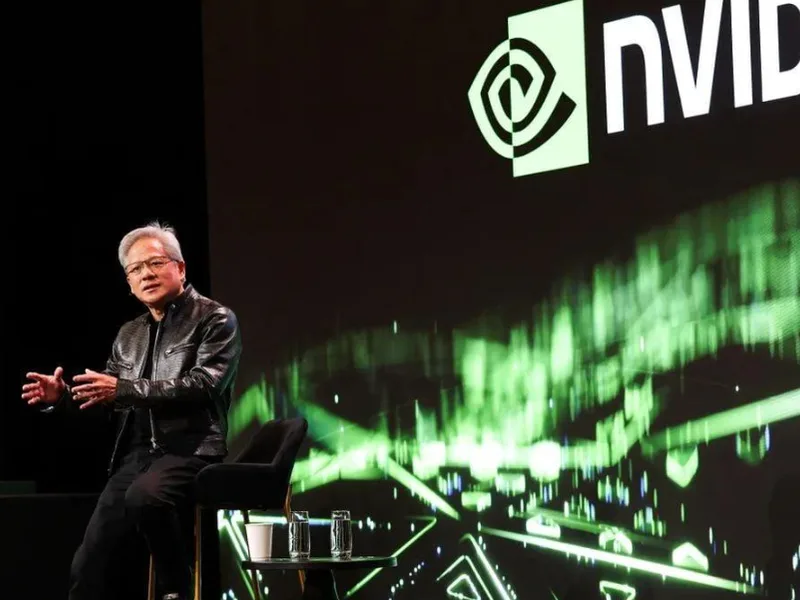
According to reports from the Financial Times and Reuters on the 16th, Huang has recently discussed the possibility of a management return with his inner circle. Some Silicon Valley figures have reportedly formed a 'war room' to persuade the board and secure support from the White House, a move Huang is said to endorse.
More than 160,000 people have participated in an online petition calling for his return. Key technology industry figures, including Tesla CEO Elon Musk and Epic Games CEO Tim Sweeney, have also expressed their support. Some Nvidia shareholders have urged the board to consider all options, including the reinstatement of Huang.
Silicon Valley Pushes for Huang's Return, While U.S. Treasury Secretary Demands Reform
In an interview with Fox News on the 15th (local time), Secretary Bessent argued that Nvidia should look outside the company for its next CEO. He emphasized the need for a major management overhaul and demanded that the board and external legal counsel respond within ten days to inquiries regarding their export control compliance systems.
Huang resigned on the 11th amid allegations concerning his private life and potential ties to Chinese intelligence agencies, with Nvidia making the official announcement the following day. The board is currently conducting an independent investigation with the support of external legal counsel.
The conflict between the two sides is rooted in Nvidia's business in China. Huang had maintained that withdrawing from the Chinese market would only encourage the growth of local semiconductor firms. Conversely, U.S. political circles continue to demand stricter restrictions on the export of advanced semiconductors to curb China's AI technological advancement.
Within Washington, there is a divergence of opinion regarding the intensity and methodology of these regulations. Perspectives coexist between those who advocate for a complete cutoff of advanced semiconductor supplies to China and those who believe it is strategically advantageous to maintain China's dependence on U.S. technology.
While Silicon Valley prioritizes Huang's technological leadership and business continuity, Secretary Bessent is challenging the existing management's accountability regarding export control compliance. While it is difficult to interpret Bessent's remarks as the official stance of the entire White House, the issues of China operations and regulatory compliance are likely to emerge as key points of contention in the succession process.
Currently, Nvidia's Chief Financial Officer (CFO) Colette Kress is serving as interim CEO. With ARM CEO Rene Haas mentioned as a potential external candidate, the board is reviewing both internal and external options.
Will Nvidia's Aggressive AI Investment Continue Under New Leadership?
The controversy surrounding the succession has also focused attention on Nvidia's AI investment model. Huang had expanded the customer ecosystem by not only supplying semiconductors but also injecting capital into AI development firms and cloud service providers.
This model involves Nvidia's capital fueling customer infrastructure investments, which in turn drives demand for Nvidia's semiconductors. Reports suggest there were internal differences regarding this aggressive investment strategy. According to Reuters, interim CEO Kress had raised objections to some of the large-scale AI investments pushed by Huang.
If the next management team manages investment profitability and financial risk more strictly, Nvidia's pace of investment and cooperation models could change. However, a shift in Nvidia's strategy does not necessarily lead to an immediate decline in global AI semiconductor demand, as major cloud companies like Microsoft, Amazon, and Google continue to execute AI infrastructure investments based on their own business plans.
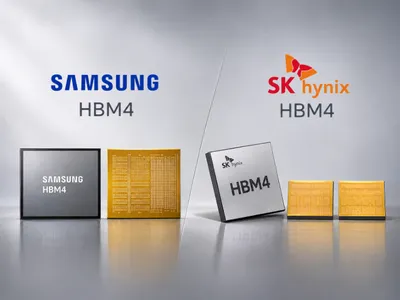
In South Korea, collaborations involving high-bandwidth memory (HBM) supply from Samsung Electronics and SK hynix, as well as AI infrastructure and autonomous driving projects with companies like Naver and Hyundai Motor, could be affected by the investment priorities of the next management team.
Nvidia's board has stated that it intends to maintain existing customer contracts and product roadmaps. The fiscal 2027 third-quarter earnings call scheduled for the 17th (local time) will be the first official earnings presentation since Huang's resignation. Attention is focused on what stance interim CEO Kress and the management team will take regarding future AI investments and business operations.