

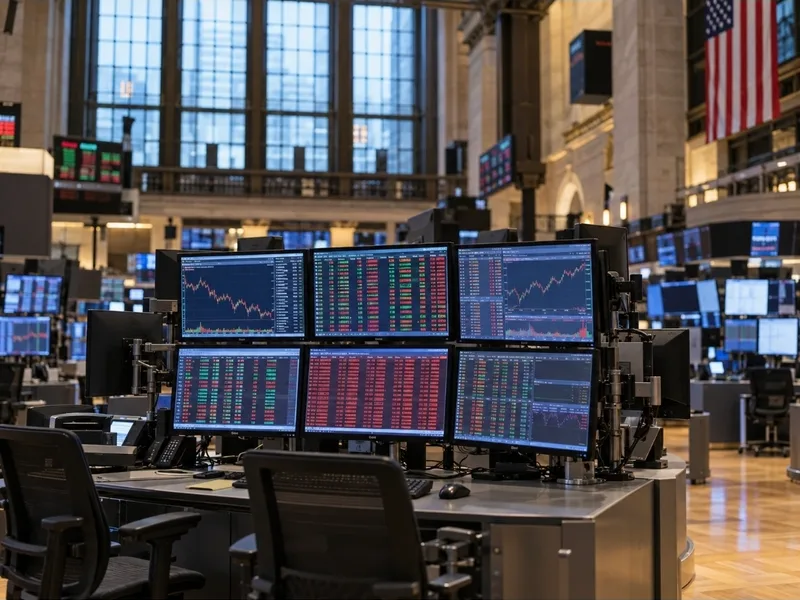
Insurance stocks weaken on concerns over Medicare overpayment clawbacks; AMD and Broadcom rise while Nvidia declines for the fifth consecutive session.
Fed Governor Waller suggests a 0.5 percentage point rate hike in December; Anthropic IPO priced at $83, exceeding the top end of its target range.
The three major U.S. stock indices diverged on November 18 (local time). The Dow Jones Industrial Average fell more than 1% as UnitedHealth Group plummeted for the second straight day following the U.S. government's announcement of expanded health insurance audits. The Nasdaq snapped a four-day losing streak, supported by gains in AMD and Broadcom, despite a decline in Nvidia. Meanwhile, a Federal Reserve official suggested a 0.5 percentage point interest rate hike in December.
The Dow Jones Industrial Average closed at 50,198.17, down 561.25 points (1.11%). The S&P 500 fell 16.90 points (0.23%) to 7,323.63, marking its fifth consecutive decline—the longest losing streak since June. The Nasdaq Composite rose 101.50 points (0.42%) to 24,429.88.
UnitedHealth Group was the primary drag on the Dow. After falling 5.42% the previous day, the stock dropped another 10.21% to close at $349.91. Humana, a peer in the sector, also fell approximately 13%. Concerns intensified after the Centers for Medicare & Medicaid Services (CMS) released a proposed rule on the 16th that could increase the amount insurers must return to the government.
The core of the proposal involves calculating and clawing back total overpayments based on sample audits of Medicare Advantage plans operated by private insurers. The CMS estimated that applying this method to payments starting from 2018 could allow the government to recover an average of approximately $9 billion per payment year.
Chevron also weighed on the Dow alongside insurance stocks. As U.S. commercial crude oil inventories rose by 3.4 million barrels over the week, West Texas Intermediate (WTI) for December delivery fell $2.75 (3.2%) to $83.26 per barrel, its lowest level since late August. Chevron closed at $205.88, down 4.74%, impacted by both falling oil prices and an ex-dividend date of $1.78 per share.
In the Nasdaq, AMD and Broadcom led the rebound. AMD, which had fallen 5.74% over the previous two sessions, rose 5.31%, while Broadcom gained 3.65%. Nvidia, despite jumping over 2% in pre-market trading following better-than-expected earnings, turned lower during regular hours. It closed down 2.89% at $150.96, its lowest level since June 2025.
Nvidia's revenue more than doubled year-over-year. Revenue for the third quarter of fiscal year 2027 reached $115.8 billion, a 103% increase from the same period last year, with data center revenue rising 110% to $107.6 billion. The company projected $130 billion in revenue for the fourth quarter, which includes an extra week. Despite the strong performance, the question of who will succeed founder Jensen Huang remains a variable. The board stated it has no plans to bring Huang back as CEO and is searching for a successor both internally and externally.
Retailers Target and TJX saw their shares rise following earnings reports. Target shares rose about 4% after announcing a 7.1% year-over-year increase in third-quarter net sales. TJX shares jumped 8.05% after raising its annual same-store sales growth forecast from 3-4% to 4%, even while accounting for fuel cost pressures in its fourth-quarter profit outlook.
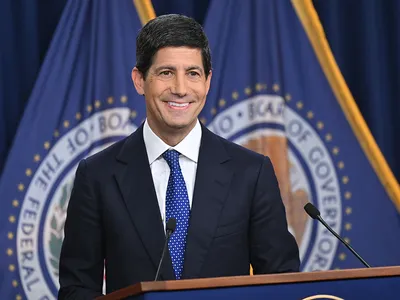
Regarding interest rates, the debate centered on the magnitude of a potential hike. Fed Governor Christopher Waller suggested a 0.5 percentage point hike in December, citing that inflationary pressures are spreading to the service sector. He argued that if the December hike is limited to 0.25 percentage points, the Fed must clearly signal a similar move for January.
The discussion on rate hikes was also reflected in the minutes of the October Federal Open Market Committee (FOMC) meeting released that afternoon. While the Fed held the benchmark rate at 3.75-4.00%, nearly all participants agreed that further hikes would likely be necessary to return inflation to the 2% target. Two participants noted that if subsequent inflation data remains unfavorable, a hike larger than 0.25 percentage points could be considered at the next meeting. Despite this hawkish tone, the 10-year Treasury yield fell from 5.10% to 5.06%.
On the 19th, U.S. weekly jobless claims and Walmart's earnings are scheduled for release. These will provide insights into the labor market and U.S. consumer sentiment ahead of the year-end shopping season.
On the same day, Anthropic, the developer of the AI model 'Claude,' will make its market debut on the Nasdaq. According to foreign media reports after the market close, the IPO price was set at $83 per share, $5 higher than the top end of the initial target range of $70-$78. Investors are watching to see if the strong demand for the IPO will carry over into its first day of trading.