

Short-selling order limits reduced by 30-fold… Margin call burdens eased
Foreign investors net sell 10.4 trillion won in five days… Approaching the total commitment of the Stock Market Stabilization Fund
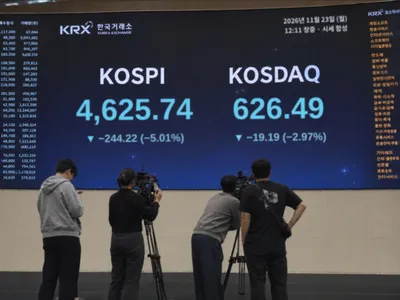
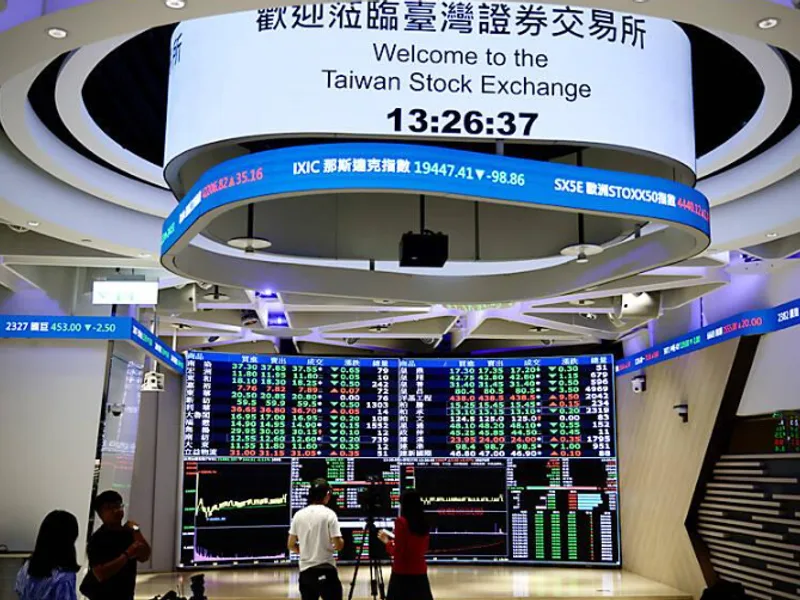
While both markets rebounded on the same positive news, their defensive mechanisms against the recent market rout differed significantly. Following reports of the return of Nvidia CEO Jensen Huang, who had resigned on the 12th, both South Korean and Taiwanese stock markets rallied sharply on the 24th. As of 1:00 PM KST, the Taiwan Stock Exchange Weighted Index (TAIEX) rose 9.04% to 40,139.87, while the KOSPI jumped 7.41% to 5,057.31, reclaiming the 5,000-point mark.
According to Taiwan's Central News Agency, the TAIEX saw its largest intraday gain in history, surging 3,368.49 points at one stage, with over 550 stocks hitting their daily upper limits.
South Korea and Taiwan share similarities as economies that have cultivated semiconductors as a core industry and relied on exports as a growth engine. While both markets plummeted due to uncertainty surrounding U.S.-led artificial intelligence (AI) investments, the peak-to-trough decline as of the 23rd showed a significant gap: 26.33% for Taiwan compared to 49.83% for South Korea.
During the downturn, Taiwan mobilized its national fund and reduced short-selling order limits to one-thirtieth of their previous levels. South Korea, meanwhile, maintained existing short-selling conditions while tightening monitoring of illegal trades and preparing to activate its Stock Market Stabilization Fund, which has remained stagnant at 10 trillion won for six years.
Taiwan Tightens Short-Selling While Easing Margin Call Burdens
Taiwanese financial authorities approved the activation of the National Financial Stabilization Fund on the 6th of this month. Starting the 9th, they reduced the intraday order limit for short selling from 30% of the average trading volume of the previous 30 trading days to 3%, and raised the minimum margin requirement for margin short selling from 90% to 130%.
As market volatility persisted, the short-selling order limit was further reduced to 1% on the 20th. On the 21st, additional measures were announced, including expanding price restrictions on short selling to all stocks and raising the minimum margin requirement to 150%. Authorities also recommended that financial institutions halt new stock lending and recall existing lent shares. In just over ten days, the short-selling order limit was slashed to one-thirtieth of its original level.
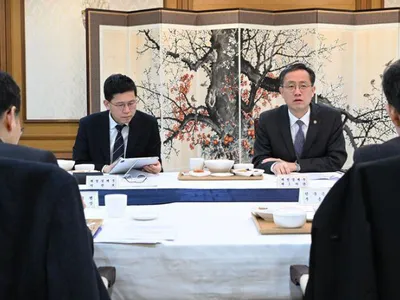
In contrast, South Korean financial authorities held an emergency market situation meeting on the 22nd to begin preparations for activating the Stock Market Stabilization Fund. While they decided to ease the daily share buyback limit for listed companies for three months starting the 24th and operate a special monitoring period for illegal short selling, they did not touch the short-selling order limits themselves.
Prescriptions to prevent chain-reaction forced liquidations also differed. The Taiwan Stock Exchange decided on the 23rd to lower the minimum maintenance ratio for margin trading from 130% to 120%. The new standard took effect on the 24th, and additional collateral calls based on the previous 130% threshold were canceled.
South Korea also exempted securities firms from the mandatory 140% margin maintenance ratio for three months starting the 9th. While both countries implemented measures to reduce the burden of forced liquidations, Taiwan lowered the common market standard, whereas South Korea left the specific level of easing and the decision to defer forced liquidations to the discretion of individual brokerage firms.
10 Trillion Won in Foreign Net Selling… A Stagnant Stabilization Fund
Taiwan established its National Financial Stabilization Fund under the Executive Yuan based on legislation in 2000. It can be activated by a resolution of the management committee when capital market order is damaged or national stability is threatened, with profits and losses accruing to the state. The statutory funding limit is 500 billion New Taiwan dollars (approximately 20 trillion won).
Conversely, South Korea's Stock Market Stabilization Fund is a private fund created through contracts between financial companies and related institutions. It operates on a capital-call basis where commitments are made first and funds are contributed when necessary; the decision to actually purchase stocks is made by an investment management committee. Profits and losses are borne by the contributing institutions.
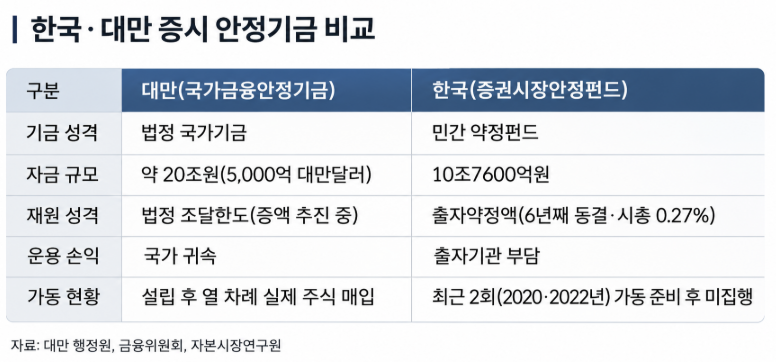 The committed capital for the domestic Stock Market Stabilization Fund is 10.76 trillion won, roughly half of the statutory limit of Taiwan's national fund. While the nature of the two figures differs, the size of the Korean fund has remained unchanged for six years since the 2020 COVID-19 pandemic, even as the domestic capital market has grown significantly. According to the Korea Capital Market Institute, as of the 20th, it represents a mere 0.27% of the total KOSPI market capitalization.
Taiwan is even discussing expanding the resources of its national fund. A legislative amendment has been submitted to the Legislative Yuan to increase the borrowing limit from financial institutions from 200 billion to 700 billion New Taiwan dollars. Having activated the fund for the tenth time since its inception, Taiwan officially confirmed actual stock purchases on the 21st. The historical maximum purchase amount was 122.7 billion New Taiwan dollars (approximately 4.9 trillion won).
Foreign investors net sold 10.4 trillion won in the KOSPI between the 2nd and 6th of this month. The net selling by foreigners in just five days is nearly equal to the total commitment of the Stock Market Stabilization Fund established six years ago. Before debating when to activate the fund, it is necessary to consider whether the resources are commensurate with the current scale of the market.
A 36-Year-Old Safety Net: Can It Handle an Expanded Capital Market?
According to the Korea Capital Market Institute, excluding 1990, the size of the domestic Stock Market Stabilization Fund has been only 0.1% to 0.7% of the market capitalization at the time of its creation. This contrasts with market interventions in Hong Kong, Japan, and China, where stock purchases reached 3% to 6.5% of market capitalization.
Market intervention using private financial firms also carried side effects. In 1989, three major investment trust companies that purchased approximately 2.8 trillion won worth of stocks under government direction saw their financial health deteriorate due to investment losses and interest burdens, eventually requiring special loans from the Bank of Korea and public fund support. Since then, the actual execution of the domestic fund has occurred only three times (1990, 2003, 2008), while in 2020 and 2022, it remained at the preparation stage.
Activating a national fund does not guarantee stock price defense. The TAIEX fell an additional 9.2% between the 6th, when the fund activation was decided, and the 20th. As the decline continued, Taiwanese authorities prepared follow-up measures to gradually tighten short-selling regulations and lower the burden of forced liquidations.
Market intervention carries costs and risks. Excessive short-selling regulations can shrink market liquidity, and there is a possibility that the stabilization fund may merely end up absorbing foreign selling pressure.
Lee Hyo-seob, a senior research fellow at the Korea Capital Market Institute, suggested, "The criteria for executing the Stock Market Stabilization Fund should be based on market trading functions, such as remaining buy orders, bid-ask spreads, and the spread of forced liquidations, rather than just index decline rates."
Being cautious about capital injection is one thing, but having the resources and systems to prepare for a crisis is another. It has been 36 years since South Korea first created a stock market stabilization fund in 1990. In that time, both the scale of the capital market and the assets of investors exposed to external shocks have grown significantly.
Taiwan has activated its legally-backed national fund ten times and is even discussing expanding its resources in line with market growth. South Korea is still debating when and how much to inject from a private commitment made six years ago.