

Despite two review meetings, the government has failed to disclose activation criteria or the scale of capital injection for the market stabilization fund, nine days after the President's initial order.
While Taiwan expands short-selling restrictions starting the 23rd, South Korea focuses on easing share buyback rules and increasing surveillance.
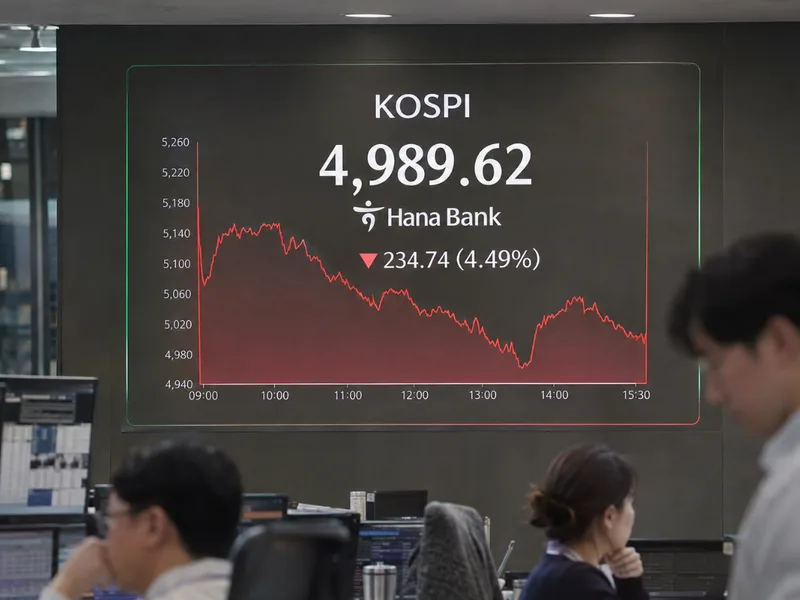
Following the collapse of the KOSPI below the 4900 level and a more than 5% plunge in the U.S. Nasdaq, the government convened an emergency meeting over the weekend. However, the decision to activate the Securities Market Stabilization Fund (SMSF), which the market has been closely watching, was once again absent. While the government announced the easing of regulations on share buybacks and strengthened monitoring of illegal short-selling, it failed to clarify the specific activation criteria or the scale of the fund, which serves as a direct market stabilization tool.
This stands in stark contrast to Taiwan, which faced similar market shocks stemming from the AI and semiconductor sectors; Taiwan announced it would expand short-selling price restrictions and increase margin requirements starting the 23rd.
Nine Days of 'Preparation' Despite Presidential Orders; Only Pleas for Restraint
On the 22nd, Deputy Prime Minister and Minister of Economy and Finance Lee Hyung-il held an emergency market situation review meeting (F4 meeting) with Bank of Korea Governor Rhee Chang-yong, Financial Services Commission Chairman Lee Eok-won, and Financial Supervisory Service Governor Lee Chan-jin at the Government Complex Seoul.
The government decided to ease the daily share buyback order limits for listed companies for three months starting the 24th and to operate a special intensive monitoring period for illegal short-selling, led by the Financial Supervisory Service and the Korea Exchange. Regarding the SMSF, the government stated it would review the activation system and prepare measures to enhance its effectiveness so it can be deployed immediately if necessary.
The government previously held an F4 meeting on the 6th in response to the market slump, exempting securities firms from the obligation to maintain collateral ratios for credit loans for three months. At that time, it also stated that it would prepare stabilization measures if market volatility increased further.
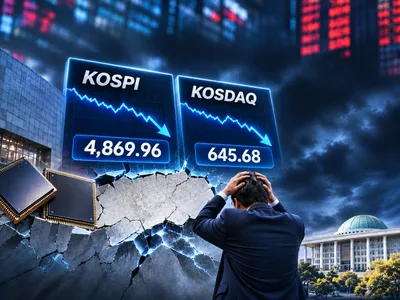
However, the market has since fallen even more sharply. On the 20th, the KOSPI closed down 5.21% at 4869.96, while the KOSDAQ plummeted 5.71% to 645.68. With the U.S. Nasdaq index also crashing 5.28% on the same day, concerns over further declines in the domestic market on the 23rd have intensified.
The necessity of activating the SMSF was raised during a capital market policy meeting presided over by the President on the 13th. At the time, Kim Jin-wook, Chief Economist at Citibank Korea, suggested activating the fund, noting that extreme volatility is deterring long-term foreign investors from entering the Korean market. President Lee Jae-myung also stated, "It is necessary to examine whether there are effective ways to operate it, what the appropriate scale would be, and if there are new methods available."
Yet, nine days later, the government has still not disclosed under what market conditions it would activate the fund or how much capital it is prepared to inject.
The government emphasized that expectations for the mid-to-long-term growth of the AI industry remain valid and that investors should guard against excessive anxiety and panic selling. While urging investors to refrain from dumping stocks, the government failed to provide concrete criteria for the fund's activation.
While there is merit to the argument that SMSF intervention could distort the market's price discovery function, the decision to be cautious about intervention is separate from the failure to disclose the criteria for such a decision.
Furthermore, the need for the SMSF has been raised multiple times during past market crashes, yet it has rarely led to actual capital deployment. The recurring cycle of merely discussing the possibility of activation during crises only deepens skepticism regarding its effectiveness as a market stabilizer.
Taiwan Tightens Short-Selling Conditions; Korea Relies on Corporate Autonomy
The Taiwan Financial Supervisory Commission (FSC) finalized additional market stabilization measures on the 21st, deciding to restrict short-selling at prices lower than the previous day's closing price starting the 23rd.
The price restriction, previously applied only to stocks that fell more than 3.5%, has been expanded to all stocks in the listed and over-the-counter markets, as well as Taiwan Depositary Receipts (TDRs). The minimum margin requirement for short-selling was also raised from 130% to 150%. However, short-selling for hedging purposes by securities and futures firms was excluded from these restrictions.
Financial institutions were advised to halt new stock lending and to refrain from early recall or re-lending of existing borrowed shares upon maturity. The FSC also suspended the acceptance of new applications for put warrants and encouraged listed companies to engage in share buybacks. These measures aim to curb additional selling pressure by strengthening price and collateral conditions without imposing a total ban on short-selling.
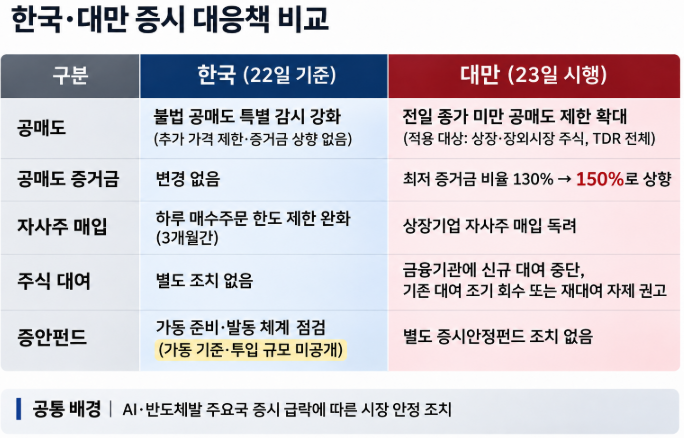 In contrast, South Korea focused on detecting and strengthening supervision of illegal short-selling. Additional price restrictions or increased margin requirements for normal short-selling transactions were excluded from the latest measures.
Although both markets are highly sensitive to global tech trends and have significant semiconductor export exposure, their responses to the same shock have diverged.
Whether Taiwan's tightened regulations will effectively defend stock prices remains to be seen. There are concerns regarding reduced market liquidity and impaired price discovery, and it is difficult to attribute the current crash solely to short-selling. Nevertheless, Taiwan has responded to the market shock by incrementally increasing the intensity of its regulations and setting a firm implementation date. Since the South Korean government chose supervision and monitoring over stricter short-selling regulations, it must provide a rationale for why it believes the existing management system is sufficient to handle the current crash.
The government's move to ease share buyback limits also depends entirely on corporate choice. Even if the daily purchase limit is increased, it is difficult to expect a meaningful influx of buying power if companies do not choose to initiate additional purchases.
The previously implemented exemption from the obligation to maintain collateral ratios for credit loans is focused on reducing immediate forced liquidation shocks. As the balance of credit loans remains unchanged, a prolonged downturn could lead to renewed supply-demand instability as securities firms tighten collateral management and investors face additional margin calls.
The measures finalized by the government focus on indirect support—delaying forced sales and expanding the capacity for corporate share buybacks. The SMSF, which would directly absorb market selling pressure, remains in the preparation stage.
The government does not need to inject funds every time the market drops. However, having urged investors to refrain from panic selling, the government must now explain its own judgment. It owes the public an answer regarding the conditions under which the SMSF will be activated and why it was not deployed even now, after the KOSPI has broken below the 4900 level. Nine days after the President's order for a review, all the government has to offer regarding the SMSF is, once again, the word 'preparation.'