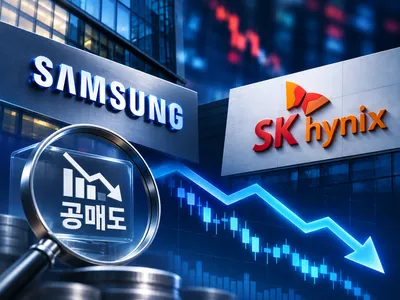
Prohibition of short-selling below the previous day's closing price starting from the 23rd… Minimum margin requirement raised from 130% to 150%
Encouragement of treasury stock buybacks and recommendation to suspend stock lending… Stabilization measures announced ahead of the next trading day
What is needed is not a replication of Taiwan's measures, but a diagnosis of risks and clear principles for response
Taiwan's financial authorities announced market stabilization measures on Saturday, the 21st, tightening short-selling regulations. Effective from the 23rd, short-selling below the previous day's closing price for listed and over-the-counter stocks as well as Taiwan Depositary Receipts (TDRs) will be completely banned, and the minimum short-selling margin ratio will be raised from 130% to 150%. Financial institutions are also encouraged to suspend new stock lending and recall previously lent shares.
What deserves attention is not merely the content of the measures, but the fact that the authorities announced the steps during the weekend ahead of the next trading day, explicitly stating the implementation timeline and scope. This is a point that South Korean financial authorities should take note of amid steep declines in the domestic stock market. Market closures do not halt investors' anxieties.
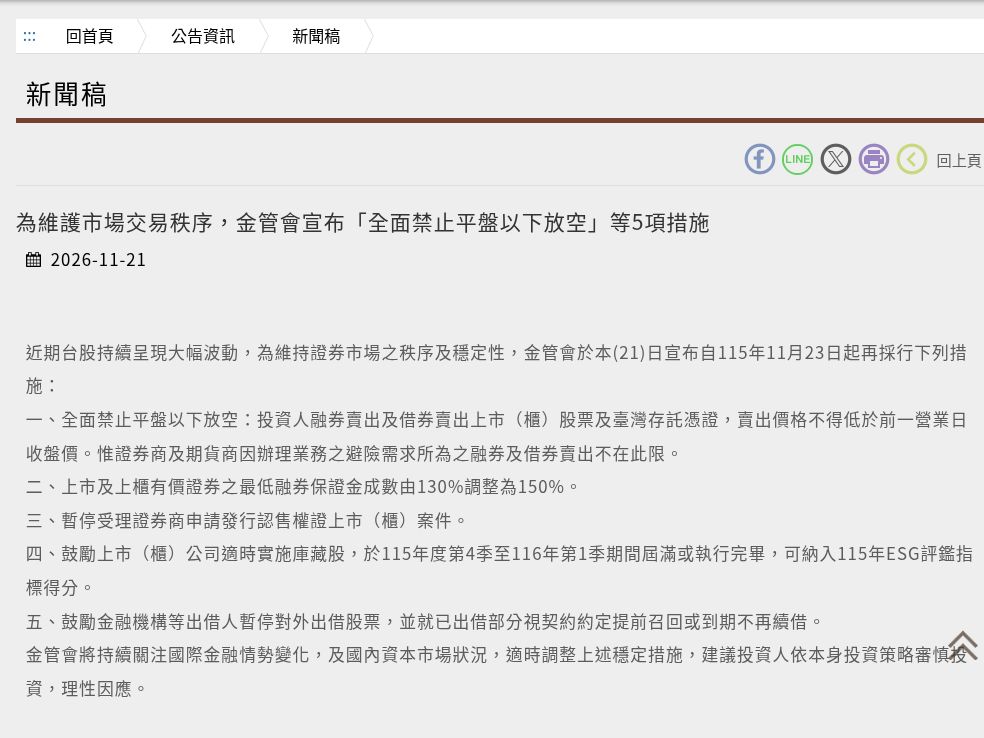
[Photo Description = Market stabilization measures unveiled by Taiwan's Financial Supervisory Commission (FSC) on the 21st / Source = FSC website]
Taiwan's Financial Supervisory Commission (FSC) stated in a press release that day that recent volatility in the Taiwanese stock market has been substantial and that additional measures are being implemented to maintain order and stability in the securities market. The latest package consists of five pillars: short-selling price restrictions, higher margin requirements, suspension of new put warrant listing applications, encouragement of treasury stock purchases, and recommendations to halt and recall stock lending.
The move does not amount to a total ban on short-selling. Instead, it prevents investors from executing short sales—whether through margin borrowing or stock borrowing—at prices lower than the closing price of the preceding trading day. Exceptions are granted for transactions conducted by securities firms and futures commission merchants for hedging purposes.
The scope of application was also broadened compared to previous measures. On the 19th, Taiwanese authorities announced restrictions on short-selling below the previous day's close for stocks that dropped 3.5% or more during the session. This time, the drop-rate condition was eliminated, expanding the price restrictions. The regulatory intensity was adjusted further based on market conditions.
Efforts are also underway to expand buying demand through treasury stock purchases and to reduce the supply of shares that could be used for short-selling. While encouraging listed and OTC companies to buy back their own shares, authorities recommended that securities lenders temporarily suspend new lending and either secure early recall of existing lent shares according to contracts or refrain from extending them upon maturity. It should be noted that the suspension and recall of lending are recommendations rather than mandatory orders.
South Korea Must Also Diagnose Risks and Announce Response Principles Before Market Opening
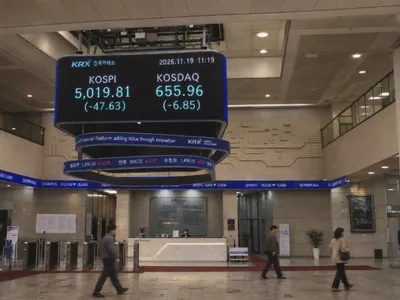
South Korea is likewise not in a position to take the upcoming trading day lightly. On the 20th, the KOSPI closed down 267.93 points at 4,869.96. Both the KOSPI and KOSDAQ plunged by more than 5% in a single day. When external risk factors emerge overseas after the domestic market closes, it is the duty of the authorities to examine their impact and prepare response tools before the market reopens.
This does not mean South Korea should immediately adopt the exact same measures simply because Taiwan tightened short-selling regulations. First, the pathways of the domestic downturn must be analyzed. Responses should vary depending on whether the rise in short-selling is amplifying the decline, whether forced liquidation of credit transactions or derivative-related selling is exerting influence, and what burden the outflow of foreign capital is placing on the stock and foreign exchange markets.
The fact that measures were not announced over the weekend does not automatically mean the authorities are inactive. Unpublicized inspections and consultations may be underway. However, internal monitoring and providing necessary information to the market are two different matters. To reduce market uncertainty, authorities must clearly differentiate between verified facts, issues that are still difficult to assess, and the direction of preparations under way.
Restoring stock prices to a specific level is not the responsibility of financial authorities, nor can the government fully compensate for investment losses. However, ensuring that trading and settlement proceed normally, checking whether liquidity shortages and forced liquidations are compounding shocks, and maintaining tools that can be deployed when necessary are fundamental to market stability.
Whether Taiwan's latest steps will genuinely stabilize the market remains to be evaluated after implementation. The mere speed of the announcement does not prove the policy's efficacy. Nevertheless, the fact that the authorities made public what would change and when it would take effect prior to the next trading session is evident.
What is demanded of South Korean financial authorities is neither unconditional stimulus nor a replica of Taiwan's measures, but a response that diagnoses risks, selects necessary actions, and explains those judgments in a timely manner. If necessary, countermeasures should be unveiled on a Saturday, and related institutions should mobilize on a Sunday.
Whether it is a weekend or not is merely a matter of administrative scheduling. What matters to investors awaiting the next market opening is the confidence that authorities grasp the situation and stand ready to act when required.