


South Korea fails to reach MSCI Developed Market watch list; while foreign exchange and settlement hurdles remain, is short-selling regulation being treated as a taboo?
Taiwan implements price restrictions and raises margin requirements for all short-selling; South Korea prepares for a market stabilization fund and intensifies illegal activity monitoring.
Lee Un-ju asks, "Can you not hear the cries of the people?"; senior ruling party members criticize the authorities' response.
In the face of a market rout that threatens the assets of the public, what should the government prioritize? The wealth of domestic investors or the assessment of global index providers?
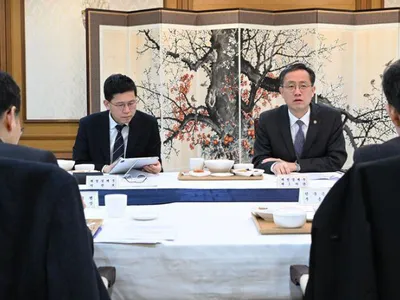
Despite emergency meetings held by economic and financial leaders over 'Black Monday' fears, measures to directly restrict short-selling were notably absent. The government's response focused on preparing to activate a stock market stabilization fund, easing limits on treasury stock repurchases, and intensifying surveillance of illegal short-selling. This stands in stark contrast to Taiwan, which expanded short-selling price restrictions to all stocks and increased margin requirements.
Inclusion in the MSCI Developed Market index is a long-term goal. However, South Korea failed to even reach the watch list this year. If the government hesitates to use immediate market stabilization tools due to a goal with no set realization date, it is difficult to avoid the criticism that policy priorities have been inverted.
Senior Ruling Party Member Questions 'Monitoring' Approach
Criticism of the authorities' response has emerged even from within the ruling party. Lee Un-ju, a three-term lawmaker and former supreme council member of the Democratic Party, stated on social media on the 23rd, "It is fortunate that the F4 (financial leaders) gathered to discuss and announce stabilization measures, but can you not hear the cries of the people?" She added, "The content is far too complacent and insufficient."
She further questioned, "What is the point of just 'monitoring' short-selling?" and demanded, "An immediate ban on short-selling must be implemented to protect retail investors from illegal short-selling by foreign entities."
She also addressed the concerns regarding MSCI inclusion. While acknowledging that authorities are cautious due to potential impacts on MSCI status and the depletion of the stabilization fund, she emphasized, "The current situation is too severe to consider such factors." She urged the immediate announcement and implementation of measures such as a short-selling ban and an increase in margin requirements for derivatives.
MSCI Threshold: Not Just a Short-Selling Issue
The obstacles to South Korea's entry into the developed market index should not be reduced to short-selling alone. In its annual market classification released on June 23, MSCI did not include South Korea on its watch list. The market accessibility assessment cited deficiencies in five areas: foreign exchange market liberalization, investor registration and account opening, information flow, clearing and settlement, and securities mobility.
The inability to deliver the Korean Won offshore and operational burdens related to short-selling regulations were also identified as hurdles. This implies that the issue cannot be resolved simply by resuming short-selling or refraining from additional regulations.
Of course, repeated short-selling regulations can negatively impact policy predictability and foreign investor access. It is not inherently wrong for authorities pursuing MSCI inclusion to consider these factors.
However, long-term market reform and temporary responses to market crashes must be distinguished. The potential burden on index inclusion should not become a universal logic that excludes all short-selling restrictions.
Taiwan Changes Trading Conditions; Korea Focuses on 'Preparation' and 'Monitoring'
[Table: Comparison of Short-Selling Responses and Market Stabilization Measures between South Korea and Taiwan]
Taiwan's response was concrete. The Financial Supervisory Commission of Taiwan announced on the 21st that it would prohibit short-selling at prices lower than the previous day's closing price for all listed and OTC stocks, effective the next trading day, the 23rd. The minimum margin ratio for short-selling was also raised from 130% to 150%, with exceptions for hedging by securities and futures firms.
In contrast, the measures announced by South Korean authorities on the 22nd were merely preparations to activate a stabilization fund, with no specific timeline or scale. The limit on treasury stock purchases was eased for three months, and a special monitoring period for illegal short-selling was established.
Taiwan changed trading conditions, while South Korea promised to monitor illegal activities more thoroughly. Monitoring is a basic duty of supervisory authorities that should be performed at all times. Whether strengthening this is sufficient as an emergency measure for a market crash is a separate matter.
Foreign Trust vs. Appeasement
Short-selling restrictions do not guarantee a stock price rebound. Taiwan also failed to stop its downward trend after previous regulatory tightening. As the policy environments of South Korea and Taiwan differ, one cannot conclude that Taiwan-style regulations should be adopted wholesale.
However, policy tools should not be treated as taboo from the outset. While foreign investor trust is important, the convenience of overseas investors cannot always take precedence over the protection of domestic investors. Excluding emergency measures simply because foreigners might be inconvenienced invites criticism of 'financial subservience.'
If financial authorities believe that not restricting short-selling is the correct decision, they must explain the rationale. They should clarify whether they reviewed price or stock-specific restrictions, how they weighed expected effects against side effects, and under what conditions additional measures would be triggered.
While reports suggest MSCI inclusion is a policy consideration, it has not been officially confirmed as the sole reason for not restricting short-selling. Therefore, a transparent explanation from the authorities is essential.
The title of a 'developed market' is a means to protect investors, not an end in itself. If the government delays current responses out of concern for future assessments, investors may be left with neither the status of a developed market nor the protection of their assets.
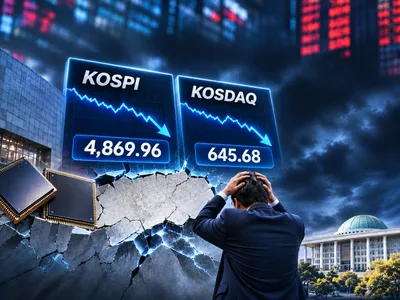
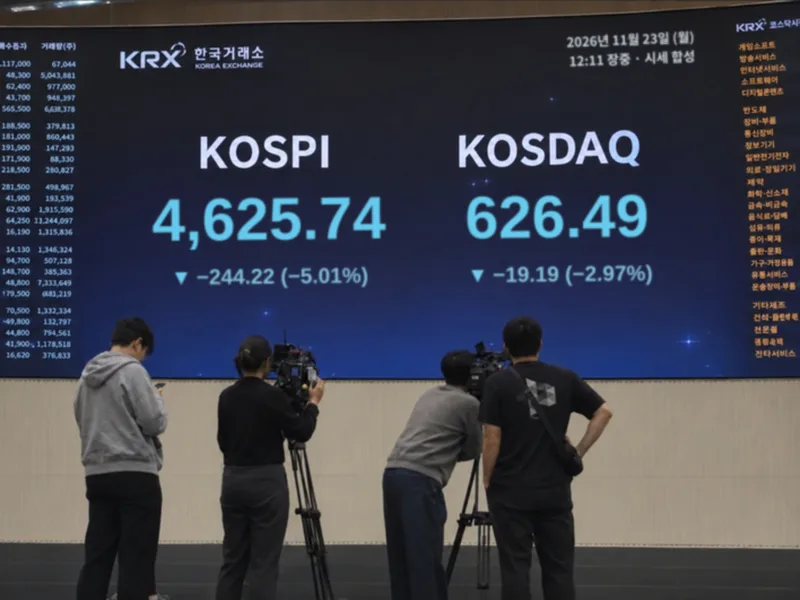
On the 23rd, the KOSPI plummeted by over 5%, triggering a sidecar, while the KOSDAQ fell nearly 4% to the low 620s. Conversely, the Taiwan Weighted Index rose 1.21% as of 12:40 PM. While the effect of short-selling regulations cannot be determined by a single day's trading, the contrast between Taiwan's active adjustment of trading conditions and South Korea's focus on 'preparation' and 'monitoring' serves as a painful comparison for investors.
"Can you not hear the cries of the people?"
The financial authorities must answer. It is time to move beyond declarations of 'preparation' and 'monitoring' and respond with action.