Financial authorities must first verify whether forced liquidation buffers actually work in practice
Time to redesign KOSDAQ short-selling rules to reflect growth market traits and liquidity risks
“The train came out of the long tunnel into the snow country.”
With the opening line of his novel Snow Country, Yasunari Kawabata, Japan's first winner of the Nobel Prize in Literature, transports readers directly into winter. Without lengthy descriptions, a snow-covered landscape unfolds before one's eyes.

[Photo Caption: A snowy landscape viewed from Takahan Ryokan in Yuzawa, Niigata Prefecture, Japan, where the novel Snow Country was written. Photographed in 2014. Photo=Daderot/Wikimedia Commons(CC0).]
On Nov. 8, Seoul saw its first snowfall. According to the Korea Meteorological Administration, the first snow of the season was observed at the Seoul Weather Observatory in Songwol-dong, Jongno-gu, Seoul. This is 12 days earlier than average and 26 days earlier than last year.
However, not all Seoul residents saw the snow. An official first snowfall in Seoul means snow was recorded at the Songwol-dong observatory, not that snow fell across the entire city. For lovers who agreed to meet on the day of the first snow, what they see outside their window matters far more than the news on their phones.
Financial policy is no different: announcing a policy is quite distinct from producing actual results on the ground. At stake in this gap is not romance, but livelihoods and assets. The success of market stabilization measures should be judged not by the wording of press releases, but by the trading conditions investors face and how the market actually functions.
KOSDAQ at 644.27... Do Forced Liquidation Buffers Actually Work in Accounts?
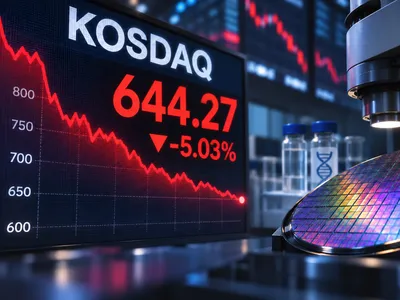
On Nov. 6, the KOSDAQ index closed at 644.27, down 34.14 points or 5.03% from the previous trading day. After breaking below the 700 mark the previous day, it dropped more than 5% for two consecutive days, falling as low as 629.17 intraday. The anxiety felt by investors facing such a rapid drop can hardly be captured by the mere phrase "increased volatility."
Authorities responded promptly. Relevant agencies held an emergency meeting on Nov. 6 and decided to temporarily exempt securities firms from the 140% margin maintenance ratio requirement for three months starting Nov. 9. The measure aims to curb the vicious cycle where falling stock prices trigger forced liquidations, pushing prices down further.
While this is a step in the right direction, waiving regulatory obligations is separate from individual brokerages relaxing margin requirements for their clients. A mere announcement does not automatically stop forced liquidations for retail investors.
Regulators must verify which brokerages are applying the relief, to whom, and when, ensuring that investors are clearly informed. They must also monitor whether forced margin sales and forced selling pressure actually decline following the measures.
If regulatory relief is not applied on the ground, it remains nothing more than a press release to investors. The responsibility to demonstrate policy effectiveness lies with the authorities who introduced the measures.
KOSDAQ's Founding Mandate Must Remain Valid Even in Crises
This sharp drop presents an opportunity to reassess the role of KOSDAQ. The exchange was designed to help promising SMEs and tech startups raise capital. The special listing track for tech-growth firms exists specifically to connect capital with growth potential that cannot be judged solely by current profits.
However, providing listing opportunities alone does not fulfill the role of growth financing. Post-IPO, investors must be able to access reliable information to evaluate companies, and businesses must be able to raise necessary funds built on market trust.
Companies in R&D, clinical trial, or commercialization stages cannot be evaluated on short-term earnings alone. Conversely, high valuations cannot be justified purely by future promise. Narrowing this gap requires thorough disclosures, verifiable data, and professional research.
Positioning a market for growth companies is no excuse for lax verification. On the contrary, high uncertainty demands higher data quality and stricter oversight.
Trading systems must also be scrutinized to ensure they adequately reflect these characteristics. If the system accommodates growth-company traits during the listing phase but lacks sufficient safeguards against trading risks, regulations must be refined. Short-selling rules are a key target for this review.
Should Uniform Short-Selling Rules Share the Same Risk Management Standards?
Short selling resumed across all KOSPI and KOSDAQ stocks on March 31, 2025. At that time, financial authorities improved regulations while reinforcing the short-sale overheating designation system to buffer against heightened volatility in certain stocks, recognizing that trading permission must go hand-in-hand with shock-mitigation mechanisms.
The current debate is an extension of that premise. Even if the common principle of permitting short sales applies to both KOSPI and KOSDAQ, whether the detailed risk management standards should be identical warrants separate examination.
This is not a call for a blanket short-selling ban on KOSDAQ simply because it is a growth market. Within KOSDAQ, companies vary widely in scale, financial health, free float, and trading volume. Defining targets for protection solely by market tier makes it hard to pinpoint truly vulnerable stocks.
What matters are actual trading conditions. Regulators must examine whether short selling concentrates on illiquid stocks or specific sectors, how fast trading volume and short positions expand, and whether sharp price swings coincide with trading concentrations.
Based on these findings, authorities could consider tightening overheating criteria, adjusting ban durations, or introducing temporary restrictions on high-risk stocks. In emergency situations where market-wide trading functionality is impaired, broader temporary bans should not be ruled out. However, trigger criteria, scope, and exit conditions must be specified upfront so policy uncertainty does not become an added burden on the market.
The crux of the issue is not whether one is for or against short selling. It is establishing standards that reflect market and stock characteristics—defining what risk signals trigger what level of response.
Analyze Causes of Sell-Offs, But Do Not Ignore Investor Anxiety
A decline in stock indices cannot be attributed to short selling alone. Net foreign selling and short selling are not identical concepts, nor can a market drop alone prove the scale of gains or illegal conduct by specific investors.
Misdiagnosing the cause leads to flawed remedies. Regulators must distinguish whether global investors have reassessed Korean firms, whether institutional buying demand has weakened, or whether illiquidity and forced sales amplified the downturn. Any allegations of market manipulation or unfair trading tied to short selling must be verified using actual trading data.
While strictly separating legitimate investment strategies from illegal acts, authorities must not be passive in investigating suspicious activities.
Retail investors are citizens bearing the impact of policy outcomes on their wealth. Dismissing their anxiety as mere misunderstanding will fail to build trust. Regulators must present data questioned by the market—such as short sales, open short positions, trading by investor type, and forced liquidations—in a clear, accessible manner.
When illegal acts are uncovered, sanctions must be swift; when structural weaknesses emerge, corrective measures and implementation schedules must be laid out. Trust is not built by declaring "there is no problem." It is earned by demonstrating what was inspected, what issues were found, and how they will be fixed.
Indices Cannot Be Guaranteed, But Market Function Must Be Preserved
The government cannot guarantee specific index levels or compensate for investment losses. Support for KOSDAQ should not serve to keep non-viable firms afloat or artificially defend inflated valuations.
Yet corporate risks borne by investors must be distinguished from systemic market risks buffered by regulations. R&D failure is a matter of investment risk. By contrast, structural shock amplification caused by liquidity crunches and forced selling falls on policymakers to address. Allegations of unfair trading, including illegal short selling, must also be investigated promptly, with severe sanctions imposed upon confirmation.
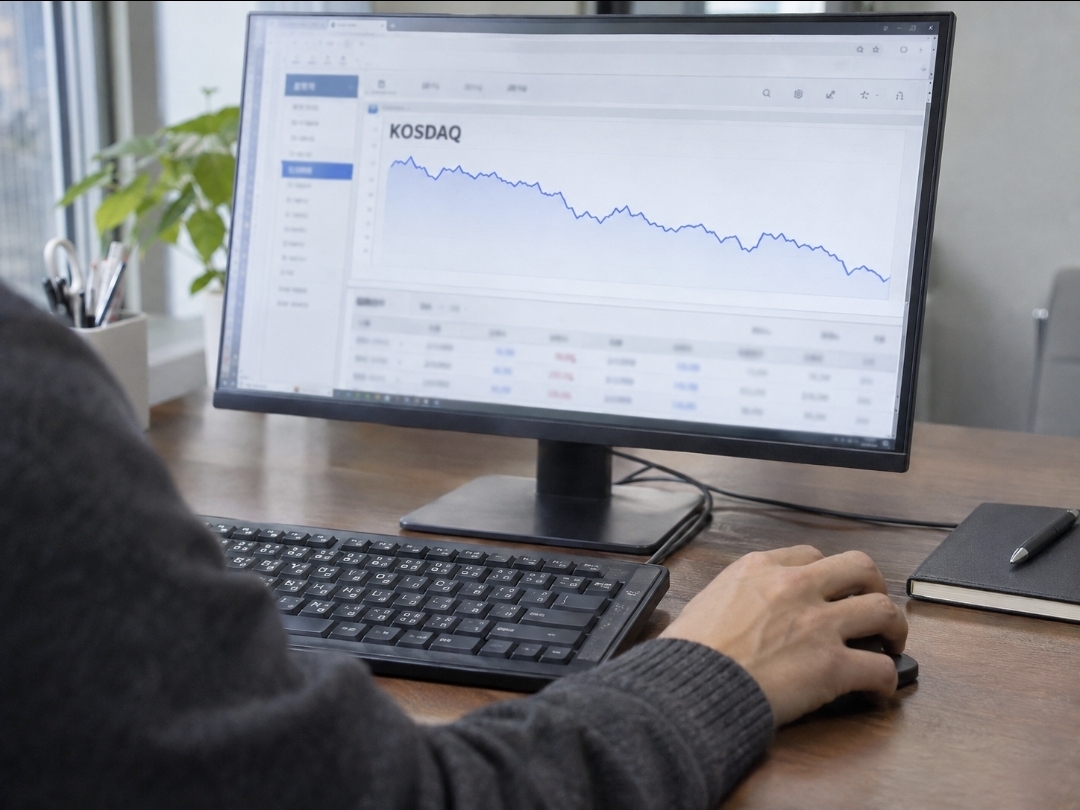
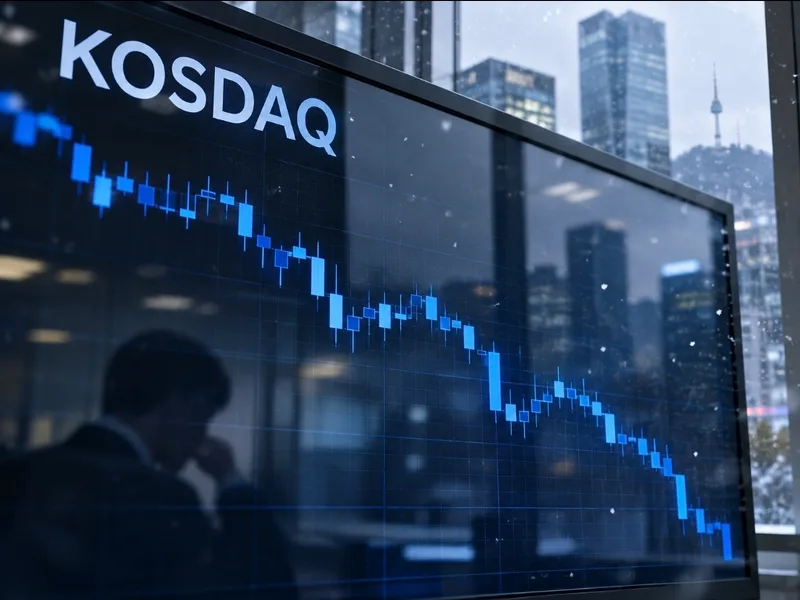
[Photo Caption: AI-generated image depicting the decline of KOSDAQ and an investor checking trading screens.]
The immediate task is verifying whether forced margin sale buffers are taking effect in individual accounts. Next, regulators must review short-selling rules tailored to KOSDAQ's liquidity and disclosure environment. Long-term efforts must strengthen disclosure and verification systems for growth firms and broaden the foundation of long-term capital capable of patient investing.
None of this can be accomplished by press releases alone. Target scope and implementation dates must be explicit, followed by evidence of on-the-ground performance. If measures fall short, they must be augmented; if regulatory gaps emerge, they must be fixed.
The first snow at Songwol-dong may differ from the view outside one's window. But the gap between financial regulator announcements and market realities cannot be accepted as natural. In that gap lie citizens' living expenses, retirement savings, and corporate capital raising essential for fostering future industries.
What is needed are not comforting statements to reassure markets, but policies that work effectively in practice. Authorities must demonstrate not what they announced, but what has actually changed as a result.