S&P 500 Gains 0.31%, Dow Slips 0.46%, Philadelphia Semiconductor Index Jumps 4.21%
October Payrolls Rise by 165,000, Defying Expectations and Reviving Fed Tightening Concerns
US equities clawed back some of their recent steep losses on Thursday, led by a recovery in semiconductor issues. Although technology shares drew dip-buyers to push the Nasdaq higher, an upbeat employment report heightened worries over additional interest rate hikes by the Federal Reserve, leaving major benchmarks mixed at the closing bell.
The Dow Jones Industrial Average fell 237.33 points, or 0.46%, to finish at 51,285.73. The S&P 500 added 23.13 points, or 0.31%, to 7,376.86, while the tech-heavy Nasdaq Composite advanced 264.43 points, or 1.09%, to 24,579.42. Despite today's rebound, the Nasdaq notched its fourth consecutive weekly decline.
Semiconductor Stocks Bounce, but AI Spending Concerns Linger
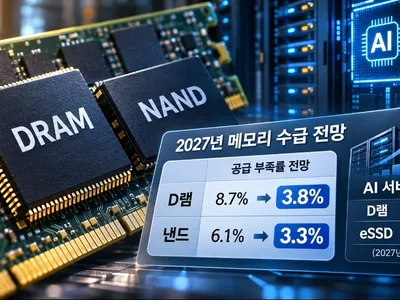
Semiconductor equities, which bore the brunt of a heavy sell-off a day earlier, spearheaded the rebound. The Philadelphia Semiconductor Index advanced 4.21% to close at 9,390.25. NVIDIA rose 2.78% to $186.64, Micron Technology gained 5.1%, and Advanced Micro Devices (AMD) and SanDisk also posted recoveries.
These shares had plunged previously amid fears that a Democratic midterm election victory could usher in tighter regulations on data center construction and slow the pace of artificial intelligence (AI) infrastructure investments. While buying pressure returned, it fell short of erasing the prior session's losses. The Nasdaq remains approximately 10.9% below its all-time closing high reached on the 6th of last month.
Among chip equipment makers, Lam Research surged 8.2% after announcing that its board of directors approved a $25 billion share repurchase authorization on top of its existing program, alongside a quarterly dividend of $0.33 per share.
Stock performance diverged based on individual corporate earnings and outlooks. Home-sharing platform Airbnb moved higher after upgrading its full-year revenue growth forecast. Conversely, enterprise software firm Atlassian tumbled despite beating quarterly earnings estimates, as market participants fixated on slowing future growth.
Hotter-Than-Expected Labor Market Fuels December Hike Betting
The day's employment report reinforced caution regarding prolonged monetary tightening. According to the Bureau of Labor Statistics (BLS), nonfarm payrolls expanded by 165,000 in October, far surpassing the consensus estimate of 65,000. The unemployment rate ticked down from 4.2% in September to 4.1%.
Furthermore, job gains for August and September were revised upward by a combined 84,000 jobs. Average hourly earnings in the private sector rose 0.4% from the previous month and 3.1% from the same period a year ago. The stronger-than-expected labor momentum added credence to market views that the Fed may pursue aggressive tightening to rein in inflation.
Rate-futures markets priced in a 78% probability of a December rate hike, up from the high-60% range the prior day.
San Francisco Federal Reserve President Mary Daly noted in a CNBC interview that additional monetary tightening will likely be necessary to bring down elevated inflation. While emphasizing that the central bank must weigh tech stock sell-offs and market volatility, she maintained that the timing and magnitude of any rate hikes will be determined cautiously based on incoming data.
Consumer Inflation Expectations Ease Ahead of Crucial CPI, PPI Reports
Meanwhile, consumer inflation expectations showed signs of moderating. The University of Michigan's preliminary consumer sentiment index for November rose to 51.0 from 48.0 in the prior month. One-year inflation expectations declined from 4.7% to 4.3%, while long-term inflation expectations edged down from 3.5% to 3.4%.
However, because the survey was conducted between October 20 and November 2, it failed to capture the fallout from the midterm election results and the subsequent stock market plunge. The university noted that despite improving consumer sentiment, anxieties regarding high living costs persist.
Crude oil prices faced downward pressure from rising expectations of a diplomatic resolution to the Iran conflict following the US midterms. Even so, ongoing vessel attacks in Middle Eastern waters kept supply-side anxieties alive.
Looking ahead, the US October Consumer Price Index (CPI) is scheduled for release on the 10th, followed by the Producer Price Index (PPI) on the 13th. Should inflation data run hot on the heels of robust employment figures, expectations for further interest rate hikes could gather further momentum. Whether inflationary pressures continue to subside will serve as a critical catalyst for the durability of the tech sector's recovery.