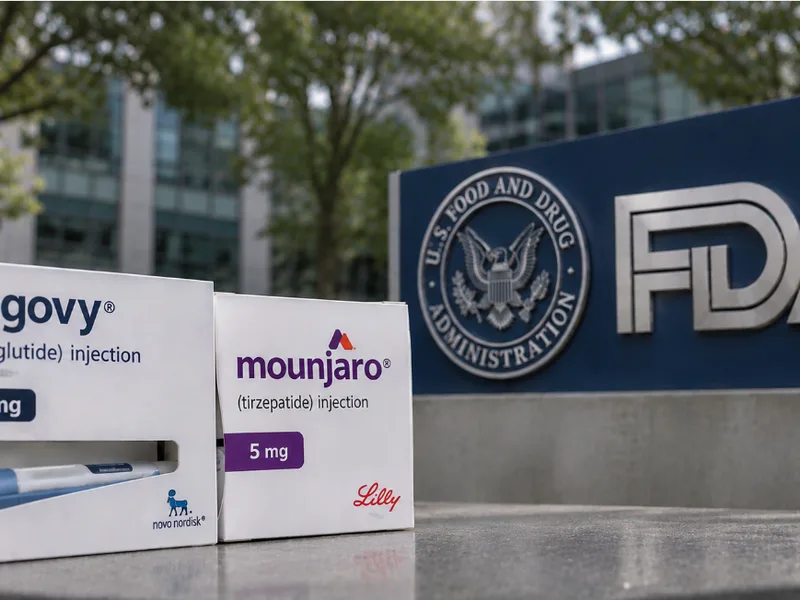
U.S. FDA demands warnings for 12 GLP-1 products regarding optic nerve disease; pharmaceutical companies dispute causal link.
Risk signals identified in clinical trials involving 130,000 patients; U.S. ophthalmology community and South Korean regulators monitor developments.
Controversy surrounding global obesity treatments, including Wegovy and Mounjaro, is intensifying. With 278 product liability lawsuits currently pending in the U.S., the Food and Drug Administration (FDA) has mandated that 12 GLP-1 receptor agonist products include warnings regarding a rare optic nerve condition. Pharmaceutical companies maintain that a causal link between the drugs and vision loss has not been established, while regulatory bodies worldwide, including those in South Korea, are moving to update safety information.
On the 9th (local time), the FDA required that the product labeling for GLP-1 receptor agonists be updated to include the potential risk of Non-Arteritic Anterior Ischemic Optic Neuropathy (NAION). The mandate applies to both injectable treatments, such as Novo Nordisk’s Wegovy and Ozempic and Eli Lilly’s Mounjaro and Zepbound, as well as oral medications.
NAION is a condition characterized by sudden vision loss caused by reduced blood flow to the optic nerve. It often occurs without pain and can lead to permanent vision impairment in severe cases.
278 U.S. Lawsuits: Why Pharmaceutical Companies Are Contesting the Claims
In the U.S., a wave of lawsuits has been filed by patients claiming vision loss following the use of GLP-1 medications. According to data released on the 2nd by the U.S. Judicial Panel on Multidistrict Litigation (JPML), 278 product liability lawsuits (MDL 3163) related to NAION are currently pending. Plaintiffs allege that pharmaceutical companies failed to adequately warn them of the risks of vision loss.
Pharmaceutical companies argue that no causal relationship has been confirmed. Novo Nordisk maintains that studies analyzing clinical trial data from over 90,000 participants showed no association with NAION. Meanwhile, Eli Lilly stated that the FDA’s action applies to the entire GLP-1 class and does not suggest specific risk evidence unique to its products. While both companies are responding to the expanded warnings, their grounds for rebuttal differ.
Clinical data reviewed by the FDA did show signals of increased risk. An analysis of 134,253 participants across 126 clinical trials found that the incidence of NAION in the GLP-1 treatment group was 6.4 cases per 100,000 person-years, approximately 1.7 times higher than the 3.8 cases in the control group. The absolute difference in observed incidence is about 2.6 cases per 100,000 patients treated for one year. With only 15 suspected cases in total, it is difficult to definitively establish causality based on this difference alone.
Analyses of actual patient medical records also yielded varying results depending on the comparator drug. The risk of NAION in the GLP-1 group was 19% higher than in users of SGLT-2 inhibitors, though not statistically significant, while it was 43% higher compared to DPP-4 inhibitors, reaching statistical significance. Even within the same drug class, the statistical significance of the increased risk varied depending on the comparison group.
The U.S. ophthalmology community is weighing the potential for increased risk against the low frequency of occurrence. A joint statement released in August by the North American Neuro-Ophthalmology Society and the American Academy of Ophthalmology noted a potential two-fold increase in the relative risk of NAION for GLP-1 users, but advised against universal screening for all patients due to the low absolute risk.
The specific biological mechanism linking the drugs to optic nerve damage remains unknown. Since underlying conditions such as diabetes and hypertension are also known risk factors for NAION, further research is required to determine whether the increased risk observed in clinical trials and medical records is a direct effect of the medication or the result of other contributing factors.
Europe Acknowledges Side Effects; South Korea Reviews Mounjaro and Others
Europe took action on this issue earlier than the U.S. In June of last year, the European Medicines Agency (EMA) classified NAION as a very rare side effect of semaglutide. Large-scale epidemiological studies indicated a roughly two-fold increase in risk, with the additional risk estimated at approximately one case per 10,000 patients per year.
The UK’s Medicines and Healthcare products Regulatory Agency (MHRA) also updated safety information for semaglutide products, including Wegovy and Ozempic, in February of this year. Between 2018 and August of last year, three suspected cases of NAION were reported in the UK, though the number of reports does not necessarily reflect the actual scale of occurrence.
Japan’s Pharmaceuticals and Medical Devices Agency (PMDA) also updated the Wegovy package insert to note that an increased risk of NAION has been reported in overseas observational studies, while also clarifying that a causal link to the drug remains unconfirmed.
Safety reviews are also expanding in South Korea. On the 7th of last month, the Ministry of Food and Drug Safety (MFDS) updated the labeling for Wegovy to include precautions regarding NAION. It was also confirmed during a parliamentary audit that one suspected case of NAION was reported in Korea in December 2024.
Following the FDA’s latest action, the MFDS plans to review the risks for other GLP-1 medications currently distributed in Korea, such as Mounjaro. The ministry intends to examine whether safety information updates are necessary for other obesity treatments following the precedent set by Wegovy.
There are differences in the scope of regulation by country. While Europe recognized NAION as a very rare side effect of semaglutide and Japan included relevant risk information, the U.S. has demanded warnings for 12 GLP-1 products, including tirzepatide. South Korea has updated the labeling for Wegovy and is currently reviewing whether additional measures are needed for other products.
These measures do not imply the suspension of sales or the withdrawal of approval for obesity treatments. The FDA recommends that patients seek immediate medical attention if they experience sudden vision loss and that, if NAION is confirmed, clinicians should weigh the treatment benefits against the risks to decide whether to discontinue the medication.
In the ongoing U.S. litigation, the central issues are when pharmaceutical companies became aware of the risk of vision loss and whether they adequately informed patients. With the FDA’s demand for expanded warnings, the risk signals identified in existing clinical trials and the timing of the companies' responses are expected to be key points of contention in the legal proceedings.