

KOSPI rises 2.60% as semiconductor heavyweights rally; foreign investors net buy for second consecutive day.
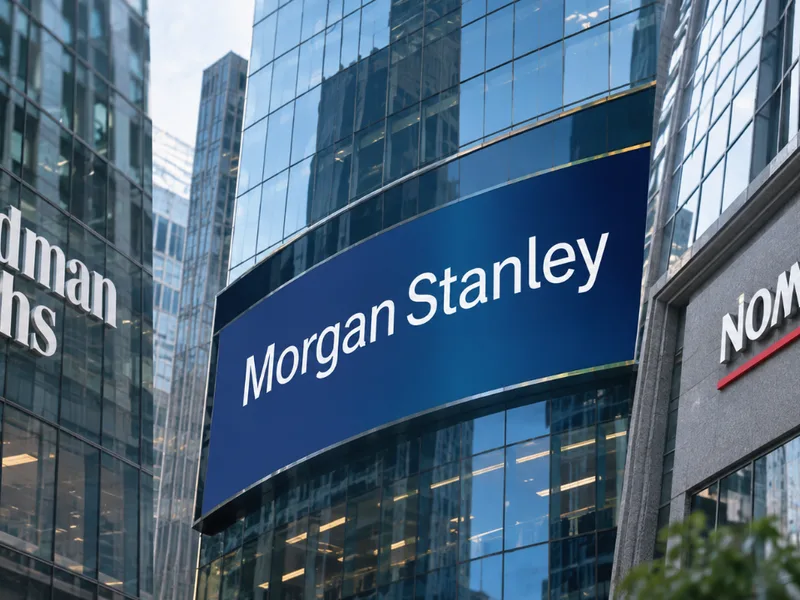
Morgan Stanley raises earnings forecasts but cuts price targets; Nomura anticipates persistent supply shortages.
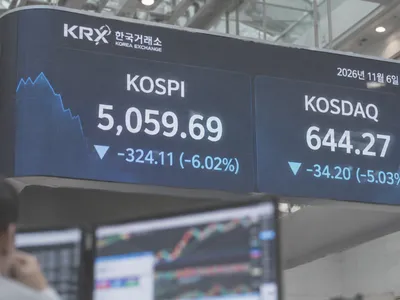
The KOSPI closed at 5,375.36 on the 11th, up 2.60%, driven by a strong rally in Samsung Electronics and SK hynix. Samsung Electronics rose 3.57% to 206,000 won, while SK hynix climbed 5.36% to 1,277,000 won. Sustained foreign buying for the second straight day propelled the semiconductor giants to lead the index's recovery.
Despite the rebound in share prices, global investment banks remain divided on the outlook for the semiconductor industry. The price targets for SK hynix set by Morgan Stanley and Nomura Securities differ by nearly threefold, at 1.6 million won and 4.7 million won, respectively. Goldman Sachs, while significantly lowering its KOSPI target, maintains that the semiconductor sector holds substantial upside potential.
Goldman Sachs lowered its 12-month KOSPI target by 25% to 9,000 in late October, down from its June forecast of 12,000. Even after the downward adjustment, the firm remains bullish on semiconductors. In its 'Korea Kickstart' report released on the 9th, Goldman Sachs analyzed that domestic semiconductor stock prices already reflect a scenario where 2027 corporate earnings estimates are slashed by approximately 70%.
The three-year forward price-to-book ratio (PBR) for the semiconductor sector, as calculated by Goldman Sachs, stands at 0.7x, a historical low. While the KOSPI has fallen by about 11% recently, the 12-month forward earnings per share (EPS) forecast has actually risen by 3.4%. Goldman Sachs suggests that as this disconnect between rising earnings expectations and falling stock prices narrows, the semiconductor sector could potentially double in value.
Higher Earnings Forecasts, Lower Price Targets
In a report on the 9th, Morgan Stanley slashed its price target for SK hynix by 38.5%, from 2.6 million won to 1.6 million won, and lowered Samsung Electronics' target by 18.9%, from 381,000 won to 309,000 won. Conversely, Nomura Securities maintained its targets of 670,000 won for Samsung Electronics and 4.7 million won for SK hynix in an October 20th report. The gap between the two firms' latest targets is 2.17x and 2.94x, respectively, with the reports published about three weeks apart.
Morgan Stanley's aggressive price target cuts were not due to deteriorating earnings outlooks. In fact, the firm raised its 2027 operating profit estimates for Samsung Electronics and SK hynix by 9% and 13%, respectively, and also upgraded 2028 forecasts. However, the firm factored in the potential for declining memory prices and profitability following the launch of new production facilities. Morgan Stanley analyst Shawn Kim noted that the most critical debate in the current memory market is whether a 'profit cliff' in 2028 can be avoided.
Morgan Stanley expressed concerns regarding the potential delay in AI data center investments amid an expansion in memory production capacity starting in late 2027. The firm anticipates that approximately 5 gigawatts (GW) of U.S. data center projects scheduled for 2028 could be pushed to 2029, leading it to lower its 2028 global data center new facility growth forecast from 21% to 9%.
The combination of supply expansion and demand delays could lead to a decline in both memory prices and profit margins. Morgan Stanley adjusted its 2027-2028 operating margin forecast for SK hynix's High Bandwidth Memory (HBM) from 78-80% to approximately 70%, and for Samsung Electronics from 80% to 65-72%. It also revised SK hynix's average operating margin forecast for 2029-2035 from 53% to 28%.
Despite the lower price targets, Morgan Stanley maintained an 'Overweight' rating for both Samsung Electronics and SK hynix. It also shifted its top pick in the semiconductor sector from Samsung Electro-Mechanics to Samsung Electronics, citing the latter's recovery in HBM market share and profitability in non-memory businesses.
Nomura Securities, however, maintains that AI data center demand will absorb the increased supply even as new facilities come online. It expects memory supply shortages to persist until at least 2028, estimating that global new data center capacity will grow by approximately 41%, from 22.3GW this year to 31.5GW next year.
Nomura also dismissed market concerns regarding technological catch-up by Chinese memory firms and the funding burdens on AI companies as excessive. The fundamental divergence between Morgan Stanley and Nomura lies in whether AI data center investments can maintain their current growth trajectory beyond 2028, when memory supply is expected to increase.