Founder's son and second-largest shareholder form 22.25% alliance; proxy battle for three board seats set for December extraordinary general meeting.
Despite securing 166.7 billion won in financial assets, acquisition price remains undecided; conflict intensifies over funding and conflicts of interest.
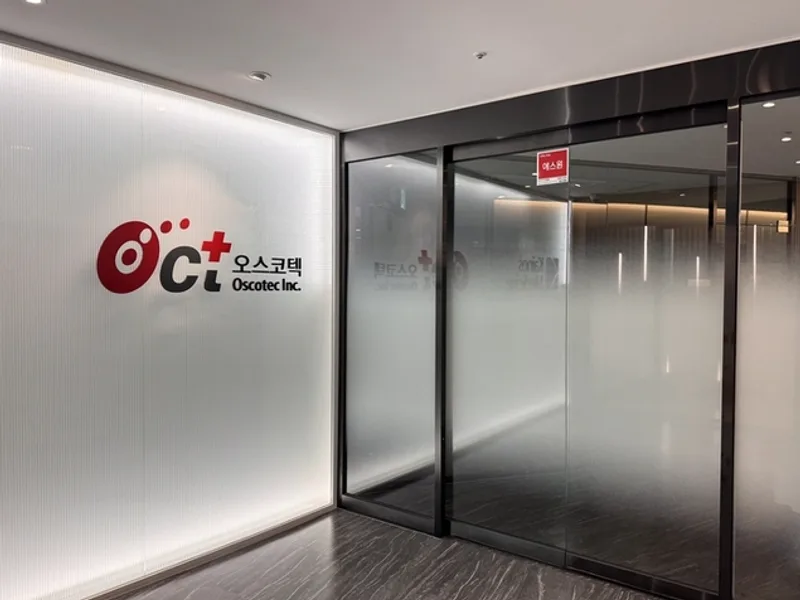
Oscotec, which has bolstered its financial position through royalties and licensing revenue from the lung cancer drug Lazertinib, is now embroiled in a management dispute over the acquisition of its U.S. subsidiary, Genosco. While the company held approximately 166.7 billion won in financial assets as of the end of September, the acquisition price for the remaining stake in Genosco has yet to be determined. Tensions between the major shareholder alliance and current management over external investment and new share issuance to fund the acquisition have raised concerns regarding the dilution of existing shareholder value.
In a twist, the second-largest shareholder, who previously opposed the founder, has now aligned with the founder's son to challenge the current leadership. With an extraordinary general meeting scheduled for December 1, the conflict over board restructuring and the Genosco acquisition process is intensifying.
Second-Largest Shareholder Aligns with Founder's Son
Kim Sung-yeon, head of strategic planning at Genosco and son of the late Oscotec founder Kim Jung-keun, became the largest shareholder in July after inheriting his father's 8.72% stake. By entering into a joint voting agreement with the second-largest shareholder, GK Asset, the alliance increased its combined stake to 22.25% as of September 16.
GK Asset previously clashed with the late founder over issues such as Genosco's potential dual listing and the founder's reappointment. Now, these former opponents are working with the founder's son to secure seats on the board. The alliance is demanding the appointment of three new directors and the repeal of the supermajority provision, a defensive mechanism requiring a higher-than-normal approval threshold for specific agenda items.
According to the notice of the general meeting, four candidates are vying for three board seats. The alliance has nominated Ko Jong-sung, head of R&D at Genosco; Kim Sung-yeon; and Harvard Medical School Assistant Professor Park Jong-chul. The current management has nominated independent director candidate Bae Jin-geon. Cumulative voting will be applied to the election.
Amid the dispute, 49 Oscotec employees—representing approximately 74% of the total workforce and over 90% of researchers—issued a joint statement supporting CEO Yoon Tae-young’s R&D leadership, calling for continuity and stable management conditions.
Genosco Stake and Conflict of Interest Concerns
Current management is concerned about Kim Sung-yeon’s personal 13% stake in Genosco. Oscotec currently holds a 59.31% stake in Genosco and intends to acquire the remaining 40.69% to make it a wholly-owned subsidiary. Because Kim holds shares in both entities, management argues he faces a conflict of interest in determining the acquisition price.
While Kim has stated he will recuse himself from deliberations regarding Genosco’s valuation, management insists that conflicts of interest must also be addressed regarding external investment and new share issuance. The two sides are also at odds over shareholder protection, with management demanding a legally binding agreement from the major shareholders as a condition for potentially repealing the supermajority provision.
Financial Assets vs. Acquisition Costs
As of the end of September, Oscotec reported approximately 166.7 billion won in cash and short-term financial instruments. While the company turned a profit with 22 billion won in operating profit for the first three quarters, driven by Lazertinib royalties and licensing fees, it must also reserve funds for ongoing R&D. Independent director Kim Gyu-sik noted that while tens of billions of won will be required for the acquisition, the final price remains unconfirmed.
Furthermore, the company’s capacity to issue new shares is limited, with only about 1.74 million shares remaining under the current authorized limit. Any issuance beyond this requires an amendment to the articles of incorporation. The major shareholder alliance argues that any expansion of authorized shares or third-party share allocations should be decided by the new board following the December meeting, citing concerns over shareholder dilution.