KOSPI recovers to 5,050 level after early morning dip to 4,984
The KOSPI index fell below the 5,000 mark during intra-day trading on the 17th but managed to pare losses and recover to the 5,050 level. While the domestic market has faced a four-day losing streak driven by a sharp decline in U.S. semiconductor stocks and sustained foreign selling, the index saw a partial rebound as institutional buying entered the market following the early morning plunge.
According to the Korea Exchange, the KOSPI opened at 5,008.09, down 92.41 points (1.81%) from the previous trading session. The index extended its losses immediately after the opening to hit a low of 4,984.83, but subsequently reclaimed the 5,000 level and climbed as high as 5,084.06 during the session.
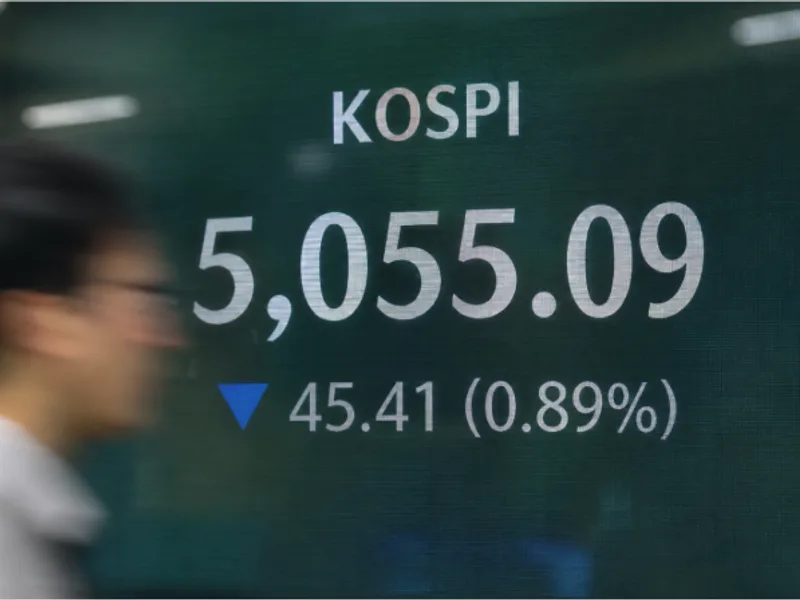
As of 10:45 a.m., the KOSPI stood at 5,055.09, down 45.41 points (0.89%). The initial decline, which exceeded 2%, narrowed to under 1%, with the index fluctuating within a range of approximately 100 points.
Foreign investors continued their selling spree. As of 9:17 a.m., foreigners were net sellers of 192.9 billion won in the KOSPI market, while institutions and retail investors were net buyers of 171 billion won and 2.3 billion won, respectively.
The KOSPI closed at 5,100.50 yesterday, plummeting 190.03 points (3.59%). Despite heavy net selling by foreigners (1.3769 trillion won) and institutions (451.3 billion won), retail investors' net buying of 1.3398 trillion won failed to prevent the index from sliding. This morning, however, the shift to net buying by institutions helped mitigate the early losses.
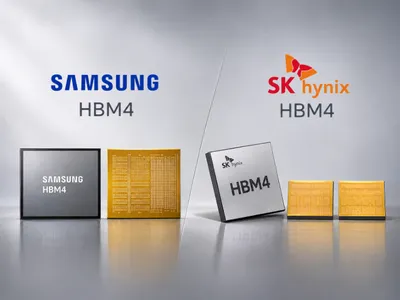
Semiconductor heavyweights remained weak. Samsung Electronics closed at 196,800 won yesterday after a 4.47% drop, while SK hynix fell 7.89% to 1.12 million won. As of 9:10 a.m. today, Samsung Electronics was trading at 192,700 won (-2.08%) and SK hynix at 1,114,500 won (-0.49%).
The recent surge in margin debt is also cited as a burden on the market. As of the 13th, the combined margin debt for Samsung Electronics and SK hynix reached 6.934 trillion won, accounting for 27.7% of the total for the KOSPI and KOSDAQ. Furthermore, the balance of credit lines at the five major banks reached 44.2632 trillion won as of the 12th, the highest level since August 2022. With leveraged investments concentrated in large-cap semiconductor stocks, continued price declines could increase the risk of losses for margin traders and trigger further selling pressure.
U.S. Semiconductor Index Plummets 5.28% Amid AI Investment Anxiety
The primary factor weighing on the domestic market is the sharp decline in U.S. technology stocks. On the 16th (local time), the tech-heavy Nasdaq fell 2.49%, while the S&P 500 and the Dow Jones Industrial Average declined 1.92% and 1.41%, respectively.
Notably, the Philadelphia Semiconductor Index plunged 5.28%. Nvidia fell 4.12%, while major semiconductor firms including Micron (-7.62%), AMD (-5.58%), and Broadcom (-3.92%) all saw significant declines.
Concerns over tightened U.S. export controls on advanced AI semiconductors and high valuations for AI-related companies have dampened investor sentiment across the tech sector. Fears regarding the funding burden associated with expanding AI data center investments have further fueled the sell-off in the semiconductor industry.
Volatility was also evident in the domestic semiconductor sector. Yesterday, semiconductor component and substrate manufacturers such as Samsung Electro-Mechanics (-8.19%), Simmtech (-13.38%), and Daeduck Electronics (-9.53%) saw sharp declines, indicating that the sell-off has spread beyond major semiconductor stocks to the broader supply chain.
The KOSDAQ index also opened lower at 656.82, down 8.83 points (1.33%). Following a 4.86% drop the previous day, the continued decline reflects persistent selling pressure on small and mid-cap growth stocks.
Han Ji-young, an analyst at Kiwoom Securities, stated, "As the market had already priced in AI-related risks during yesterday's plunge, we expect to see a recovery of the intra-day losses." He also noted that the KOSPI's forward price-to-book ratio (PBR) has fallen to 0.96x, which may limit the potential for further sharp declines.