KDI and IMF project growth in the high 3% range, yet gains remain concentrated in high-tech industries.
Domestic sectors like food and accommodation face delayed recovery amid inflation and tight monetary policy.
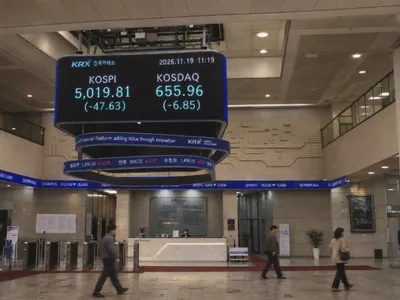
Following the Korea Development Institute (KDI) projecting economic growth of 3.8% this year and 3.9% next year in its "Second Half 2026 Economic Outlook" on the 18th, the International Monetary Fund (IMF) also raised its growth forecast for this year to 3.9% in its "2026 Article IV Consultation" results a day earlier. While South Korea's economic growth outlook is being revised upward, the export boom centered on semiconductors has failed to lift the perceived economic conditions for households and the self-employed.
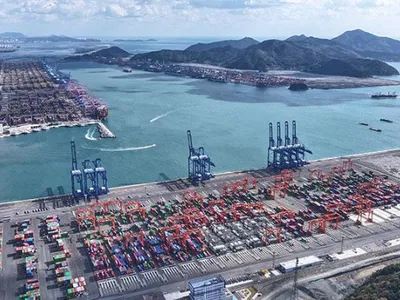
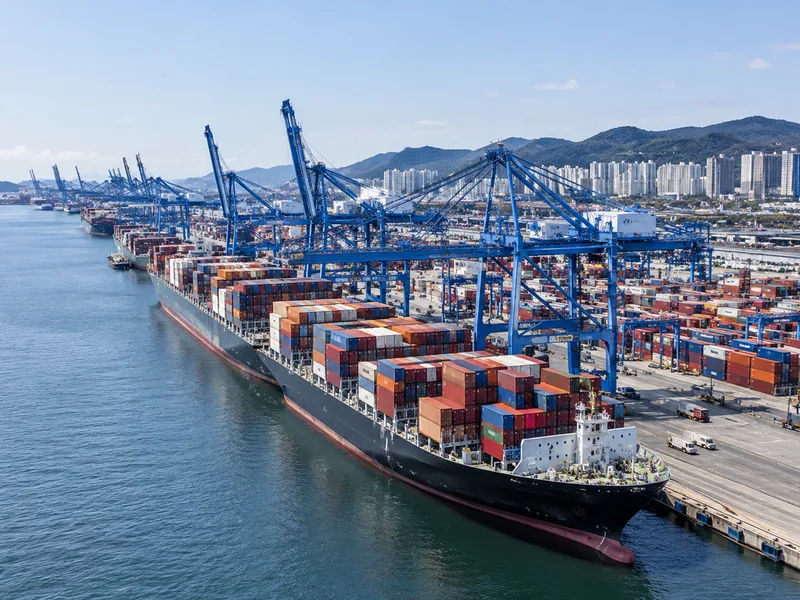
The rise in growth forecasts is underpinned by a semiconductor boom driven by global artificial intelligence (AI) investment. According to the KDI, the value-added share of computer, electronic, and optical equipment manufacturing—including semiconductors—relative to nominal GDP rose from an average of 7.5% between 2022 and 2025 to 20.7% in the first half of this year. The growth contribution of semiconductor-related industries has also increased significantly.
Kim Ji-yeon, head of the Economic Outlook Division at the KDI, stated, "Semiconductors account for about half of this year's annual growth rate, and for next year's 3.9%, one can consider semiconductors to be contributing about two-thirds."
However, this statistical growth does not immediately translate into the daily lives of households. The IMF mission noted that while the global AI boom has driven record-high semiconductor exports and contributed to growth momentum, corporate earnings, and fiscal revenue, the benefits are primarily concentrated in high-tech industries, suggesting it will take time for these gains to permeate the broader economy.
The KDI projects private consumption growth at 2.4% next year. However, it expects that because the benefits of the semiconductor boom are concentrated in specific industries and demographics, a broad-based recovery in consumption will be difficult to achieve.
Growth Rises, but Recovery in Food and Accommodation Lags
Inflation and monetary policy conditions also remain challenging for household consumption. The KDI forecasts consumer price inflation at 2.7% this year and 2.4% next year. The IMF similarly expects 2.7% this year and 2.3% next year. Both institutions anticipate that inflation will remain above the Bank of Korea's 2% target through next year.
Both institutions suggested that a restrictive monetary policy is necessary for the time being to address inflationary pressures. The IMF recommended further monetary tightening to prevent inflation from becoming entrenched. The KDI also stated that it is necessary to maintain a restrictive stance, projecting core inflation to reach 2.5% next year.
While overall growth is rebounding, domestic demand recovery remains relatively sluggish. In particular, the growth of lifestyle-oriented service industries, such as food and accommodation, is weak, leading to a discrepancy between macroeconomic indicators and the economic reality felt by the self-employed and small business owners.
Kim Mi-ru, a director at the KDI’s Department of Macro and Financial Policy, explained that the benefits of the semiconductor boom are concentrated in specific sectors, noting, "There will be some gap between perceived economic conditions and the overall growth rate." She added that due to the relatively low growth in the food and accommodation sectors, it is difficult for small business owners and the self-employed to feel the economic recovery.
Growth concentrated in semiconductors also increases vulnerability to economic fluctuations. If global AI investment slows or the semiconductor market turns, it could have a significant impact on the overall domestic growth rate. If the recovery of domestic sectors, including food and accommodation, remains delayed while the semiconductor boom continues, the gap between high economic growth and the economic reality felt by households is unlikely to narrow easily.