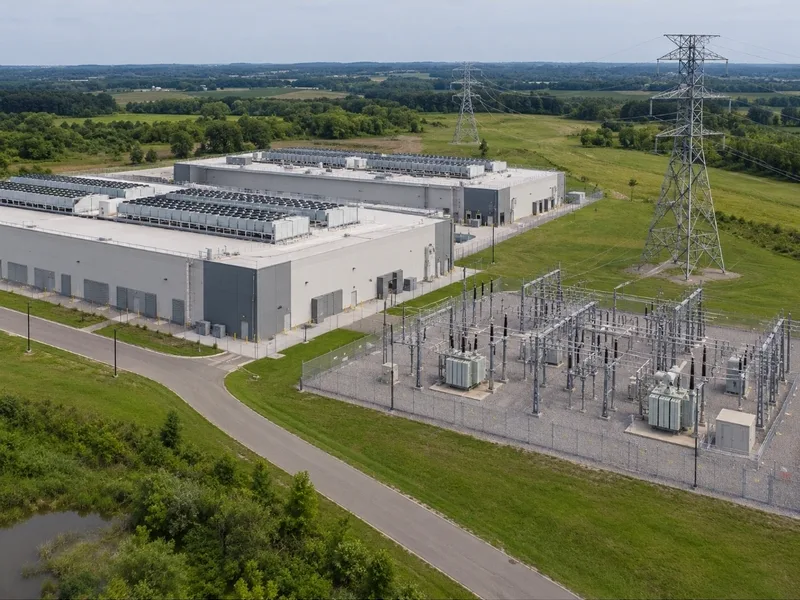
Passed by the Senate with a 62-33 vote; data centers to bear unrecovered costs even if power contracts are terminated early.
Grid Strategies estimates an additional $35 billion in transmission fee burdens over the next decade.
The U.S. Senate has passed an energy permitting bill that increases the grid cost burden for data centers. Under the proposed legislation, new data centers connecting to the power grid will be required to cover additional infrastructure costs necessary for power supply. These new transmission rate standards may also apply to existing facilities. The bill also streamlines federal permitting processes for the construction of power plants and transmission lines.
On the 19th (local time), the Senate passed the 'Bipartisan American Affordable Living and Jobs Act' (BAAJA, H.R.2347) with a vote of 62 to 33. The bill received support from 47 Republicans, 14 Democrats, and one Independent. It has now moved to the House of Representatives. According to Reuters, President Donald Trump has indicated he would sign the bill if it passes Congress.
Community Backlash Against Data Center Development
According to data released by Ballotpedia on November 6, 40 out of 41 local referendums related to data centers held alongside the November 3 midterm elections resulted in the rejection of development projects or the imposition of stricter regulations. Senator Sheldon Whitehouse, a co-sponsor of the bill, stated that the legislation aims to prevent the structure where data center power costs are shifted onto other consumers.
New Facilities Face Infrastructure Costs; Existing Ones May See Rate Hikes
Section 2107 of the Senate bill mandates that costs associated with power generation, storage, and transmission for data centers connecting to the grid after the bill's enactment cannot be passed on to other customers. Utility companies must require financial guarantees or contributions from data centers before building or expanding necessary infrastructure. If a power contract is terminated early or electricity procurement is halted, the data center must bear any unrecovered costs. AEP Ohio, an Ohio-based utility, already enforces full recovery of construction costs if a data center of 25MW or larger cancels or delays its project by more than 12 months beyond the target supply date.
Federal transmission rate standards are also set to change. The bill requires that transmission fees for applicable data centers reflect both existing grid usage costs and additional transmission costs. Current Federal Energy Regulatory Commission (FERC) guidelines apply the higher of the two when expanding the grid. The new standards could apply to existing facilities, with the specific scope to be determined by FERC. The commission is required to revise guidelines within 90 days of enactment and issue a final rule within one year.
Grid Strategies estimated in an analysis released on November 2 that the transmission rate overhaul could increase the burden on the data center industry by approximately $35 billion over 10 years. The report projected total transmission costs to reach $55 billion under the new policy, compared to $20 billion under current policies, assuming a 40.3GW increase in new data center power demand.
Corporate Push for Power Security and Self-Generation
The bill simplifies federal environmental reviews and expands the scope of transmission projects that FERC can authorize. The Clean Energy Buyers Association (CEBA), which includes members like Amazon, Google, Meta, and Microsoft, supported the bill, citing the potential for faster infrastructure deployment. The Data Center Coalition (DCC) is currently reviewing the legislation.
The Electricity Customers Alliance (ECA) warned that rising transmission costs might drive data centers to secure their own power sources off-grid. A McKinsey survey indicated that approximately 60% of U.S. data center respondents expect to have long-term self-generation capabilities by 2030, even while maintaining grid connectivity.
Environmental Concerns and Legislative Hurdles
The bill also limits the window for filing lawsuits against certain permitting decisions. Environmental groups and some indigenous tribes have expressed opposition, fearing that expedited construction of power plants and pipelines could weaken environmental protections and tribal rights. House Minority Leader Hakeem Jeffries' office also raised concerns regarding the adequacy of environmental review reforms and the protection of tribal authority.
House Speaker Mike Johnson has signaled his intention to apply an expedited process to the bill, which would prevent amendments on the floor and require a two-thirds majority for passage. However, House Energy and Commerce Committee Chairman Brett Guthrie noted in a Politico interview that certain provisions, such as grid stability, may require modification. The industry is now closely watching the scale of grid investment and the timeline for equipment procurement, which could accelerate for contractors and manufacturers of transformers and high-voltage cables as project timelines shorten from 10 years to 5-6 years.