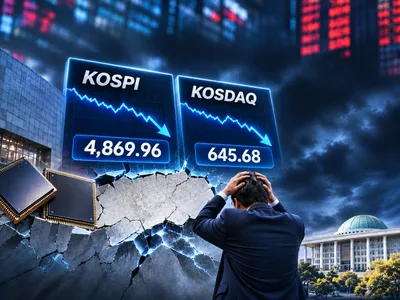


Forced delistings reach highest level since 2013, driven by audit opinions and listing eligibility issues.
Despite a surge in designated administrative issues, approximately 40% of firms with market caps under 30 billion won remain profitable.
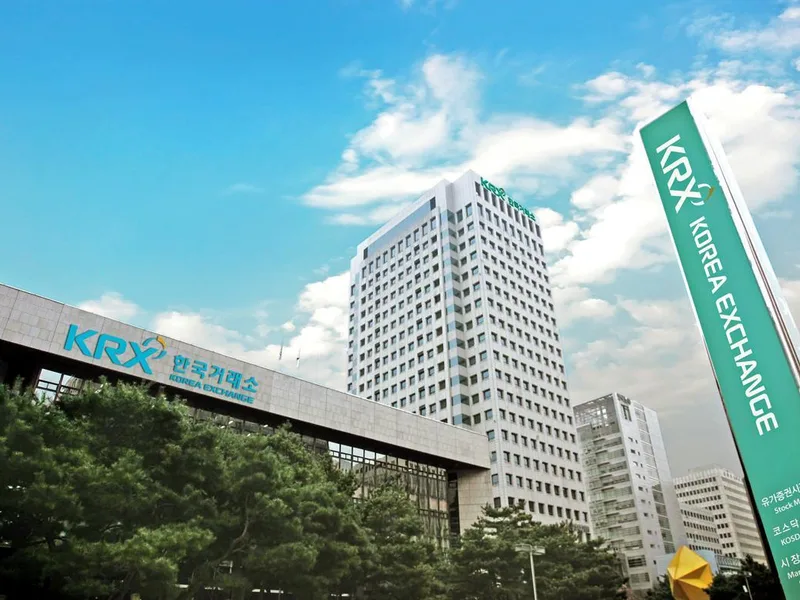
The delisting process for companies that failed to meet tightened market capitalization and stock price requirements has been stalled for over a month. This follows the Korea Exchange's (KRX) decision to suspend follow-up procedures after a court granted an injunction. With forced delistings hitting their highest level since 2013, debate over the fairness and procedural legitimacy of these exit criteria continues ahead of a court hearing on objections scheduled for the 27th.
According to KRX data as of the 22nd, 40 companies have been forcibly delisted this year, including 29 on the KOSDAQ and 11 on the KOSPI. The KOSDAQ accounted for 72.5% of the total. These figures exclude delistings resulting from SPAC mergers or integration into parent companies.
By cause, 19 companies were delisted due to qualified or disclaimed audit opinions, 17 due to reviews of listing eligibility, and 4 due to failing to meet market capitalization requirements. While 90% of exits were tied to audit or eligibility issues, the stricter market cap standards have directly resulted in only four delistings so far.
Administrative issues surge 2.4-fold in three months; delisting procedures suspended
The KOSDAQ market capitalization threshold for maintaining a listing was raised from 4 billion won last year to 15 billion won in January and 20 billion won in July. The KOSPI also adopted a 30 billion won threshold in July, and "penny stocks" priced below 1,000 won were added to the delisting criteria.
The number of companies designated as administrative issues due to market cap or stock price failures rose from 36 in mid-August to 87 recently—a 2.4-fold increase in just three months. This includes 46 firms failing market cap requirements, 33 failing price requirements, and 8 failing both.
However, following a court injunction in October, the KRX suspended subsequent delisting procedures to prevent the spread of similar legal disputes. The Seoul Southern District Court had ruled in favor of some companies seeking to halt the effect of their delisting notices.
The court questioned the implementation process of the tightened standards, noting that the accelerated timeline did not provide companies with sufficient opportunity to respond and that the objection process was inadequate. Beyond the policy goal of weeding out insolvent firms, the legitimacy of the exit process itself has come under scrutiny.
The KRX stated at the time that it would suspend follow-up delisting procedures after designating administrative issues, citing concerns over increased uncertainty for companies and investors. This measure was subsequently extended to firms failing to meet stock price requirements.
Currently, 17 companies—8 failing market cap requirements and 9 failing price requirements—remain in a state of limbo where delisting triggers have been met, but procedures are halted pending further court decisions.
Approximately 40% of firms with market caps under 30 billion won are profitable; debate over criteria appropriateness
The core issue is that a low market capitalization does not necessarily equate to insolvency. A symposium on KOSDAQ revitalization held at the National Assembly on the 20th revealed that as of September, 132 out of approximately 340 KOSDAQ firms with market caps under 30 billion won recorded an operating profit. Of these, 113 had debt ratios below 200% and no capital impairment.
Ahn Tae-jun, a professor at Hanyang University Law School, stated, "Rather than deciding on delisting based solely on market capitalization, it is appropriate to comprehensively review the company's fundamentals, such as financial status and business operations, and to guarantee sufficient opportunities for improvement and reasonable grace periods."
While operating profit alone cannot guarantee a listing, audit opinions and management transparency remain critical for investor protection. However, given that financially sound companies could be targeted for delisting due to market cap fluctuations, the appropriateness of using market cap as a sole criterion is being questioned.
Amid the ongoing controversy, the government has delayed the implementation of certain rules. The application of the 30 billion won market cap threshold for the KOSDAQ was postponed by six months to July, and a plan was introduced allowing qualified companies to transfer to the KONEX market without undergoing liquidation trading.
The focus now shifts to the court's decision on the pending objections. With the hearing scheduled to conclude on the 27th, the outcome will likely dictate the future of the suspended delisting procedures. The market is watching to see how the KRX balances the policy goal of removing insolvent firms with the need to ensure due process and investor protection.