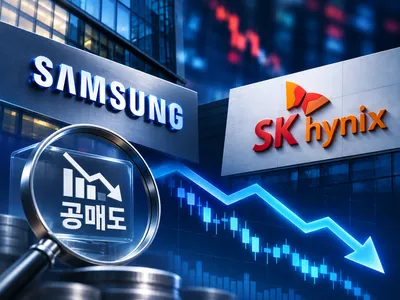


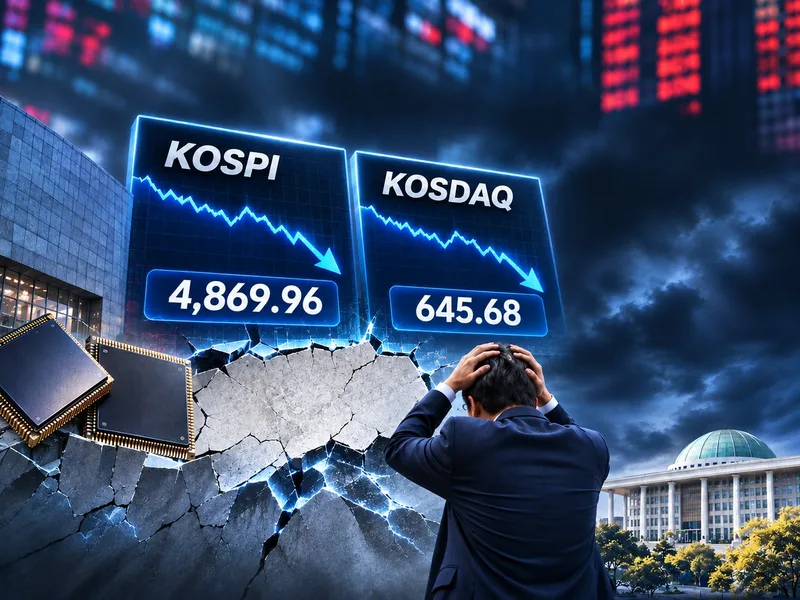
KOSPI and KOSDAQ collapse; 3,768 trillion won in market value evaporates.
While foreign investors offload 100 trillion won, Samsung Electronics and SK hynix spend 55 trillion won on share buybacks.
Government and brokerage firms intoxicated by rallies must conduct a comprehensive review of stock market policies.
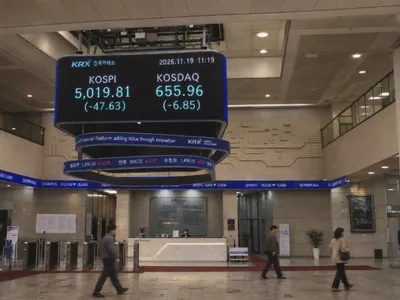
The KOSPI has breached the 5,000-point mark, while the KOSDAQ has slid below 650. On the 20th, both markets triggered sidecar trading halts. The optimism that once fueled dreams of a "10,000-point KOSPI" and "1,000-point KOSDAQ" has vanished, replaced by a market gripped by the fear of further declines.
The domestic market rout has been compounded by a series of negative signals from the U.S., including reports on Nvidia's accounting audits, a sharp drop in Anthropic shares, tightened AI semiconductor export controls, and Federal Reserve officials signaling the need for further interest rate hikes. On the 20th (local time), the Philadelphia Semiconductor Index plunged 10.73%. The major U.S. indices—the Nasdaq (-5.28%), S&P 500 (-3.70%), and Dow (-1.93%)—also fell sharply, heightening concerns over further downside for the Korean market.
The KOSPI, which had been eyeing the 10,000-point milestone just months ago, has now surrendered the 5,000-point level. We must determine whether this crash can be explained solely by external factors. It is time to examine the index's heavy reliance on semiconductors, the dependence on foreign capital flows, and the actual impact of massive share buybacks on stock prices. A fundamental review is required to assess whether government market-boosting policies have truly improved market health or if there were gaps in the regulatory and risk management frameworks that supported the rally.
A Market Reliant on Semiconductor Giants: 3,768 Trillion Won Evaporated
On June 19, the KOSPI hit an all-time intraday high of 9,385.59. However, it closed at 4,869.96 on November 20, a 48.11% decline from its peak. The KOSDAQ also fell 47.48% from its April 27 intraday high of 1,229.42 to close at 645.68.
Comparing the peak closing dates to November 20, the KOSPI market capitalization shrank from approximately 7,450 trillion won to 3,991 trillion won—a loss of roughly 3,458 trillion won. The KOSDAQ market cap fell from 679.5 trillion won to 369.3 trillion won, a decrease of 310 trillion won. In total, approximately 3,768 trillion won has evaporated from both markets.
Notably, the decline in market capitalization for Samsung Electronics and SK hynix accounted for roughly 2,290 trillion won, or 66.2% of the total KOSPI decline. While this figure includes the effect of reduced share counts from buybacks and cancellations, the concentration of the decline in these two firms is overwhelming.
This dependence was equally evident during the rally. According to the Bank of Korea’s September Monetary Policy Report, Samsung Electronics and SK hynix accounted for 77% of the KOSPI’s gains in the first half of the year. During the climb from 8,000 to 9,000 points, their contribution reached 99%.
Foreign Investors Net Sell 100 Trillion Won: Who Absorbed the Supply?
Since the KOSPI peak, the trading patterns of foreign and domestic investors have diverged sharply. From June 23 to November 20, foreign investors net sold approximately 100.3 trillion won in KOSPI stocks. Conversely, other corporate entities, retail investors, and institutional investors were net buyers.
The massive net buying by other corporate entities was largely driven by share buybacks from Samsung Electronics and SK hynix. These two firms purchased approximately 55 trillion won in shares, nearly matching the total net buying of 61.9 trillion won by all other corporate entities during the same period.
The situation on the KOSDAQ was different. While retail investors net bought 3.4 trillion won, foreign investors, other corporate entities, and institutions were all net sellers. The concern is the sustainability of this structure; one cannot indefinitely rely on corporate buybacks to absorb foreign selling. The market needs to broaden its base for long-term domestic investment and foster growth engines beyond the semiconductor sector.
Policy Effectiveness: Low PBR, Buybacks, and Delisting
The government has implemented various measures to improve market health, including the disclosure of low-PBR (Price-to-Book Ratio) companies, mandatory share cancellations, and stricter delisting requirements. While these measures aim to enhance corporate value and shareholder returns, they do not necessarily translate into corporate growth or increased investment. Policymakers must ensure that shareholder return mandates do not stifle the capital required for future R&D and facility investments.
The Need for Comprehensive Reform
During the market's ascent, both the government and political parties fueled optimism, with some officials even projecting a 10,000-point KOSPI by 2027. Brokerage firms also aggressively raised their targets, only to slash them rapidly as the market turned. Goldman Sachs, for instance, lowered its KOSPI target from 12,000 in June to 7,500 by November.
The impact of this market crash is now hitting household wealth. Citigroup estimated in a recent report that domestic households faced approximately 563 trillion won in capital losses in the second half of the year, which could drag down GDP growth and private consumption in the coming year.
What is needed now is not another round of rosy forecasts or piecemeal stimulus, but a comprehensive response that verifies policy effectiveness and addresses structural vulnerabilities. The Korean stock market must recover more than just its index—it must restore investor trust.