

November export manufacturing index fell 2.7 points to 103.4, while the domestic index rose 1.5 points to 105.3. Improved production and inventory levels among suppliers with less than 50% export exposure bolstered domestic sentiment, though 'sluggish domestic demand' remains the primary business hurdle.
Sentiment among South Korean manufacturers diverged significantly this month. While the index for export-oriented firms declined due to global oversupply in chemicals, reduced order volumes, and waning demand for mobile phones and home appliances, the index for domestic-focused manufacturers rose, outpacing their export-oriented counterparts. This rebound is attributed not to a recovery in consumer spending, but to increased production and reduced inventory levels among suppliers providing parts and materials to the semiconductor and automotive sectors.
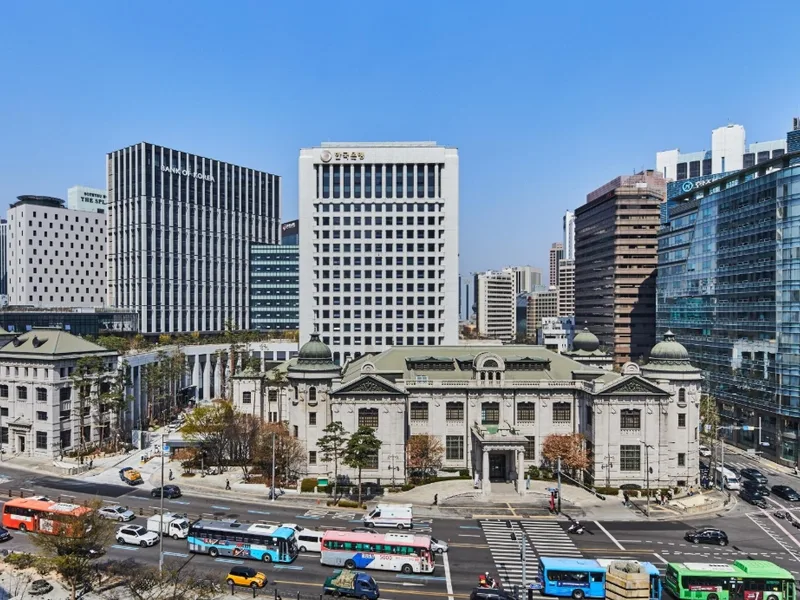
According to the 'November 2026 Business Survey Results and Economic Sentiment Index' released by the Bank of Korea on the 25th, the Manufacturing Business Sentiment Index (CBSI) stood at 104.8—remaining above the long-term average (2003–2025) of 100—but marked a 0.8-point decline from the previous month.
By business type, the CBSI for export manufacturers fell 2.7 points from 106.1 in October to 103.4 in November. Conversely, the CBSI for domestic manufacturers rose 1.5 points from 103.8 to 105.3, reaching its highest level in four years and six months since May 2022 (107.0).
The divergence is primarily driven by sector-specific production and inventory trends. Export firms faced production cuts and inventory accumulation in the chemical sector due to global oversupply and reduced orders, while demand for electronic components, such as optical materials and LEDs, suffered from a slump in mobile and appliance markets. Furthermore, the strengthening of the Korean won reduced the won-denominated value of export revenue and profits, placing additional pressure on firms with high export exposure.
In contrast, the improvement in domestic sentiment was largely fueled by suppliers to major industries like Samsung Electronics, SK hynix, and Hyundai Motor. Park Yong-min, head of the Economic Sentiment Survey Team at the Bank of Korea, explained, "Strong semiconductor market conditions and the normalization of automotive production led to increased output and reduced inventory for companies supplying semiconductor components, chemicals, and rubber and plastic products."
Despite the improvement among supply chain firms, concerns regarding domestic demand persist across the broader manufacturing sector. In the survey, 'sluggish domestic demand' (21.2%) remained the top business challenge, followed by 'rising raw material costs' (18.6%) and 'economic uncertainty' (15.2%). Notably, the proportion of firms citing economic uncertainty rose by 1.5 percentage points. Non-manufacturing firms also identified sluggish domestic demand (19.1%) as their primary challenge, indicating that a broad-based recovery remains slow.
Meanwhile, the non-manufacturing CBSI fell 0.7 points to 102.5, weighed down by seasonal declines in leisure activities and rising labor and fuel costs affecting sports, leisure, and transportation services. The overall Business Sentiment Index for all industries, combining manufacturing and non-manufacturing, fell 0.7 points to 103.5. The survey was conducted from the 10th to the 17th, with 3,440 companies responding out of 3,639 surveyed.