

Bioenergy power investment wanes; fuel and gas investment hits record highs for two consecutive years.
South Korea reduces support for woody biomass power while expanding mandatory biofuel blending.
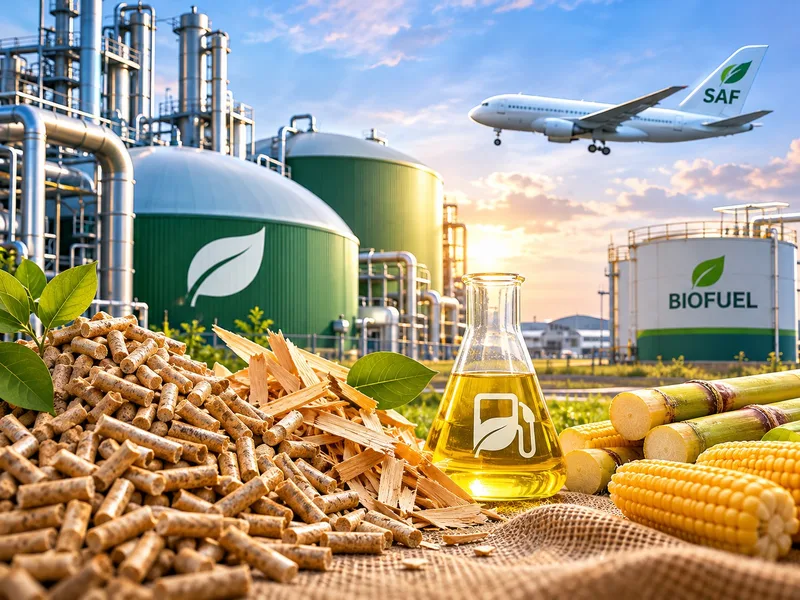
The global bioenergy industry is expanding beyond power and heat supply into the transportation fuel and gas markets. Decarbonizing hard-to-abate industries and converting organic waste into energy have emerged as new growth engines. While the growth of bio-power is slowing, the markets for Sustainable Aviation Fuel (SAF) and biomethane are expanding rapidly, bolstered by government policy support.
South Korea is also restructuring its industrial framework, scaling back support for woody biomass power generation while expanding mandatory biofuel blending and biogas production quotas.
Bio-power Growth Slows; Fuel and Gas Investment Hits Record Highs
According to the World Bioenergy Association (WBA), global bio-power capacity reached 155GW in 2025, a 2% increase year-on-year. While generation hit a record 711TWh, the growth rate slowed to 1%, the lowest on record. Its share of total renewable energy generation also declined to 6.6%.
Bioenergy remains the world's largest source of renewable heat. The International Energy Agency (IEA) projects global bio-heat consumption to grow at an average annual rate of 1.4% from 17.8EJ in 2025 to 2031. While competition with heat pumps is intensifying in the building heating market, industrial heat demand is expected to persist, particularly in emerging economies.
Liquid biofuel production reached a record 200 billion liters last year, up 4% from the previous year. Driven by blending mandates in at least 44 countries, SAF production has nearly doubled.
Investment trends are also shifting. Global investment in bio-power fell 62.6% from an annual average of $10.7 billion in 2022-2023 to $4 billion in 2024. Conversely, investment in liquid biofuels and biogas rose 6% last year and is expected to exceed $16 billion this year, a 5% increase.
Growth in Biofuels and Biomethane Intensifies Competition for Feedstock
The IEA forecasts that global demand for liquid biofuels for transportation will rise 26.8% from 198 billion liters in 2025 to 251 billion liters in 2031. Approximately 85% of this demand growth is expected to come from road transport, with 15% from aviation and shipping.
The European Union implemented a 2% SAF blending mandate last year, which will increase to 6% by 2030. The UK also plans to raise its SAF blending mandate to 10% by 2030.
According to the European Union Aviation Safety Agency (EASA), 1.1 million tons of SAF were supplied to EU airports in 2025, a six-fold increase from the previous year, accounting for 2.8% of total jet fuel. However, 85% of the feedstock was sourced from outside the EU, and the benchmark price for SAF reached 1,925 euros per ton, roughly triple the 640 euros for conventional jet fuel.
Demand for feedstock for liquid biofuel production is projected to grow by approximately 30%, from 650 million tons in 2025 to over 850 million tons in 2031. Competition for vegetable oils and used cooking oil is expected to intensify.
Global biogas and biomethane production is also expected to grow by 18% by 2031. While the EU and the US accounted for 76% of global biomethane production last year, growth in emerging markets like India and China is noteworthy. Expanding biomethane projects linked to existing natural gas supply chains presents new growth opportunities for gas purification and environmental plant markets.
South Korea Scales Back Bio-power Support to Foster Fuel and Gas Markets
According to the Korea Power Exchange, domestic bio-power capacity grew 6.5% from 1,843MW in January to 1,963MW in November, trailing the 10.6% growth rate of total renewable energy capacity. Its share of total capacity fell from 4.7% to 4.5%.
Citing high dependence on imported wood pellets and environmental sustainability concerns, the government has excluded new woody biomass power facilities from Renewable Energy Certificate (REC) eligibility and is gradually adjusting REC weightings for existing facilities.
Conversely, the biogas production quota system, which utilizes organic waste, was expanded from the public sector last year to the private sector this year. The mandatory production targets for this year are 50% for public entities and 10% for private firms.
The mandatory biodiesel blending ratio for automotive diesel will increase from 4% this year to 4.5% in 2027 and 5% in 2030.
SAF is also set to face a 1% blending mandate for international flights departing from South Korea starting in 2027. The government plans to determine specific ratios for 2030 (3-5%) and 2035 (7-10%) based on domestic production capacity and global market conditions.
The focus of South Korea's bioenergy policy is shifting from expanding power generation based on imported raw materials to utilizing domestic waste and producing high-value energy.
Business Opportunities for South Korean Firms
In the bio-power and industrial heat sector, SGC Energy supplies electricity and industrial steam using biomass at its cogeneration plant in the Gunsan Industrial Complex. GNC Energy operates approximately 7MW of biogas power plants across eight regions as of the end of the third quarter.
In biogas resource recovery and purification, EcoSimple completed a clean hydrogen production facility in the southwest region this June and has begun hydrogen production and sales. Airrane has executed projects in China, Brazil, and Malaysia based on its gas separation membranes for biogas purification and is targeting the European market following its participation in an environmental trade fair in Italy this month.
In the biofuel sector, DS Dansuk decided in October to contribute 41.2 billion won in land and facilities to its SAF-dedicated subsidiary. It aims to secure an annual SAF production capacity of 300,000 tons by 2030. JC Chemical, following its export of SAF pre-treatment feedstock, has signed a technology license and basic design contract with Denmark's Topsoe for Hydrogenated Vegetable Oil (HVO) and SAF production facilities, moving forward with feasibility studies.
In the refining industry, SK Energy, a subsidiary of SK Innovation, is expanding into the low-carbon fuel market, including commercial SAF production using existing oil refining facilities.
For the sustainable growth of the domestic bioenergy industry, it is essential to move away from reliance on imported raw materials, build stable domestic waste supply chains, and strengthen competitiveness in high-value energy production.
Market Times will cover the growth outlook for the hydrogen and fuel cell market, global policy changes, and the competitiveness of South Korean companies in the next installment.