


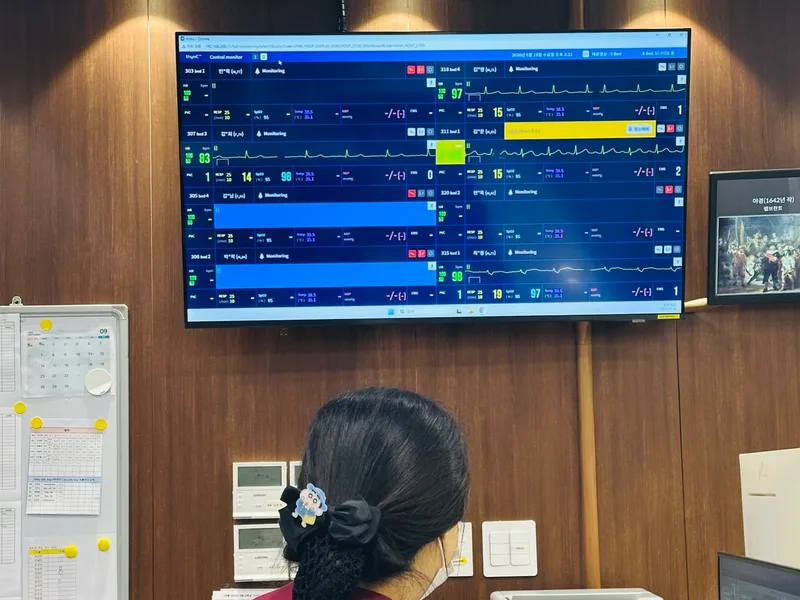
Real-time monitoring of ECG, heart rate, respiratory rate, and oxygen saturation with EMR integration capabilities.
Comprehensive care from breast and thyroid diagnosis to procedures, surgery, and post-cancer recovery and rehabilitation.
Daewoong Pharmaceutical announced on the 26th that it has supplied its 24-hour bedside monitoring system, 'thynC,' to 80 of the 120 beds at Sonamu Hospital in Saha-gu, Busan. The hospital has prioritized the deployment of thynC in wards with a high concentration of cancer and critically ill patients, enabling medical staff to respond rapidly to changes in patient conditions by supplementing routine observations with continuous vital sign monitoring.
The thynC system utilizes a wearable medical device to measure ECG, heart rate, respiratory rate, and oxygen saturation 24 hours a day, with data analyzed via artificial intelligence. Medical staff can monitor patient status in real-time through a central dashboard. The system also features integration with Electronic Medical Records (EMR), allowing collected vital signs to be utilized directly in clinical practice.
Sonamu Hospital operates advanced diagnostic imaging equipment, including PET-CT, MRI, CT, and ultrasound. The medical team consists of two surgeons, one radiologist, one radiation oncologist, and one general practitioner. Breast and thyroid conditions are managed through imaging diagnostics and specialist consultations, leading to necessary procedures or surgeries. Lesions identified during breast imaging are precisely diagnosed via stereotactic biopsy when required.
Cancer care at the hospital is integrated, ranging from diagnostic imaging and specialist consultations to radiation therapy using linear accelerators, surgical procedures, and inpatient care. The hospital is reinforcing its clinical environment to ensure patients receive continuous management, recovery, and rehabilitation support following treatment.
The hospital plans to provide medical services to patients in the region requiring prompt examination and treatment. For patients who have completed acute care or surgery at university hospitals and require further hospitalization or recovery management, the medical staff evaluates their condition to determine admission. Should high-level emergency care or specialized treatment be required during hospitalization, the hospital coordinates care or transfers with institutions such as Pusan National University Hospital, Kosin University Gospel Hospital, and Dong-A University Hospital.
Yang Song-yi, Director of Sonamu Hospital, stated, "For cancer and critically ill patients, it is crucial to carefully monitor even minor changes in condition during hospitalization, not just during the treatment process. The introduction of thynC is part of our commitment to safeguarding patient lives and safety by providing an environment where medical staff can observe patients more closely."
Park Hyung-chul, Head of the ETC Marketing Division at Daewoong Pharmaceutical, added, "We have established a monitoring environment that allows for the continuous tracking of changes in the condition of cancer and critically ill patients. We will continue to collaborate with clinical sites to ensure that thynC supports rapid decision-making and response by medical staff, thereby contributing to enhanced patient safety."