



Analysis of data from 44 healthy adults quantifies the relationship between drug concentration and target protein response.
Repeated-dose studies are currently underway, with Phase 1 clinical trials targeted for completion in the first quarter of 2027.
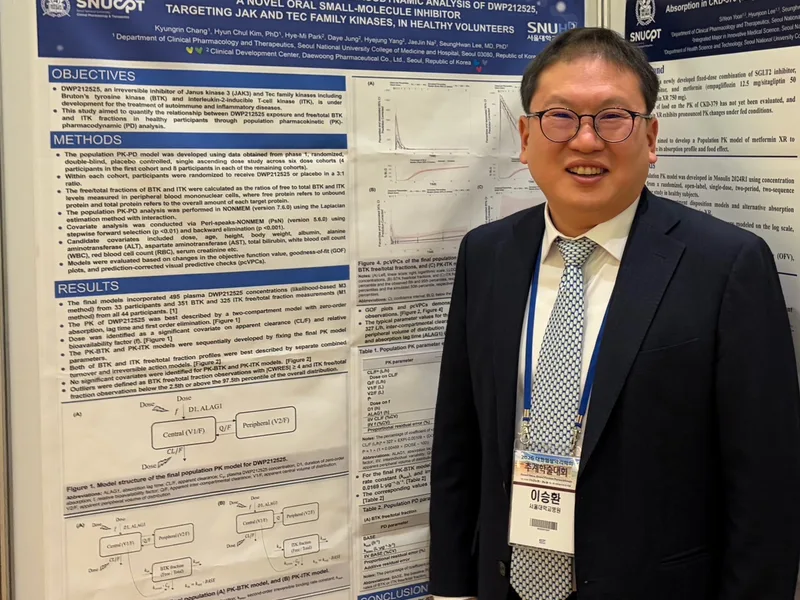
Daewoong Pharmaceutical has confirmed that in Phase 1 clinical trials for its autoimmune disease drug candidate, Plodicitinib (DWP212525), drug exposure in the body increases in proportion to the administered dose. The company quantified the relationship between drug concentration and target protein response based on data from 44 healthy adults. It plans to refine the dosage and strategy for subsequent patient trials by incorporating additional clinical data.
Daewoong Pharmaceutical announced on the 26th that it presented the results of its population pharmacokinetic and pharmacodynamic (PopPK-PD) modeling study for Plodicitinib at the 2026 Korean Society of Clinical Pharmacology and Therapeutics (KSCPT) Fall Conference, held in Jeju from the 25th to the 27th.
The research team analyzed 495 plasma drug concentration measurements, 351 BTK target protein response measurements, and 325 ITK response measurements obtained from the single ascending dose (SAD) portion of the Phase 1 trial. After modeling how drug concentrations change in the body post-administration, the team analyzed how the responses of the two targets varied according to concentration. The model successfully replicated the actual drug concentrations and BTK/ITK responses measured during the trial.
Plodicitinib is an oral candidate currently being developed by Daewoong Pharmaceutical for the treatment of autoimmune and inflammatory diseases. It simultaneously inhibits JAK3, which is involved in cytokine signaling, as well as ITK and BTK, which transmit signals for T-cell and B-cell receptors, respectively. Daewoong Pharmaceutical explained that based on this mechanism of action, Plodicitinib has the potential to treat autoimmune diseases such as rheumatoid arthritis, systemic lupus erythematosus, and Sjögren's syndrome.
Daewoong Pharmaceutical is currently conducting a multiple ascending dose (MAD) study, which involves repeated administration of the drug at escalating levels. The goal is to complete Phase 1 clinical trials by the first quarter of 2027.
Professor Lee Seung-hwan of the Department of Clinical Pharmacology at Seoul National University Hospital, who led the clinical trial, stated, "If we can enhance the predictive power of the model by securing additional data from repeated dosing, it will serve as a critical foundation for establishing appropriate dosages and administration strategies in future patient clinical trials."
Park Sung-soo, CEO of Daewoong Pharmaceutical, noted that the study successfully provided quantitative data on the pharmacological characteristics and target protein responses of Plodicitinib, adding that the company will use the repeated-dose study results to finalize the dosage and strategy for subsequent clinical phases.
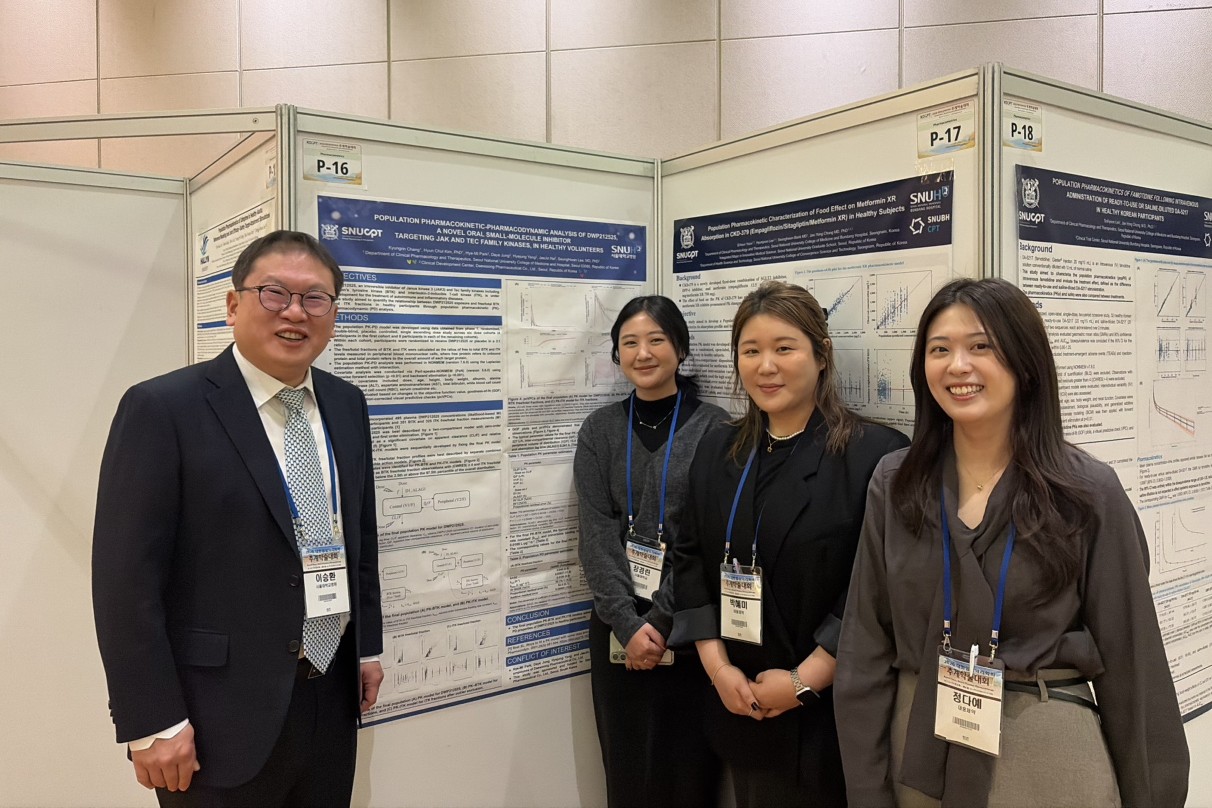
[Photo Caption: From left, Professor Lee Seung-hwan of Seoul National University Hospital, researcher Jang Kyung-rin, Daewoong Pharmaceutical Clinical Development Center PL Park Hye-mi, and CPL Jung Da-ye stand in front of the Plodicitinib Phase 1 clinical research poster at the KSCPT Fall Conference. /Courtesy of Daewoong Pharmaceutical]