Chairman Song Byung-joon: “Actor guarantees have skyrocketed”… Programming and casting practices fuel soaring production costs
Industry requests a total of 1 trillion won in support over five years… “We must eliminate the practice of concentrating production budgets on a single individual”
The K-drama industry has formally requested a 1 trillion won ($720 million) investment and support package from the government over the next five years to revive its faltering production base. Industry leaders warn that a combination of surging production costs and shrinking investments has triggered a parallel decline in both output and industry jobs. During a recent joint press conference, severe criticism was also directed at the industry's deep-rooted financial structure, which concentrates excessive costs on a handful of star actors. Participants stressed that state support must go hand in hand with sweeping reforms to eliminate star-centric casting and programming norms.
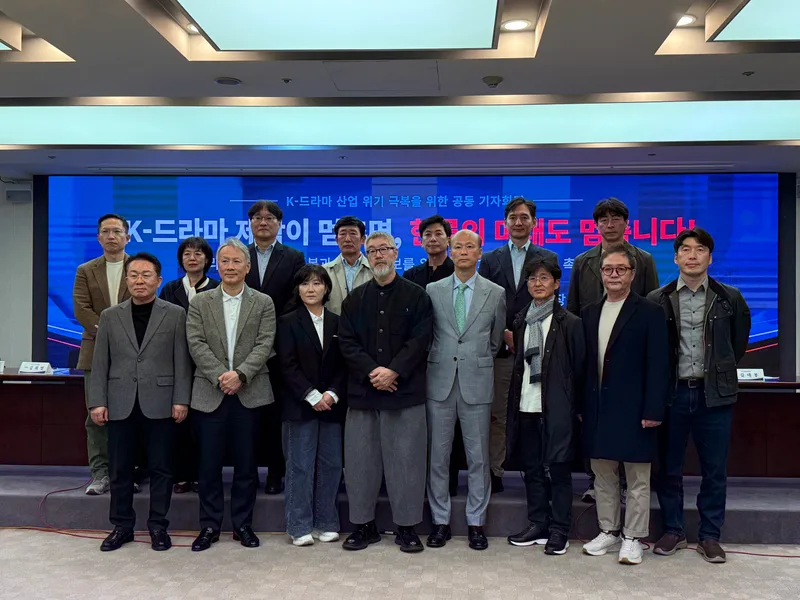
Twelve major drama-related organizations—including the Korea Drama Production Association (KDPA), the Korea TV Drama PD Association, and the Korea Television and Radio Writers Association—held a joint press conference at the Korea Press Center in central Seoul on the 4th, urging the government and the National Assembly to help restore the industry’s production ecosystem. According to association data, the number of domestically produced TV dramas dropped by roughly 30% over a two-year period, falling from 141 series in 2022.
“When productions decline, jobs disappear, and a collapsed production ecosystem is exceptionally difficult to rebuild,” said Song Byung-joon, Chairman of the Korea Drama Production Association. “Now is not the time to look back at past glories, but to look ahead to the next decade.”
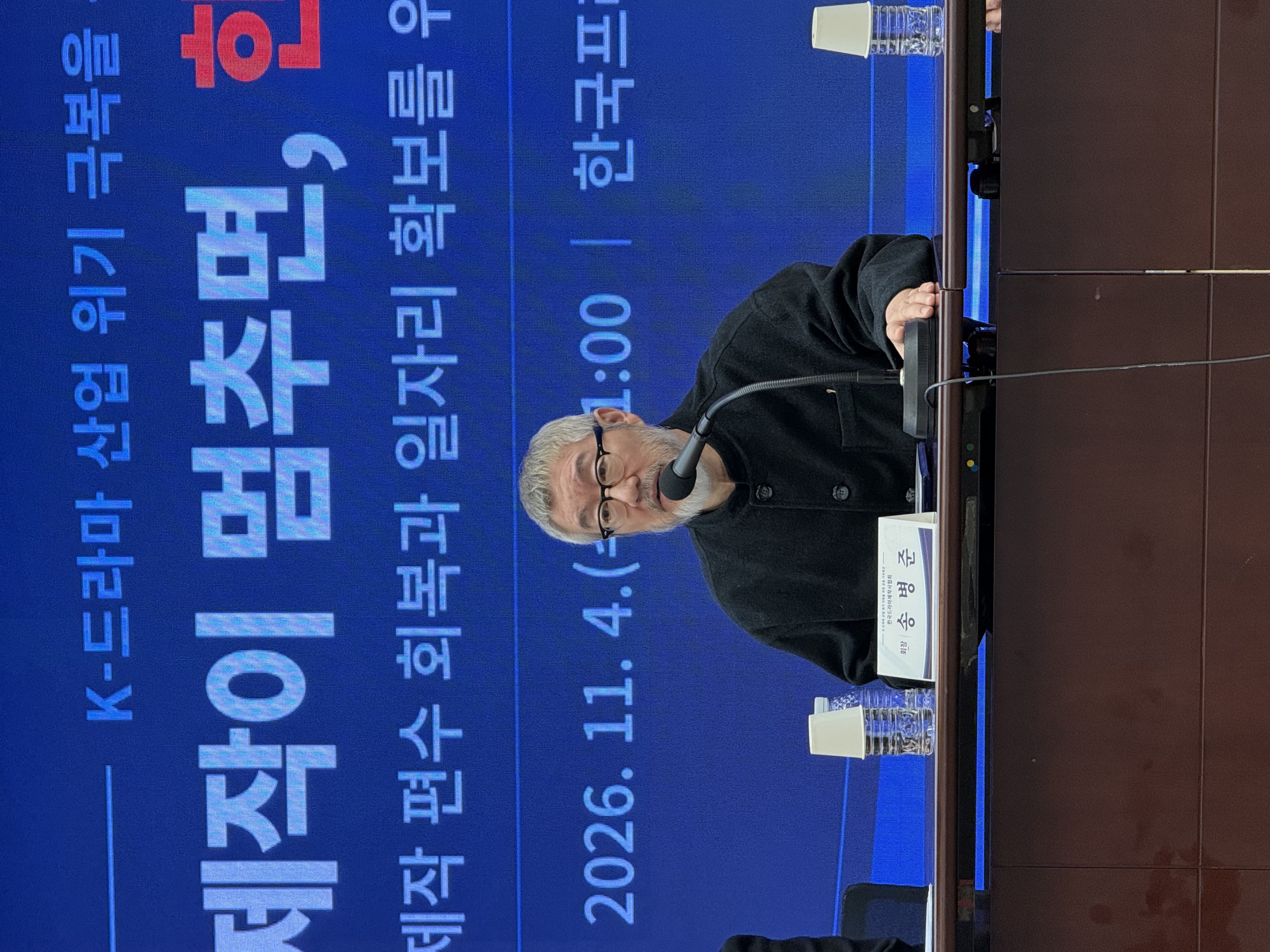
[Photo: KDPA Chairman Song Byung-joon speaking / Provided by the Korea Drama Production Association]
“Casting Specific Actors is a Prerequisite for Programming”: The Vicious Cycle of Rising Fees
At the heart of the debate over rising production costs are the astronomical appearance fees demanded by star actors, heavily reinforced by prevailing investment and programming conventions. In a market where securing a broadcasting slot and selling a project often hinges on casting specific marquee names, production companies find themselves forced into aggressive bidding wars despite exorbitant talent fees.
“Casting top-tier grade-A actors has become the primary prerequisite for securing a broadcasting schedule, which has driven up actor guarantees and subsequently fueled overall production costs,” Chairman Song pointed out. “This has cemented a vicious cycle that ultimately reduces the total number of series produced.”
The strong preference for stars among overseas buyers was cited as another factor entrenching this structure. “To secure overseas sales, buyers demand top-tier actors from a designated blacklist-style wishlist,” Song explained. “Ultimately, broadcasters prioritize who is cast over the actual content or craftsmanship of the drama when making programming decisions.”
While casting a major star undoubtedly aids in attracting investment and driving overseas sales, soaring talent costs raise the revenue threshold required to break even. If the budgets that buyers and broadcasters can stomach fail to scale at the same pace, production companies face a scenario where securing a star fails to translate into actual production and broadcasting. This is precisely why the industry is taking direct aim at purchasing and programming practices alongside talent fees.
“We Must Eliminate the Concentration of Budgets on One Individual”: Self-Rescue Measures Embedded in Support Demands
The financial backing requested by the industry is distinct from simply subsidizing the continuation of high-cost production models. Proposing a support framework targeting dramas with budgets of roughly 10 billion won per series, Chairman Song emphasized the need to build a production structure that creates opportunities for newcomers.
“We are asking for budgetary support for healthily structured dramas that open doors for rookie talent and dismantle the practice of funneling production budgets into a single individual, thereby distributing opportunities to multiple newcomers,” he stated.
When a limited budget is heavily skewed toward a few lead actors, the financial room available for supporting cast members and other essential production elements is severely constrained. Maintaining other baseline costs requires expanding total production budgets; conversely, capping total expenditures puts immense pressure on supporting and rookie casting, crew compensation, and investments in artistic quality. Consequently, surging production budgets do not necessarily translate into improved working conditions across the entire set.
To be sure, whether the rising guarantees of lead actors have directly caused a drop in supporting actors' actual pay is a matter that requires separate data analysis. The issues specifically highlighted during the press conference were the shrinking opportunities for acting, writing, and filming—driven by declining production volumes—and the subsequent flight of skilled talent.
Park Hae-young: “Junior Writers Are Left With No Work”
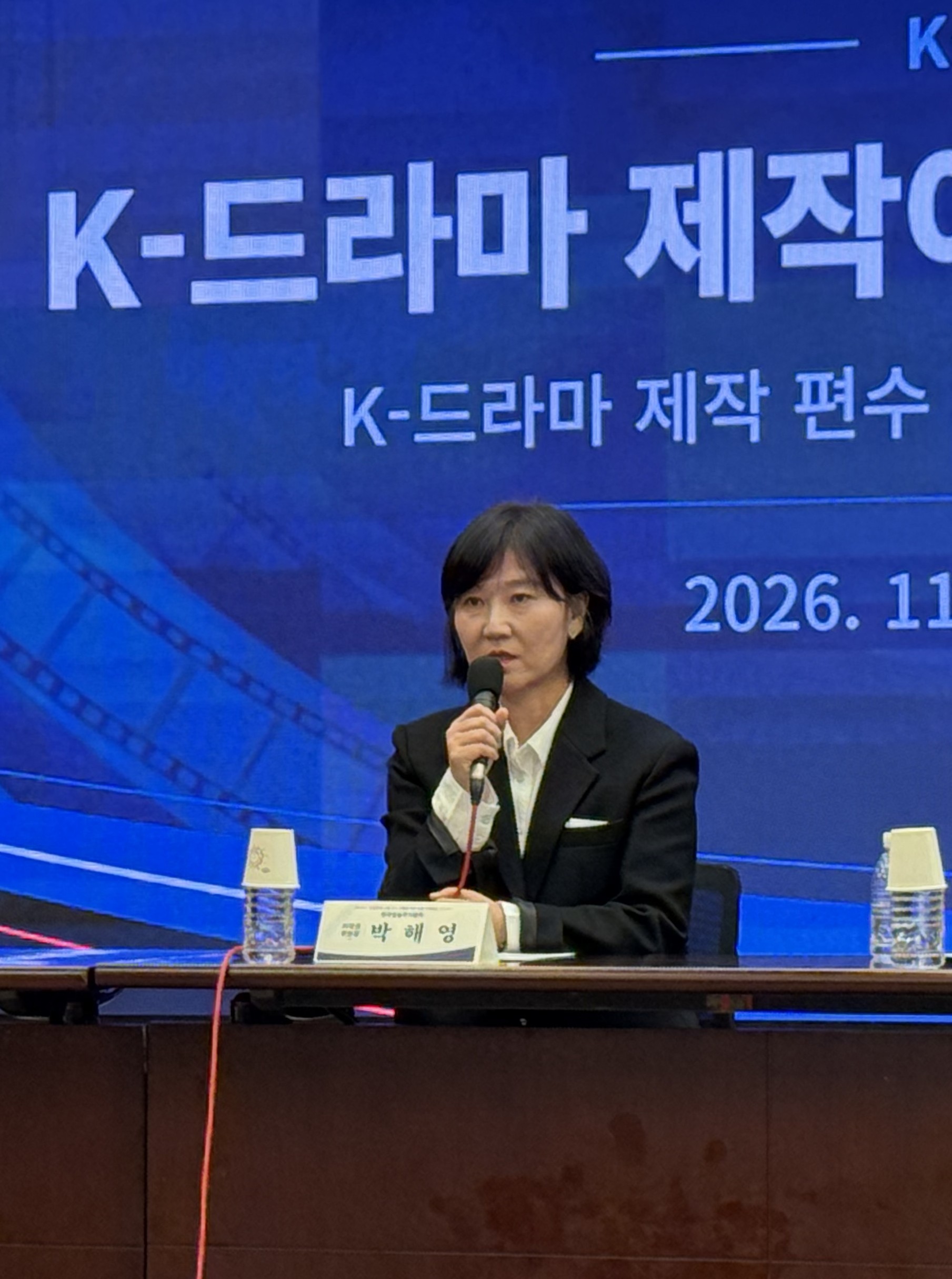
[Photo: Screenwriter Park Hae-young speaking / Provided by the Korea Drama Production Association]
Screenwriter and Copyright Committee Chairperson Park Hae-young of the Korea Television and Radio Writers Association—noted for acclaimed works such as *My Mister* and *My Liberation Notes*—highlighted the scarcity of jobs for emerging creators.
“Once a drama wraps up, we normally pass the next project down to our assistant writers, but the junior writers working under me currently have no work,” Park said. “Writers are beginning to migrate toward short-form video, web-based content, and the gaming sector.”
A contraction in production does not merely destroy current jobs; it severely narrows the pipeline for nurturing the next generation of creators. When individuals who need on-set experience are forced to pivot to other industries, rebuilding baseline capabilities will take considerable time even if production volumes eventually recover.
Kim Tae-bong, President of the Korean Society of Cinematographers, echoed these concerns. “The decline in production volume should not be viewed as a mere quantitative drop,” he noted. “The real problem is that veteran crew members with years of accumulated experience and technical expertise are being forced to leave the field without being able to put their skills to use.”
The 1 Trillion Won Blueprint Over Five Years: Connecting Production and Distribution is Key
The 12 associations are demanding that the government set national policy targets to revive annual drama production volumes, establish a mid-to-long-term investment and support framework, and build a pan-governmental comprehensive response system. The 1 trillion won figure represents a blueprint for phased support of 200 billion won annually over five years, though it is not yet finalized government policy.
The industry proposed that the government subsidize half of the roughly 400 billion won needed annually to produce about 40 dramas with budgets of roughly 10 billion won per series, with broadcasters and platforms covering the remainder. The core objective is to tie production subsidies directly to domestic broadcasting and OTT programming and distribution.
“This is seed funding disbursed over a five-year period rather than a lump-sum injection in a single year,” Song explained.
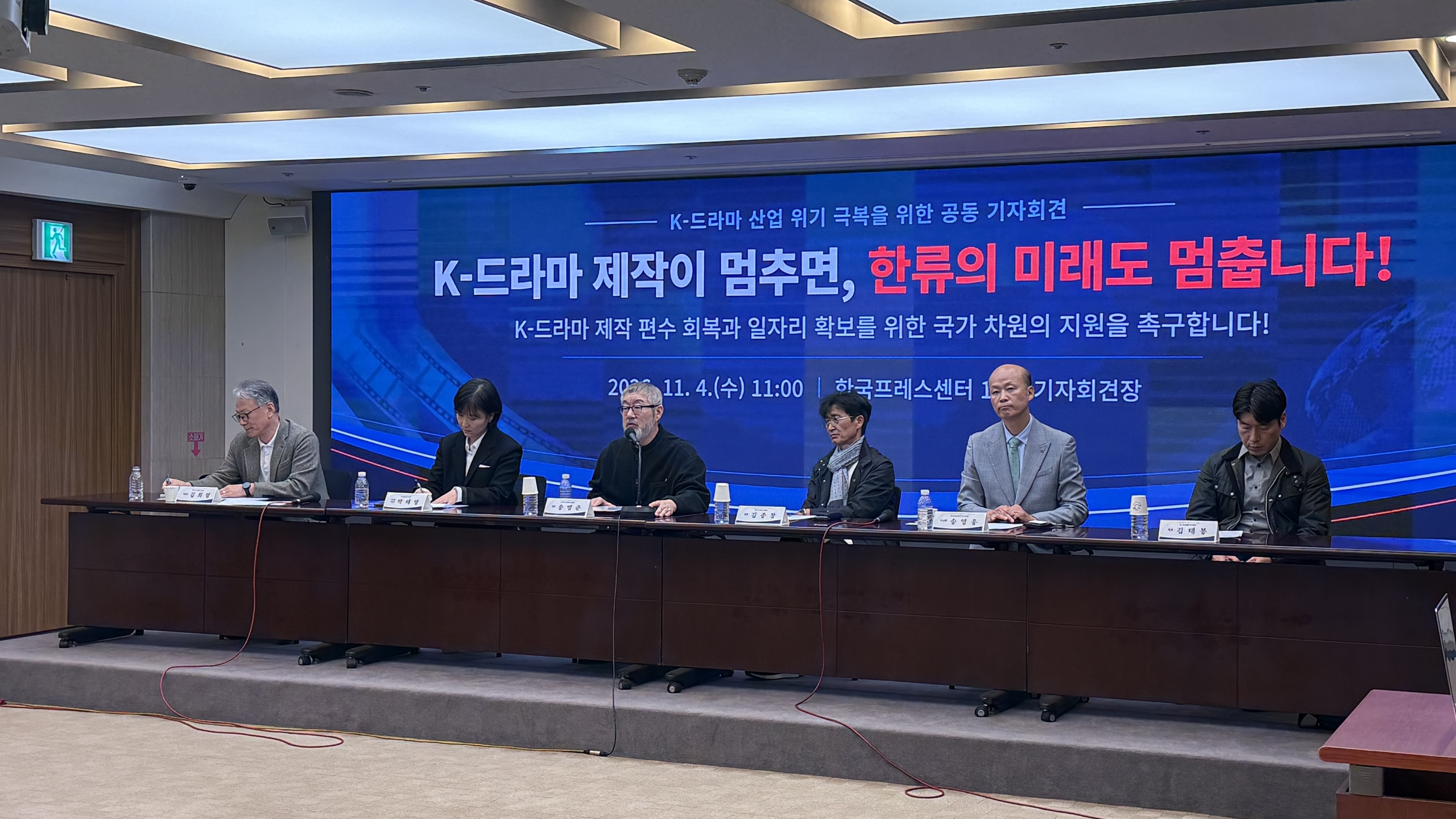
[Photo: Heads of participating organizations at the press conference (Vice Chairman Kim Hee-yeol, Writer Park Hae-young, Chairman Song Byung-joon, Chairman Kim Jong-chang, Chairman Song Young-woong, and President Kim Tae-bong) / Provided by the Korea Drama Production Association]
Kim Hee-yeol, Vice Chairman of the KDPA, outlined the support framework based on dramas with production costs of approximately 800 million won per episode. “If the government helps seven broadcasting entities, including cable networks, produce about five dramas each per year, it will provide a competitive edge in recovering production volume,” he said. Emphasizing the necessity of a sustainable production environment, he clarified that the target is not necessarily an unconditional return to the 141 productions recorded in 2022.
Post-Hit Profits Must Also Feed Back Into Future Projects
Alongside rationalizing costs at the production stage, establishing a structure to secure downstream profits after a hit show airs remains a critical challenge. Production companies must be able to accumulate the financial fruits of successful projects to build the capacity to reinvest in subsequent works.
“If there is one thing we hope for from global OTT platforms, it is a structure where they do not strip away intellectual property rights entirely, alongside profit-sharing commensurate with success,” Song stated.
At the same time, he acknowledged the contributions of global OTTs. “It is true that global streaming platforms have played a role in leading the Korean Wave and significantly elevating the caliber of K-dramas,” he said, while maintaining that a drop in production volume occurred because traditional broadcasters failed to keep pace with soaring production costs. This reflects the industry's delicate balancing act: preserving the advantages of foreign platform investment while securing the conditions for domestic production bases to reinvest.
Ultimately, the ongoing discussions regarding financial support must evaluate more than just the sheer injection volume. Stakeholders must examine whether subsidies actually generate new works and jobs, correct cost structures skewed toward a handful of elites, and translate completed projects into viable programming and distribution channels. The industry has pledged to implement self-rescue measures, including streamlining production cost structures and establishing fair production practices.
“What matters more than a single runaway global mega-hit out of 100 shows are the other 99 projects that gather talent and guarantee livelihoods,” Song concluded. Whether the industry can simultaneously sustain the commercial firepower of top stars and the operational foundation for a broad base of creators has emerged as the defining challenge for the future of K-dramas.