Semiconductor bargain hunting limited by foreign selling
AI sentiment shaken by investigation into Jensen Huang
Key Market Trends
① KOSPI remains volatile despite 4% rebound in U.S. semiconductors
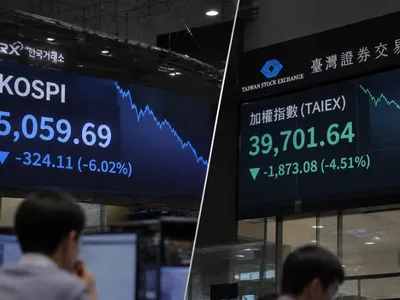
The domestic stock market showed high intraday volatility as bargain hunting clashed with foreign selling. While the KOSPI fluctuated significantly, the domestic market failed to mirror the robust rebounds seen in Japan and Taiwan.
The overnight rebound in U.S. tech stocks provided a positive start, with the Philadelphia Semiconductor Index rising over 4%. This movement was driven more by the perception that the recent sell-off was excessive rather than by specific positive news.
Uncertainty surrounding data centers persists. While political rhetoric regarding construction halts or stricter regulations continues, these issues are often conditional on resolving local community concerns such as electricity and water usage. Companies like OpenAI and CoreWeave are already moving to cooperate with local stakeholders.
② Samsung Electronics and SK hynix see momentum fade; foreign selling continues
Samsung Electronics and SK hynix attempted intraday rebounds, but momentum slowed as the session progressed. While semiconductor materials, components, equipment, pharmaceuticals, and telecommunications equipment stocks rose, selling pressure hit shipbuilding, secondary batteries, defense, robotics, and securities.
There is a growing consensus that the recent decline in semiconductor stocks is disproportionate to earnings forecasts. Samsung Electronics' decline of over 40% is consistent with historical levels seen when the following year's earnings estimates were significantly downgraded, which contrasts with current market projections for next year.
Supply and demand remain a burden. Foreign investors continued net selling across most sectors. While the volume has decreased slightly from last week, it has not reached a level that would trigger a market turnaround. Conversely, institutional investors were net buyers in most sectors, including electrical and electronics, signaling a contrast in sentiment.
③ Investigation into Jensen Huang adds new variable to AI sentiment
Market sentiment was further pressured by reports regarding Nvidia CEO Jensen Huang and potential targeting by foreign intelligence agencies.
The Nvidia board has launched an independent investigation into the reports. Huang has pledged full cooperation. To date, there is no evidence that company secrets or U.S. national security have been compromised. The board maintains confidence in Huang and the management team, confirming that his duties remain unchanged.
The issue is one of timing. With volatility already high due to data center regulations and debates over AI investment efficiency, this uncertainty adds another layer of pressure. While the actual business impact remains to be seen, it serves as a new variable shaking short-term investor sentiment.
Supply, Demand, and Sectors
Foreign investors continued net selling across most sectors, including electrical/electronics, machinery, and pharmaceuticals on the KOSDAQ. Institutional investors were net buyers in many sectors, including medical precision, pharmaceuticals, entertainment, and IT services. A meaningful index rebound requires a reduction in foreign selling intensity in the semiconductor sector.
Market Commentary
Negative news regarding AI continues to emerge, from capital expenditure concerns and data center regulations to the investigation into Nvidia's CEO. The market is reacting more sensitively to news flow than to actual earnings changes.
Data center issues are becoming more concrete, with political opposition focusing on local community burdens rather than the AI industry itself. Companies have begun proposing regional cooperation plans. Meanwhile, the investigation into Jensen Huang must be monitored, but as of now, it has not altered the outlook for AI investment or semiconductor demand.
Ultimately, the market's greatest burden is supply and demand. As long as foreign selling persists, rebound attempts will be limited. Given the remaining short-term volatility, investors should focus on existing market leaders and companies with strong fundamentals supported by institutional buying.
Source: Market Man's Stock Story (t.me/shmstory)
YouTube: Market Man TV www.youtube.com/@blueoak1004
This article is a reconstruction of a Telegram post by 'Market Man' with the author's consent. All content may contain errors and does not constitute investment advice. This content cannot be used as legal evidence under any circumstances.