


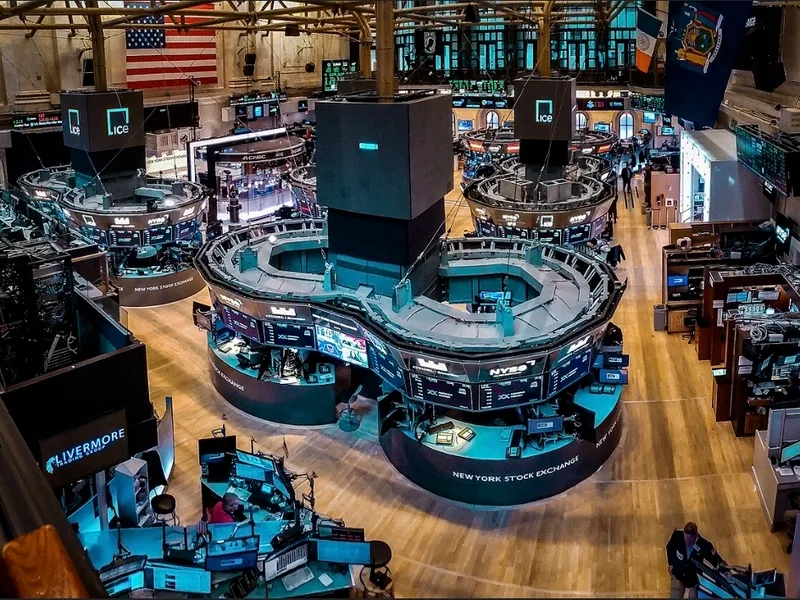
Dow rises 2.15%, S&P 500 gains 2.35%; Philadelphia Semiconductor Index jumps 6.85%.
AMD climbs 13.26% while Nvidia falls 4.27%; markets look ahead to tonight's CPI data and CoreWeave earnings.
U.S. markets closed higher across the board, buoyed by a sharp decline in oil prices and a rebound in semiconductor stocks. Easing tensions in the Middle East helped alleviate inflationary pressures, while investors moved to buy into artificial intelligence (AI) stocks that had recently suffered steep declines. Although Nvidia shares fell following news of a board investigation into CEO Jensen Huang, the broader market recovery remained intact.
On the 9th (local time), the Dow Jones Industrial Average closed at 52,389.75, up 1,104.02 points (2.15%). The S&P 500 rose 173.08 points (2.35%) to 7,549.94, and the Nasdaq Composite climbed 2.74% to 25,253.14.
Oil Price Drop Eases Inflationary Burden
A key driver of improved investor sentiment was the international oil market. Concerns over supply disruptions eased after U.S. President Donald Trump suggested a lower likelihood of further attacks, contingent on progress in negotiations with Iran.
West Texas Intermediate (WTI) crude futures settled at $86.85 per barrel, down $3.98 (4.38%). Brent crude futures also fell $5.75 (5.85%) to settle at $92.57. Both benchmarks continued to trade lower after the settlement.
The decline in oil prices was viewed favorably by the stock market, as it reduces fuel costs for corporations and energy expenditures for consumers. However, it remains premature to conclude that the inflationary trend has broken based on a single day's price movement, with markets awaiting actual inflation data and the Federal Reserve's policy response.
Oversold AI Stocks: Buying Returns to Semiconductors
Semiconductor stocks significantly outperformed the broader market. The Philadelphia Semiconductor Index rose 6.85% to 10,033.93, reclaiming the 10,000-point level. AMD surged 13.26%, and Broadcom rose 8.78%.
The rebound was supported by assessments that the recent sell-off had overly reflected risks within the AI industry. According to Reuters, Morgan Stanley and UBS noted that the likelihood of extreme regulations—a concern that spread following the Democratic Party's midterm election victory—remains limited.
Morgan Stanley analyzed that while some project timelines may be delayed, this should be distinguished from a collapse in AI capital expenditure. UBS similarly suggested that the market had been overly pessimistic regarding political and credit risks associated with AI investments.
This does not imply that all future investments will proceed without hurdles. Rather, the day's price action can be interpreted as a reassessment of whether the recent declines were excessive, even as regulatory and financing pressures persist.
Nvidia Faces Investigation; Constellation Energy Posts Strong Results
Nvidia bucked the semiconductor rally, closing down 4.27% at $178.67.
The company announced via a board statement that it has launched an independent investigation into reports that CEO Jensen Huang was a target of foreign intelligence activities. The investigation is being overseen by a committee of independent directors with external legal counsel.
The board stated there is no evidence that national security or company secrets have been compromised, but added that it would review all available information. It also reaffirmed its confidence in CEO Huang and the management team. While no breach has been confirmed, the uncertainty surrounding the investigation weighed on the stock.
Conversely, Constellation Energy rose 10.46% following its earnings report. The company's third-quarter adjusted operating profit per share was $5.06, up from $3.04 in the same period last year. It narrowed its annual adjusted operating profit guidance range to $12.50–$12.80, effectively raising the midpoint. Investors flocked to companies demonstrating tangible profit growth amid ongoing concerns over AI infrastructure spending.
The Next Test: CPI and AI Earnings
While the market has rebounded, the possibility of further monetary tightening remains a variable. Stronger-than-expected U.S. employment data released last week has highlighted the potential for a Federal Reserve rate hike in December.
Richmond Fed President Tom Barkin noted today that while inflation remains a primary risk, monetary policy must be adjusted cautiously. He stated that no decision has been made for the December meeting, pending further inflation and employment data.
The immediate focus is the U.S. Consumer Price Index (CPI) for October, due at 10:30 PM tonight (KST). The Producer Price Index (PPI) for October will be released at the same time on the 13th.
The AI investment trend will also be tested by corporate earnings. CoreWeave is scheduled to release its results early on the 11th (KST), followed by a conference call at 7:00 AM. Nvidia's earnings are expected early on the 18th.
The decline in oil prices and the perception of oversold conditions have provided a catalyst for a rebound. Whether this upward momentum continues depends on how much inflation data can lower concerns over further tightening, and whether AI companies can successfully translate increased investment into revenue and profit.