Baemin fined 331.1 billion won, Coupang Eats 300.8 billion won; regulators cite abuse of market dominance including 'most-favored-nation' demands.
Both companies argue policies were competitive responses; plan to pursue legal action after reviewing the KFTC's formal decision.
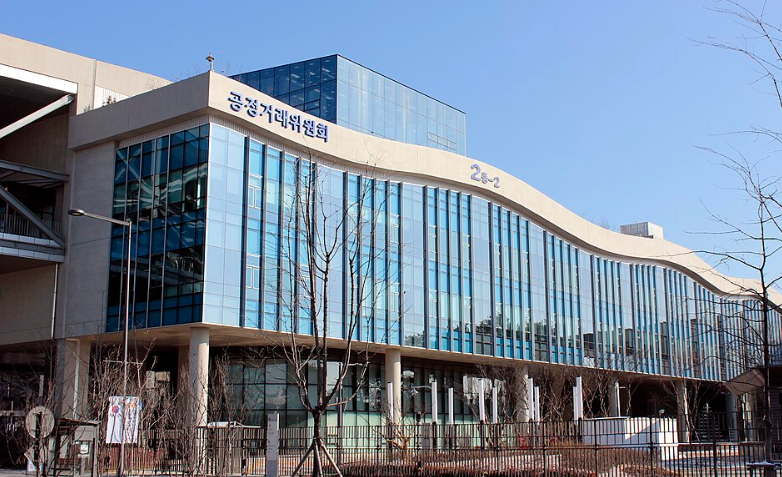
The Korea Fair Trade Commission (KFTC) has announced plans to impose a total of 631.9 billion won in preliminary fines on Baemin and Coupang Eats. The decision follows a finding that both companies abused their market-dominant positions by requiring partner restaurants to offer prices and transaction terms no less favorable than those on competing platforms.
Woowa Brothers, the operator of Baemin, faces a fine of 331.1 billion won, while Coupang, the operator of Coupang Eats, faces 300.8 billion won. The KFTC also plans to issue corrective orders. Both companies have pushed back, arguing that their policies were legitimate competitive measures rather than illegal acts.
Baemin faces sanctions over three practices, including MFN demands
Baemin faces fines for three specific violations. A fine of 160.2 billion won was calculated for its 'Most-Favored-Nation' (MFN) requirements, which prohibited partner restaurants from offering better prices or terms on other platforms.
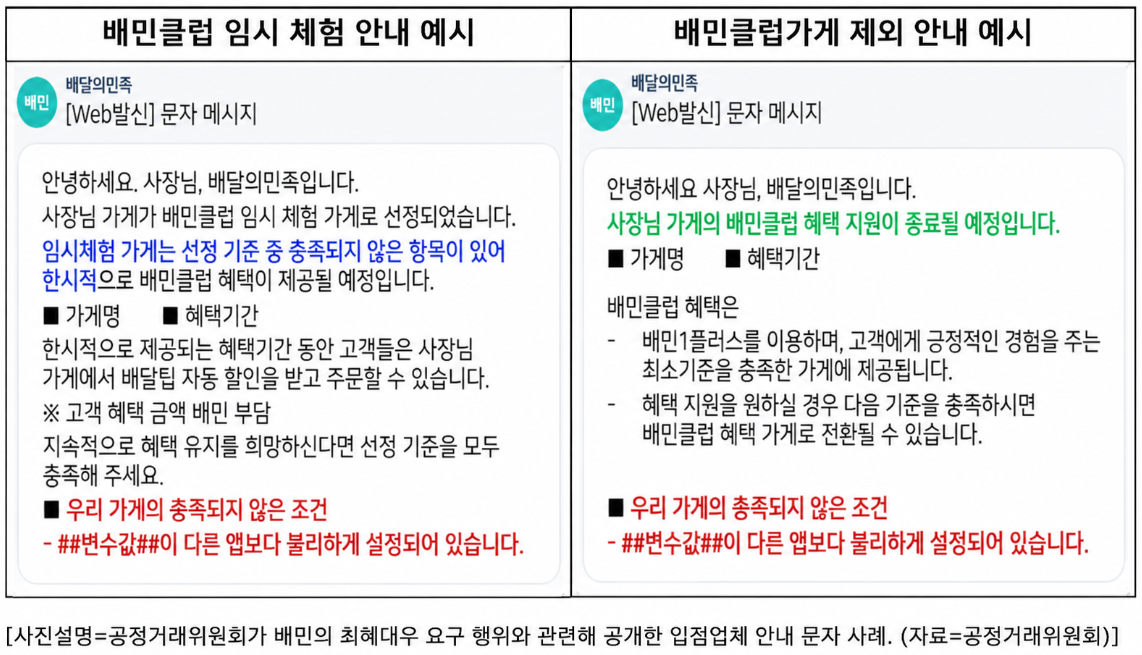 A fine of 155.4 billion won was imposed for allegedly forcing a shift toward its own delivery service (OD). The KFTC claims Baemin restricted merchant choice by reducing the visibility of store-managed delivery (MP) options within the app.
Additionally, 15.4 billion won was assessed for deceptive advertising regarding estimated delivery times, with the KFTC finding that Baemin applied different calculation standards to make store-managed deliveries appear slower than they were.
Coupang Eats was assessed a preliminary fine of 300.8 billion won, primarily for its own MFN-related practices.
Companies reject KFTC findings, citing competitive necessity
Both Baemin and Coupang Eats have denied any wrongdoing.
Woowa Brothers stated, "We have faithfully explained that there was no illegality in this matter, and we are disappointed that our explanations were not fully accepted." The company argued that its 'Baemin Club' policy was a necessary response to Coupang Eats' 'Wow' store policy and denied forcing price changes on merchants.
Regarding the shift to its own delivery service, Baemin claimed it was a measure to ensure delivery quality, noting that global platforms like DoorDash and Uber Eats are also shifting toward company-managed delivery models.
Coupang Eats also protested, arguing that its policies, such as free delivery, were designed to benefit customers. According to Coupang Eats, in the year following the launch of free delivery for 'Wow' members, average revenue per store increased by 98%, while merchant costs per order decreased by 5%. The company emphasized that it bore the full cost of the free delivery service.
Coupang Eats also challenged the KFTC's market dominance assessment. While the KFTC cited 2025 market shares of 58.45% for Baemin and 34.44% for Coupang Eats, the latter pointed out that its share was only 7% in early 2023, arguing it is unfair to label a latecomer's growth strategy as illegal.
The company also criticized the fine calculation method, noting that the preliminary fine of 300.8 billion won significantly exceeds the initial estimate of 25-42 billion won, as it includes transaction volumes unrelated to the alleged violations.
The KFTC maintains that these sanctions will expand transaction choices for merchants and improve competitive conditions for new and small delivery apps, ultimately lowering costs for consumers. Both companies plan to review the final written decision before determining their next legal steps.